



Durant: The reason my scoring is close to Jordan's is because he retired twice; otherwise, he could have reached 40,000 points.



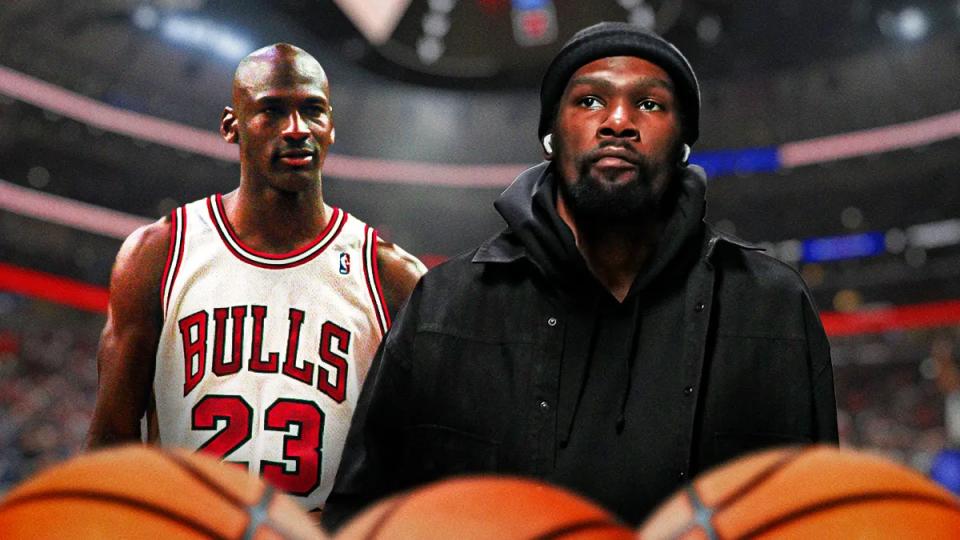
On March 18 Beijing time, the renowned American media The Ringer interviewed Durant, discussing the topic of scoring. This Rockets star has accumulated 32,224 points in his career so far, only 69 points away from surpassing Michael Jordan (32,292 points). The following is the main content from The Ringer—
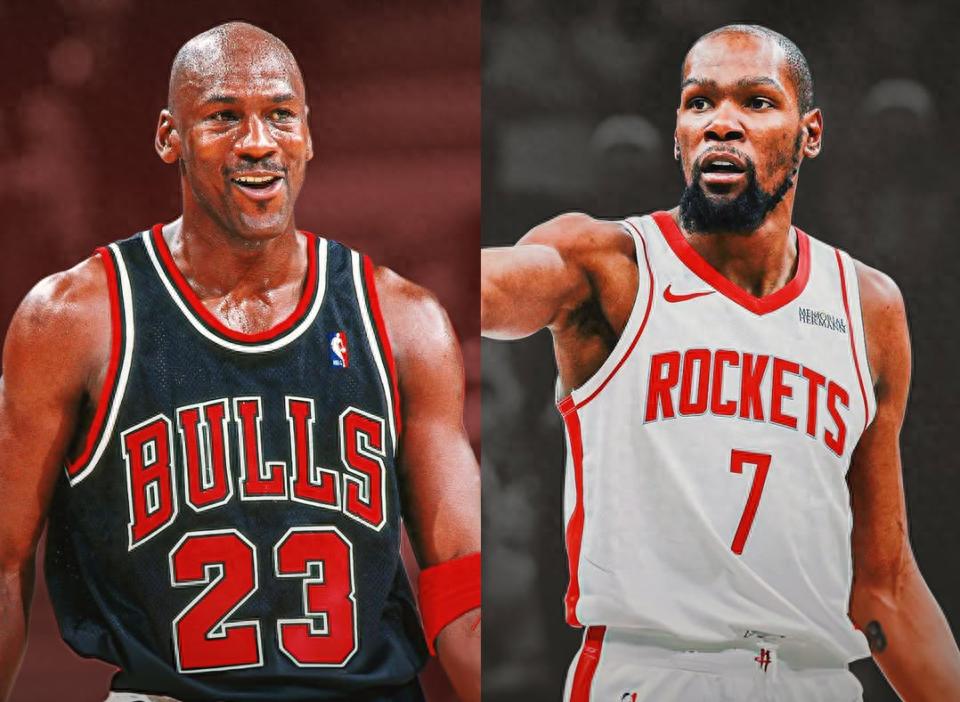
Kevin Durant has long been "married" to basketball, renewing his vows with even stronger conviction each time.
To maintain such elite performance for so long, constantly redefining the limits achievable for a player of his height and at his current age, requires an insatiable hunger for basketball. Recently, when asked whether he had lost anything on his endless pursuit of basketball legend status, the 37-year-old Durant pondered briefly and gave an answer only someone who has spent half his life in the NBA could offer.
“People always say those clichés: you give up friends, parties, fun. But I actually think once you fully commit to this sport, you don’t give up anything,” Durant said. “This is what you want to do every day, what you care about. So-called sacrifices aren’t really sacrifices. Over time, basketball becomes your everything. Your mind is filled with the game, completely immersed mentally.”
Durant is a monument to that immersion. The level he pursues on his basketball path is unreachable for most, unimaginable for others. Over the past decade, Durant’s biggest obsession has been refining his skills—fully controlling everything he does on the court. He never stops chasing perfection, regardless of the cost.
“I just want to be an impeccable player on the court,” Durant said.
Jordan will also become the third legend Durant surpasses this season. Durant once surpassed Chamberlain with a three-pointer—and “Wilt” racked up those monstrous stats when the three-point line didn’t even exist. When surpassing Nowitzki, he used Dirk’s signature one-legged fadeaway to honor the greatest shooting big man in history. As for how he will honor Jordan—a mid-range fadeaway? Shrugging after a three-pointer? Or staging a “flu game”? Durant has long felt honored to stand alongside the North Star of basketball in his mind.
“He is the benchmark,” Durant said about Jordan. “He is the blueprint for all this.”
The last two players fortunate enough to surpass Jordan—Kobe and James—carried the heavy burden of endless comparisons with “Air Jordan.” Their career achievements are almost always examined under Jordan’s shadow. Kobe forged his legend through the 81-point game, two championships without Shaq, and the “Mamba mentality”; James swept every record possible—all-time scoring leader, most field goals, most minutes played, most All-Star appearances, most consecutive double-digit games, etc., reaching a unique status through a long and extreme peak.
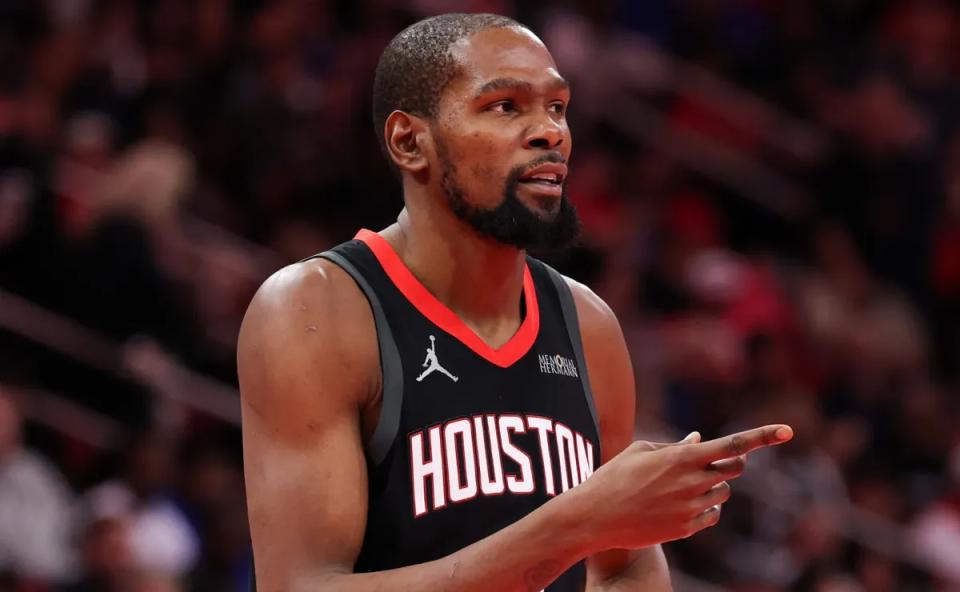
Durant was never labeled “the next Jordan,” but he too chased that shadow and earned Jordan’s respect. In 2013, when asked to choose between Kobe and James, Jordan half-jokingly replied, “I’d pick Kevin Durant.” Recently, Jordan downplayed the GOAT debate while praising three successors—James, Kobe, Durant—saying they “significantly elevated the level of the game.”
Nearly seven feet tall with all-around skills, Durant is a unique existence, the NBA’s original “unicorn.” He also inspired the evolution of the next generation of skilled big men: Victor Wembanyama is a new branch growing from Durant’s tree—Yao Ming’s height but with dribbling and three-point ability. And Durant made an Achilles tear merely a footnote in his career, giving confidence to Jayson Tatum and soon Tyrese Haliburton, among others, that they can return to elite levels after such career-destroying injuries.
“People often truly appreciate things only after losing them,” Durant said. “Everyone wants praise, but over time, it really doesn’t matter. It won’t make or break my life. I don’t expect love, praise, or anything from this sport or anyone. I just go out, do what I should—and I love what I do—without asking for anything back.”
In ninth grade, Durant living in Seat Pleasant, Maryland, was just a kid dreaming of reaching the NBA. In 2003, he got tickets to Jordan’s last home game with the Washington Wizards. That was the only time he saw Jordan play live. Jordan then wasn’t the unbeatable version from his Bulls peak, but his aura remained unmatched. “I just remember the excitement in the arena, the whole city buzzing because he was there,” Durant recalled this month when returning to Washington for a game. “People’s reaction to Mike was different.”
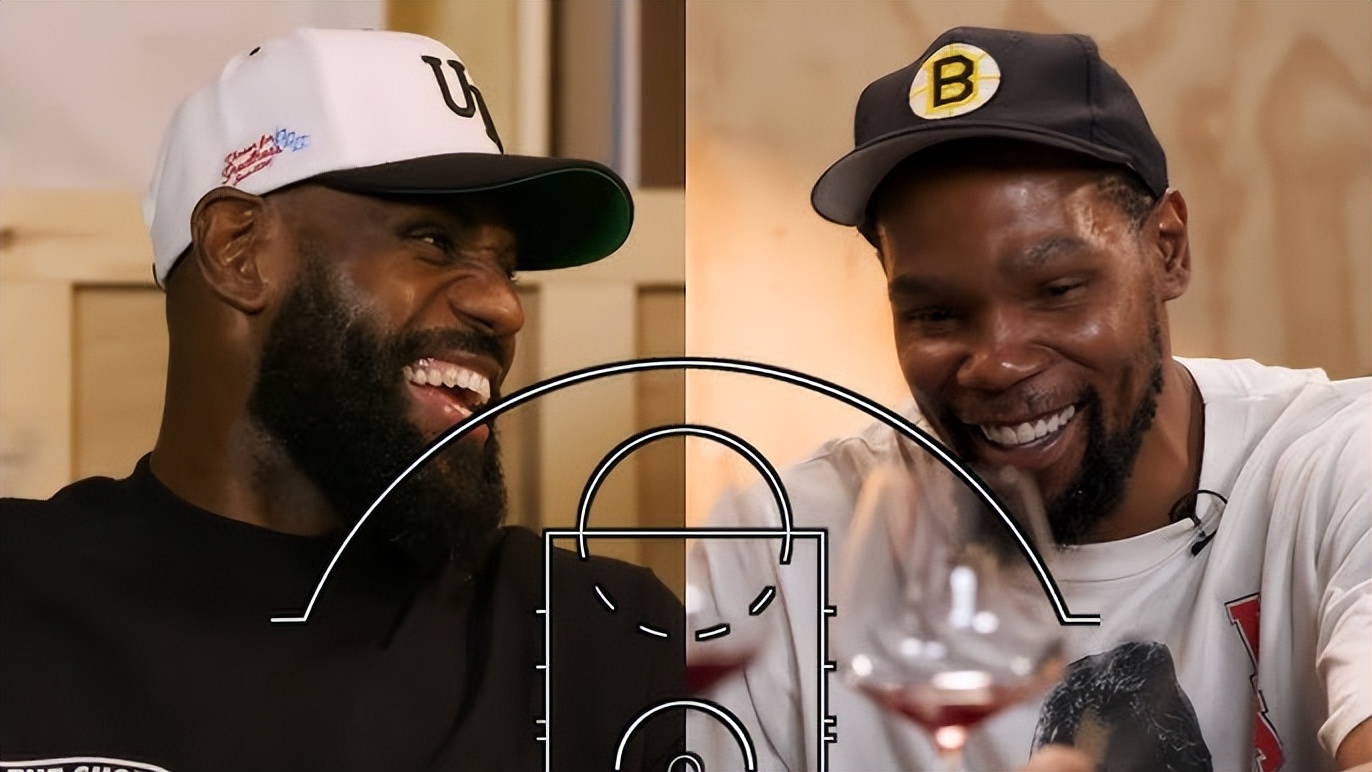
Last July, Durant joined James and Steve Nash on the “Mind the Game” podcast, discussing the difficulty of sticking to the path and maintaining career length as top scorers. “You have to recommit to yourself, sign that contract with yourself… Some say ‘I want to play baseball and then come back,’ some say ‘I’ll play 22 years straight.’” This sparked huge controversy then, but Durant stated he still holds his view.
“It’s fact,” Durant said. “MJ did leave. He had moments of ‘I’m tired of basketball, I need a break to adjust and come back,’ and he did it. LeBron played straight through. I believe he also had times he was fed up, didn’t want to play, tired of all the nonsense attached to this sport. Times are different; he might have more protective barriers around him than MJ did back then. Times are different; everyone has the right to choose their own path.”
Like Jordan, Durant’s career was interrupted twice, but unlike Jordan, both were involuntary. The first injury hiatus was the 2014-15 season—a poor follow-up to his MVP year, foot injuries allowing only 27 games. The second was the Achilles tear in the 2019 NBA Finals. Returning from the first injury, he came with urgent championship hunger; returning from the second, he could still easily and efficiently score 30 points. People always wonder: if those peak seasons, the time lost due to injuries could be recovered, where would Durant rank on the all-time scoring list now.
“Give me 200 more games, everything is unknown,” Durant said. “But the reason I’m close to MJ is only because he retired twice.” Durant firmly believes if Jordan’s second season wasn’ limited by foot injury, if he didn’t retire after the Bulls’ two triple championships, if he chose to continue playing after his overlooked Wizards stint, then in the 40,000-point club, James wouldn’t be alone.
“He could have played past 40 too,” Durant said. “MJ rested about four or five years total. Give him another 300 games averaging 30 points—that’s not exaggeration, his career average is 30 points! When I surpass him, I don’t want to erase his achievements. I think anyone studying basketball history must know this. Being on the same level with him is already an honor, but to me, MJ is far more than just a 32,000-point scorer.”
Durant has been a scoring machine from the start, yet never deliberately chased stats to prove himself. The noise seen while bored scrolling on his phone doesn’t affect his scoring approach. He is content with stability, calm and composed. If he, not Adebayo, surpassed Kobe’s 81 points, or even approached Chamberlain’s 100, he might be viewed more as a successor. But the Mamba mentality is proactive, destroying opponents, while the “Easy Money Sniper” philosophy is not appearing hungry. He is the fourth-highest average scorer (27.2 points) among NBA players with at least 500 games played. Yet his single-game high never exceeded 55 points, and he’s never accused of unreasonable stat-padding. He has 9 career 50+ games, ranking 12th historically; 72 40+ games, ranking 10th. But in 1,186 career games, he scored 30+ 434 times—that’s his consistency.
As one widely regarded as one of history’s greatest scorers, even the greatest scorer, why has Durant never pursued those historic single-game moments? Why are there 38 players in NBA history with a 60-point game, but not him? The answer might lie in the Tupac tattoo on his left calf—this rapper’s overall achievements far outweigh any single track, and his famous line in “I Get Around”恰好契合 Durant’s scoring philosophy: “No need to be greedy.”
“I aim for longevity, bro,” Durant said. “I just want to win games and go home. I know this has always been a point people discuss about me: ‘You don’t have 60, 70 points.’ But you can’t just look at one 60-point game and say ‘this is KD.’ You have to watch my entire career, carefully dissect everything I’ve done, to truly understand what kind of player I am. I like that. It’s more story-like. I don’t want a fleeting flash; I want to stay great consistently. I haven’t scored 60, but I’ve created many stats of my own.”


Wonderfulshortvideo
Players and coaches were honored to have President Barack Obama in the building for the 2026 NBA All-Star Game


Listen as the crowd roars at the sight of Tatum’s first run out this season! 🤩
Replying to @NBA Giannis was loving the Intuit Dome popcorn too 😭
Watch as SGA drills the game-winning three 🙂↕️
Tatum gets the putback ➡️ three as his first and second buckets back since returning 🔥 🔥 🔥
AND with .6 to spare 🔥
Shai IMMEDIATELY after hitting an insane shot 📸
 Links
Links
 Contact
Address:UNIT 1804 SOUTH BANK TOWER, 55 UPPER GROUND,LONDON ENGLAND SE1 9E
Number:+85259695367
E-mali:[email protected]
 App
App


