



Smiling Assassin Thomas: If Jordan were replaced by Durant, the Bulls would still win 6 championships.



On March 27, Beijing time, when asked about the comparison between Durant and Jordan, "Smiling Assassin" Isiah Thomas gave his opinion without hesitation, and his perspective shifted the discussion to a new direction. On the "Run It Back TV" podcast, Thomas made a bold assertion: if Durant were placed in that Chicago Bulls team of the past, replacing Jordan's position, he believes the outcome would be no different—they would still win six championships.
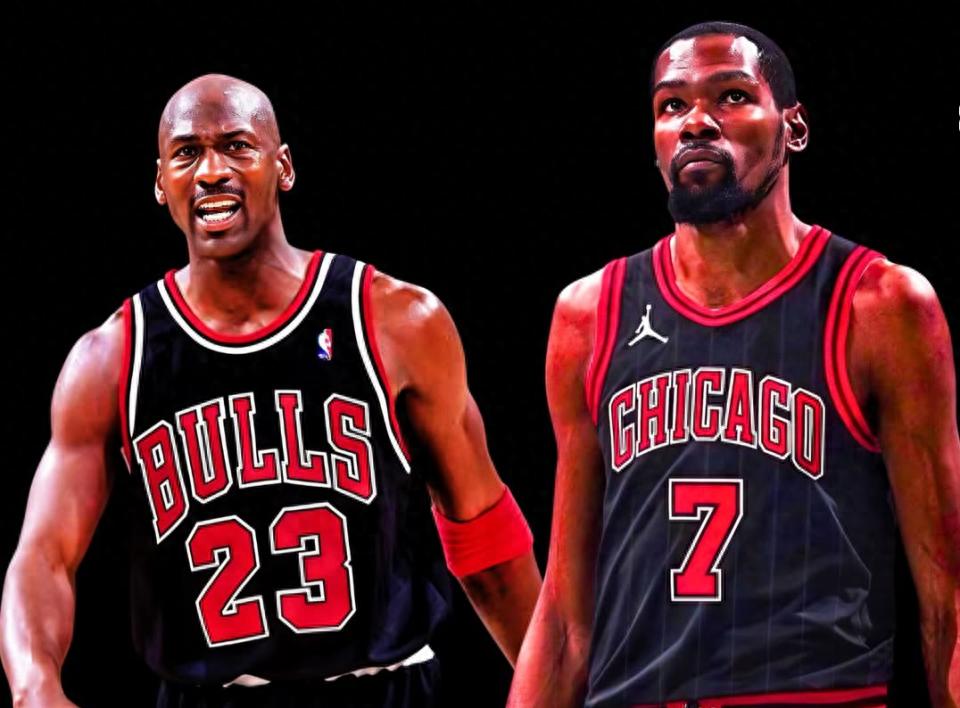
“I've said this to Durant himself, and I'll repeat it today to all the guests here. Put him back in our era, into that low-post, mid-range back-to-the-basket system, take Michael Jordan out, and give him teammates like Scottie Pippen, Toni Kukoč, Dennis Rodman, B.J. Armstrong, Craig Hodges.”
“Could he win six championships? Absolutely. Give him that tactical system, that mid-to-low post position, prioritize the ball to him every night, let him shoot 25 to 30 times. Yes, he could achieve what Jordan did. The most incredible thing about Durant is his efficiency. Compare his shot attempts to Jordan's volume when chasing records. Durant doesn't need to shoot 30 times; he can score the same points with just 17 or 18 shots.”

Thomas is not denying Jordan's greatness; he simply believes Durant could seamlessly take over that system. His core argument revolves around adaptability and efficiency. Thomas directly points to Durant's scoring method: he doesn't need 30 shots to produce the numbers; he scores in the same mid-to-low post areas where Jordan established dominance, but with fewer attempts.
And the data supports this. Jordan took 24,537 career shots to score 32,292 points. Durant recently surpassed him on the all-time scoring list, using only 22,180 shots—over 2,300 fewer attempts.
This gap is crucial. In Thomas's view, what would happen if Durant were equipped with the same Bulls system, the same shot priority, the same offensive core role?
It would mean placing an already highly efficient scorer into a system tailored to maximize a superstar's impact, and then increasing his shot volume.
However, the controversy begins to diverge precisely here.
Because replacing Jordan is far more than just scoring. It also involves mentality, defense, leadership, and the ability to control games when the Finals are tight. Jordan built his legendary status on such moments, and this is a core component of his historical standing.
And Durant himself acknowledges this. After surpassing Jordan in total points, Durant did not try to place himself above Jordan; instead, he pointed out a key difference: he said Jordan's aura was more powerful than the game itself, that intimidating presence he carried just walking into the arena, which Durant believes cannot be replicated. He also objectively evaluated Jordan's scoring achievements.

Durant stated that if Jordan hadn't retired twice, he likely would have become the first 40,000-point scorer in NBA history. This is important because it shows Jordan could have left even more statistical achievements.
Meanwhile, Durant also candidly discussed the differences in player mentality across eras. He mentioned that Jordan ultimately left because he grew tired of the game, while players like LeBron James did not interrupt their careers and have persisted to this day.
Additionally, there are era difference factors. What Thomas described is placing Durant into the Bulls system of the 90s: slower pace, more physical play, tighter spacing, fewer three-point attempts. Today's Durant benefits from modern basketball's spacing and three-point threat, which Jordan did not heavily rely on back then. But at the same time, Durant's technical traits are extremely universal: height, shooting, ability to score over defenders—applicable in any era. This is also one reason Thomas is so confident in his viewpoint.


Wonderfulshortvideo
i know, they’re mine. thank you


This energy >>>>>
Listen as the crowd roars at the sight of Tatum’s first run out this season! 🤩
23 + 77 = 💯
LUKE KENNARD FROM DEEP. GOODNIGHT.
Watch as SGA drills the game-winning three 🙂↕️
Tatum gets the putback ➡️ three as his first and second buckets back since returning 🔥 🔥 🔥
 Links
Links
 Contact
Address:UNIT 1804 SOUTH BANK TOWER, 55 UPPER GROUND,LONDON ENGLAND SE1 9E
Number:+85259695367
E-mali:[email protected]
 App
App


