



The 65-game rule can be optimized if not abolished! A prominent reporter proposes four major revisions: Is this more reasonable?



On March 29 Beijing time, NBA Commissioner Adam Silver has clearly stated that he will not consider modifying the 65-game award eligibility rule for now, as he believes it is effective. However, the players' union disagrees, and some media outlets also urge the league to at least make adjustments even if the rule is not scrapped.
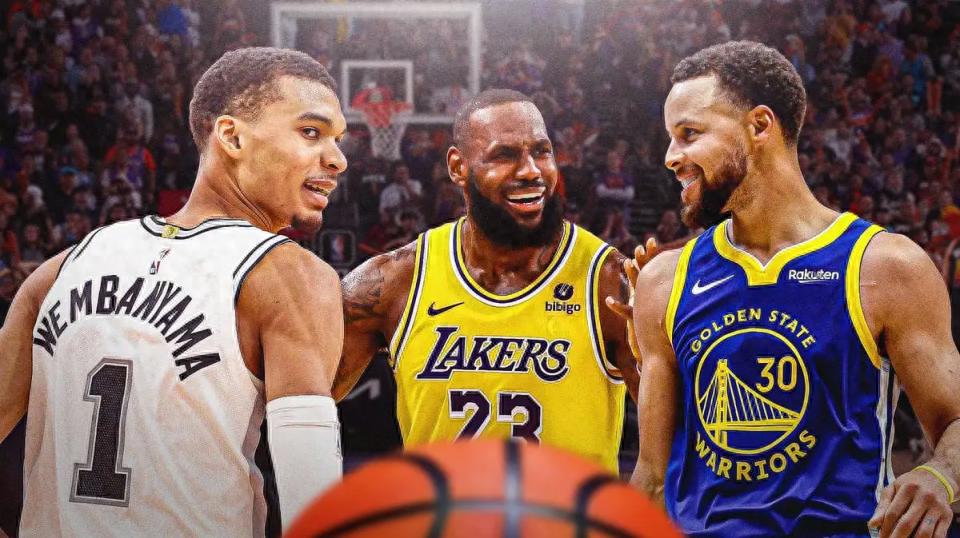
Noted reporter Sam Quinn indicated that in the coming weeks, a scenario could emerge where over half of the NBA's top 20 scorers lose their eligibility for awards due to the league's controversial 65-game minimum threshold. This rule has faced heavy criticism this season, initially with Jokić potentially missing MVP consideration, and recently, injuries to Cunningham, Edwards, and Maxey placing them in similar jeopardy. Regarding how to revise this rule, Quinn suggested the following four approaches—
1. Align with the statistical leader threshold (58 games)
The 65-game rule is new, but setting minimum appearance standards for seasonal honors is not novel. To compete for scoring, rebounding, assists, steals, blocks, or minutes per game titles, a player must participate in at least 70% of their team's games, which is 58 games in a standard season. This is a reasonable standard; no one wants a player who scores 50 points in the opener and then tears his ACL in the fourth quarter to forever be considered the season's scoring champion. This rule has never sparked substantial controversy.

So why can't the award threshold be unified with this? A cynical answer, hinted by Silver himself, is that this rule mainly aims to curb load management rather than select truly deserving award winners. Moreover, players care more about honors directly tied to salary (MVP, Defensive Player of the Year, All-NBA teams); compared to titles like scoring champion, they are more willing to play through injuries for these awards.
If the eligibility threshold is to be modified, unifying them is logical. A player who plays 58 games can compete for the scoring title should also be eligible for other awards. Is it reasonable for the season's scoring champion to be ineligible for an All-NBA team? Clearly not.
As agent Schwartz argued for Cunningham, the 65-game figure is entirely arbitrary, with no basis, roughly 79% of the schedule. If an integer percentage were desired, it could be set at 66 games, requiring players to play 80% of games to deserve trophies, at least making the number more neat. So since the number was arbitrarily set, at least keep all arbitrary standards consistent.
2. Determine eligibility by minutes played rather than games
Maxey currently leads the NBA in minutes played, averaging 38.3 per game. Even if he misses all remaining games this season, his total minutes will likely exceed those of some players selected for All-NBA teams. For instance, Wembanyama would need to play 639 minutes in the Spurs' final 7 games to catch up to Maxey, which is mathematically impossible—equivalent to playing 13 full games, and he doesn't have that many games left. Considering bench time and Spurs' rotation due to locked standings, even if Maxey doesn't play again, the minutes gap between them will almost certainly be hundreds of minutes.
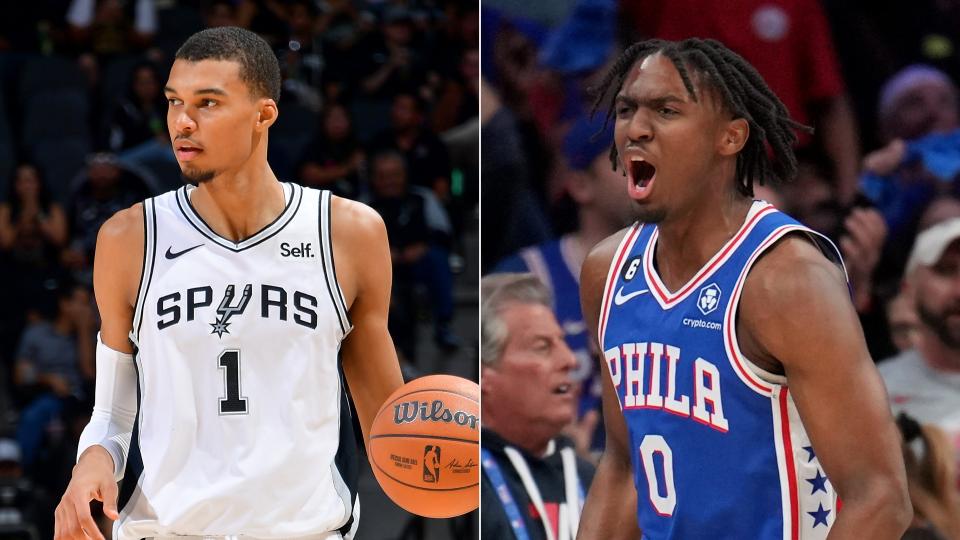
Yet the reality is that Wembanyama is eligible for All-NBA selection, while Maxey may not be. Is this fair? Certainly not. Maxey played more games. If fairness is the goal, total minutes played is the meaningful standard; if pleasing broadcasters is the aim, then game appearances matter more. TV viewers tolerate stars sitting on the bench more than tuning into a game they aren't playing. But for a team wanting to win, Maxey's extra minutes each night are immensely valuable.
The difficulty with a minutes-based threshold lies in evaluating players from top-tier teams. Alexander has played 61 games this season but only 40 fourth quarters. The Thunder often win big, leading to his frequent rest in final quarters, artificially lowering his total minutes. Curry in his peak also frequently faced this situation.
If the NBA adopts a minutes-based system, it must differentiate between absences due to injury, coach decisions, and games becoming noncompetitive. Otherwise, players might force themselves into garbage time to accumulate minutes for awards, which is undesirable from both sportsmanship and injury risk perspectives.
This issue isn't unsolvable, but the calculation formula would be slightly more complex than the current one.
3. Distinguish between long-term and short-term absences
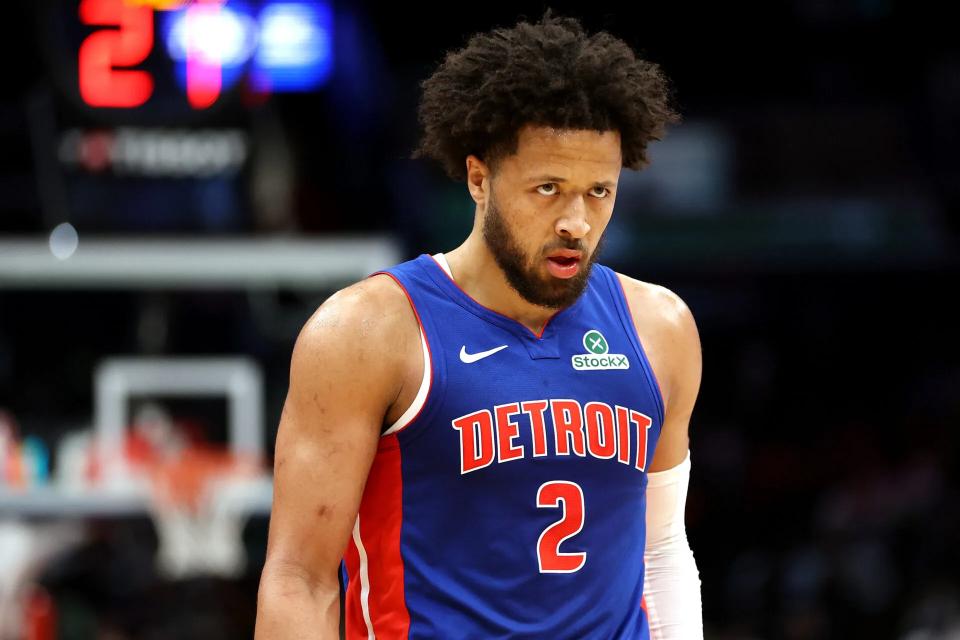
Cunningham missed only 7 of the first 68 games, with only one being a back-to-back rest, not frequent load management. Later, he suffered a collapsed lung while saving a ball, an injury type least related to load management. If, as Silver stated, the rule's intent is to curb load management, punishing Cunningham makes no sense—he is precisely the type of star the league claims to want to encourage.
Specific details are hard to define, but broadly, the NBA could set different thresholds for players with varying maximum absence lengths. We could call it the Cunningham clause. If he misses all remaining regular-season games, he would be absent for the final 14 consecutive games. Perhaps then, players with maximum absences reaching 14 games or more could have the award threshold lowered from 65 to 60 games.
The risk is that some players with long-term serious injuries might rush back prematurely to easier secure seasonal honors. Of course, players already return early now, like Haliburton; this change would merely alter the context of their return. This still carries significant risks, but perhaps a suitable compromise could be found, at least loosening the criteria for exceptions.
4. Set different thresholds based on award tiers
Most agree: winning MVP is more significant than making the All-NBA First Team, First Team is more significant than Second Team, and Second Team more than Third Team. Correspondingly, thresholds should progressively increase. But why is there no distinction now?

If quantifying MVP purely, a player delivering the league's highest value while playing only 65 games, yet surpassing another superstar playing 80 games, is logically challenging—since 80 games is about 23% more than 65. The 65-game player must outperform the 80-game player by 23% in the games they play, which is extremely difficult for superstars.
Currently, beyond the 65-game rule, MVP has no finer guidelines. I believe incorporating minutes played into value calculations and explicit thresholds harms more than helps. With a fixed threshold, the league implicitly allows voters to ignore attendance differences once eligibility is met. If the best player only plays 65 games, those 17 missed games seem unimportant because the league permits voting for him. This makes it easier for voters to view attendance in black-and-white: either enough games or not.
What if the NBA sets different minimum game requirements for different awards? For example, MVP requires 70 games, First Team 65, Second Team 60, Third Team 55. This could solve many practical issues of the 65-game rule. Players wouldn't need to rush back from severe injuries prematurely, as they'd still have chances for lower-tier teams, preserving super-max eligibility.
This also reduces the likelihood of truly undeserving players being selected; a player not First Team worthy could still be chosen for Second or Third Team, lowering the chance of erroneous selections triggering super-max contracts. It also aligns better with actual seasonal performances: a player playing 55 games can still be a season's iconic figure but unlikely among the top five. Worth remembering, but not necessarily receiving equivalent honors.
We also need to determine the positioning of Defensive Player of the Year. Its prestige is clearly lower than MVP but falls between which All-NBA tiers? I think roughly equivalent to Second Team, but opinions vary.
Do you think the 65-game rule needs some modifications? Feel free to leave your comments.


Wonderfulshortvideo
i know, they’re mine. thank you


This energy >>>>>
Listen as the crowd roars at the sight of Tatum’s first run out this season! 🤩
23 + 77 = 💯
LUKE KENNARD FROM DEEP. GOODNIGHT.
Watch as SGA drills the game-winning three 🙂↕️
Tatum gets the putback ➡️ three as his first and second buckets back since returning 🔥 🔥 🔥
 Links
Links
 Contact
Address:UNIT 1804 SOUTH BANK TOWER, 55 UPPER GROUND,LONDON ENGLAND SE1 9E
Number:+85259695367
E-mali:[email protected]
 App
App


