



Turning aliens into mortals! How the Knicks limit Wembanyama? Towns becomes the key on both ends in the Finals


On June 9 Beijing time, Game 3 of the Finals tips off, with the Knicks currently leading the Spurs 2-0 in the series. Successfully containing Wembanyama, turning him from an "alien" into a "mortal," has been a major factor in the Knicks' series lead. Bleacher Report breaks it down in detail——
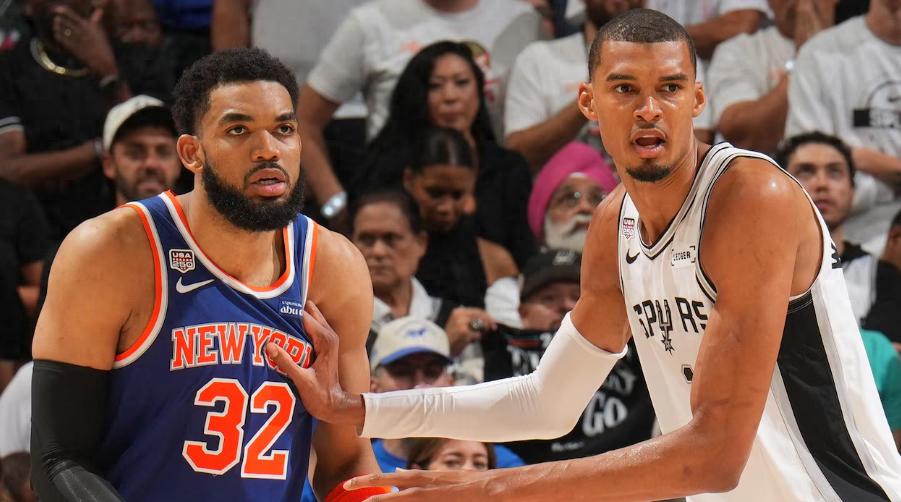
In the series against the Trail Blazers, Timberwolves, and defending champion Thunder (excluding two games where he left early due to a concussion or was ejected), Wembanyama averaged 25.7 points, 11.7 rebounds, 3.9 blocks, 2.9 assists, and 1.1 steals over 15 games, with 2.8 turnovers per contest.
Across those 15 games, he shot 51.4% from the field, 38% from three-point range, and 87.4% from the free-throw line.
Throughout the first three playoff rounds, Wembanyama fully earned the nickname "alien." But in the Finals, the Knicks brought the "chosen one" back down to earth, constantly challenging him and exposing his current true level—ultimately, he remains a mortal player.
After just two Finals games, Wembanyama is averaging 27.5 points, 10.5 rebounds, and 3.5 blocks, numbers that look impressive at first glance.
However, those stats are heavily inflated by his outburst in the fourth quarter of Game 2: in the second half he went 9-for-17 and scored 22 points. Looking at the full two-game picture, his shooting efficiency and turnover numbers reveal underlying issues.
Against the Knicks, Wembanyama's overall field goal percentage is just 40.5%, and his three-point percentage is a low 26.7%. He has committed 10 turnovers across the two games, including a critical one in Game 2 that directly cost his team a fast-break opportunity that could have sealed a win.
More surprisingly, while his block totals remain respectable, he is far from flawless on defense. Towns repeatedly blows past him on perimeter drives; Anunoby not only hit a step-back three over him but also drove past him for a posterizing dunk.
In short, he is no longer the unsolvable "alien." How exactly did the Knicks pull this off?
On defense, Towns' one-on-one coverage has been virtually perfect. Many initially expected the Knicks to assign Anunoby to guard Wembanyama for long stretches with creative schemes, but the team did the opposite, relying mainly on Towns to defend him straight up: staying in front, keeping his arms high, and constantly contesting his jump shots. In Game 1, when Towns was the primary defender, Wembanyama shot just 2-for-12.
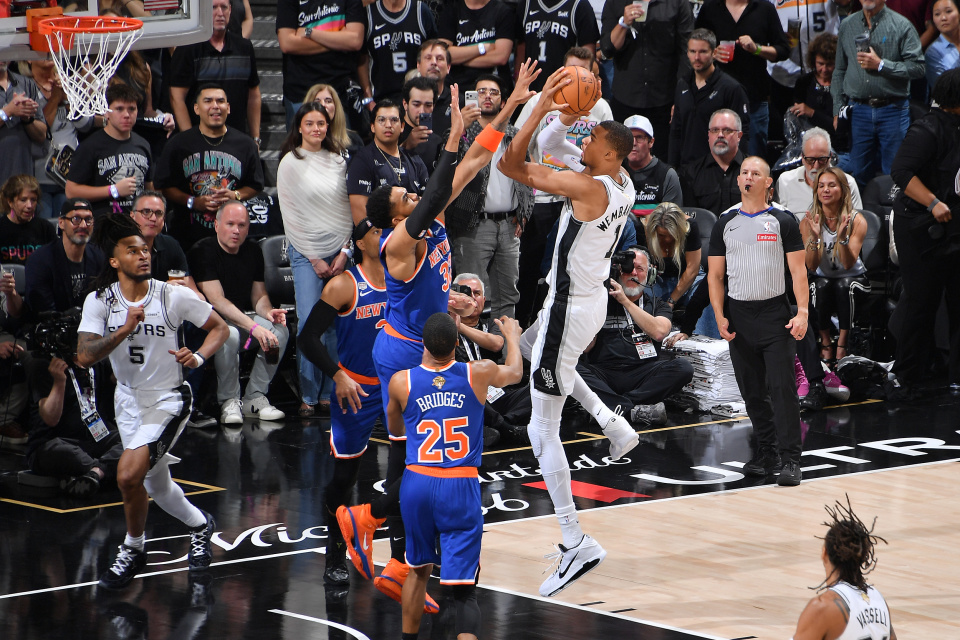
Of course, Towns isn't the only big man capable of stopping Wembanyama from attacking the rim. Late in Game 2, with the Spurs down by one and holding the ball for a potential game-winner, coach Mike Brown trusted Mitchell Robinson to protect the paint. In that crucial moment, Wembanyama didn't dare drive into the lane and instead settled for a contested two-point shot, which clanked off the rim. After landing, he signaled for a foul call but was not rewarded.
Throughout the series, the Knicks have rarely needed extensive help defense or double-teams. They have effectively contained Wembanyama simply by stationing two strong centers in the paint to raise their arms and contest shots.
In the previous series against the Thunder, opponents tried to wear down Wembanyama with smaller defenders, but he feasted inside, scoring 41 points in one game to lead his team to victory. The Knicks, however, did not replicate that strategy. Physical one-on-one battles have been the cornerstone of their success.
On offense, the Knicks have executed a targeted game plan centered on two key aspects——
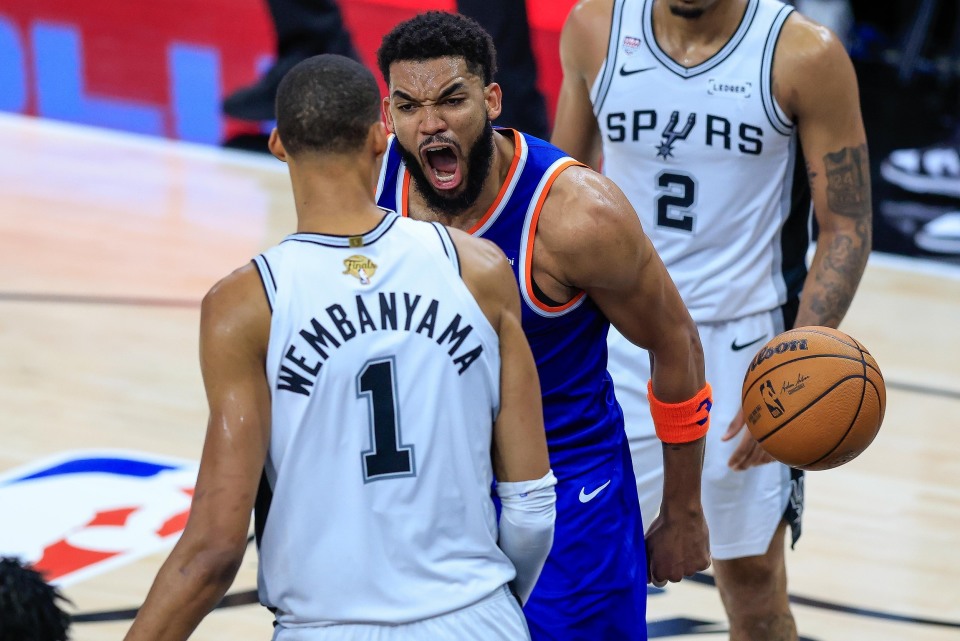
First, Towns (with Anunoby and Brunson also frequently involved) shows no fear and actively attacks Wembanyama with the ball in hand.
Towns repeatedly steps out to the perimeter, forcing Wembanyama to extend his defense and creating driving lanes. When the Spurs switch a smaller defender onto Towns to allow Wembanyama to focus on rim protection, Towns cuts inside, attacks the basket like a traditional big man, or crashes the offensive boards to punish the mismatch.
On the other side, Anunoby has clearly prepared for this, having refined his skills against taller defenders over the years. In that iconic poster dunk, he beat Wembanyama on the first step, but fearing a chase-down block, he deliberately slowed down, used body contact to impede Wembanyama's leap, and then exploded for the dunk.
Moreover, when Wembanyama is set and ready defensively, the Knicks do not force shots recklessly.
The team repeatedly sends multiple players driving into the paint, then kicks the ball out to open perimeter shooters. This approach exhausts the entire Spurs defense, including Wembanyama. Even the league's elite rim protectors and top defensive systems cannot withstand such relentless penetration and ball movement.
In summary: the Knicks have successfully contained the newly minted unanimous Defensive Player of the Year by relying on an All-Star center to initiate aggressive offense and replicating the ball movement of the peak-era Warriors.
Of course, not every team has this kind of roster. Elite big men like Towns are rare in the league, and building a selfless, ball-sharing team is even more difficult. Several of the Knicks' core players were college teammates, and that chemistry is hard to replicate.
Undeniably, Wembanyama is already a superstar, and it won't be long before he becomes the best player in the world and the face of the league. But the current Knicks have displayed a team cohesion and will to win that is rarely seen in non-contending squads.
And they are the first team this postseason to strip Wembanyama of his "otherworldly" aura and bring him back to mortal form.


Wonderfulshortvideo
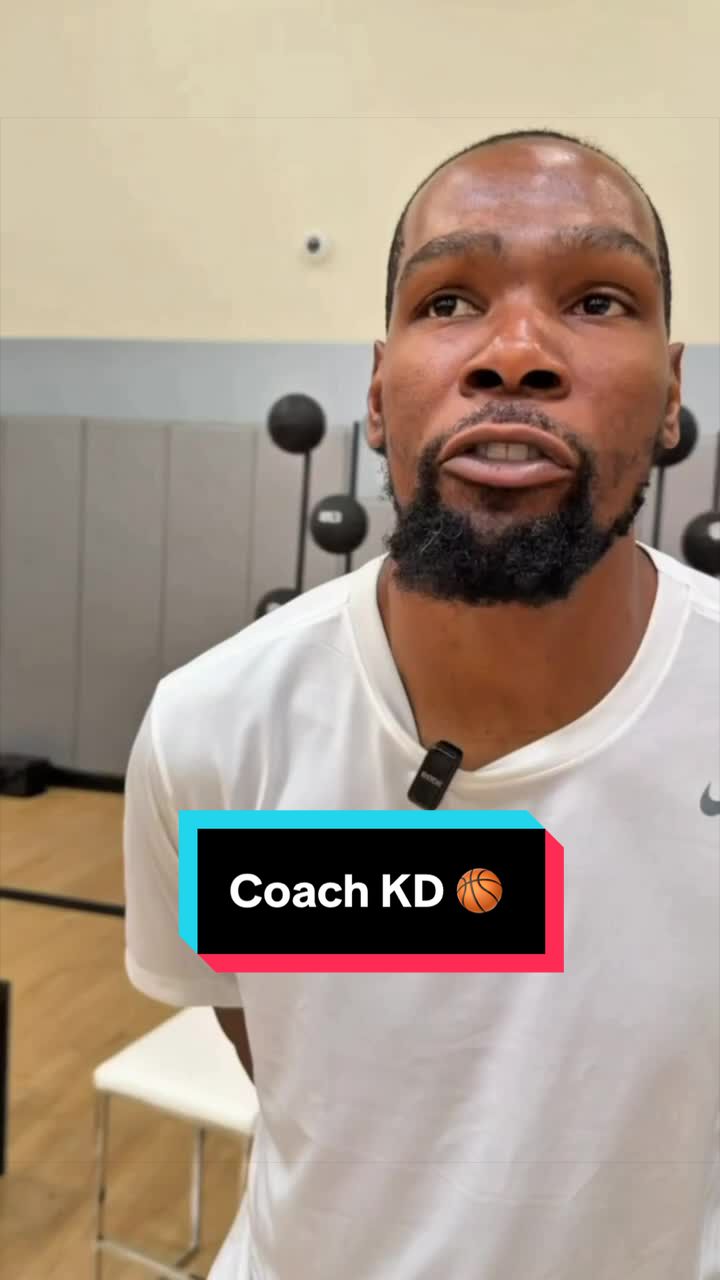
Imagine getting coached by USA Basketball All-Time Leading Scorer and 4 time gold medalist Kevin Durant? 🤯🤩


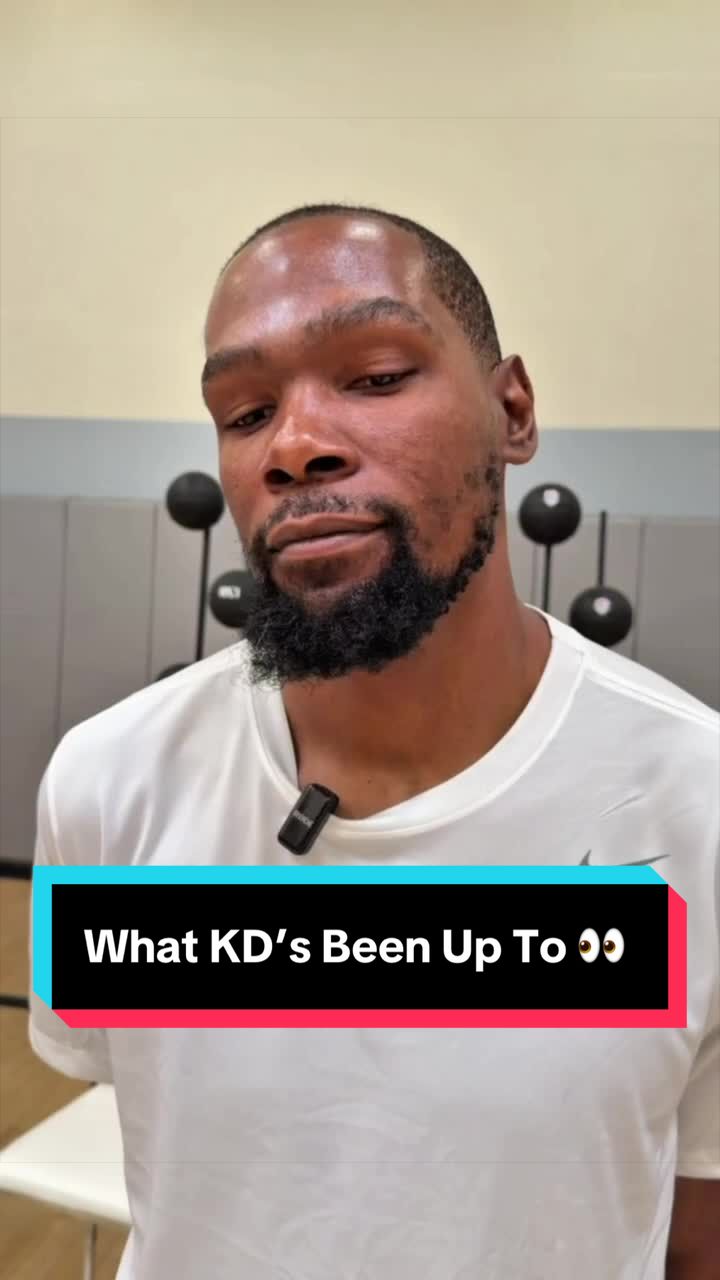
Checking in with KD 🎙️ on how his off season is going 👀
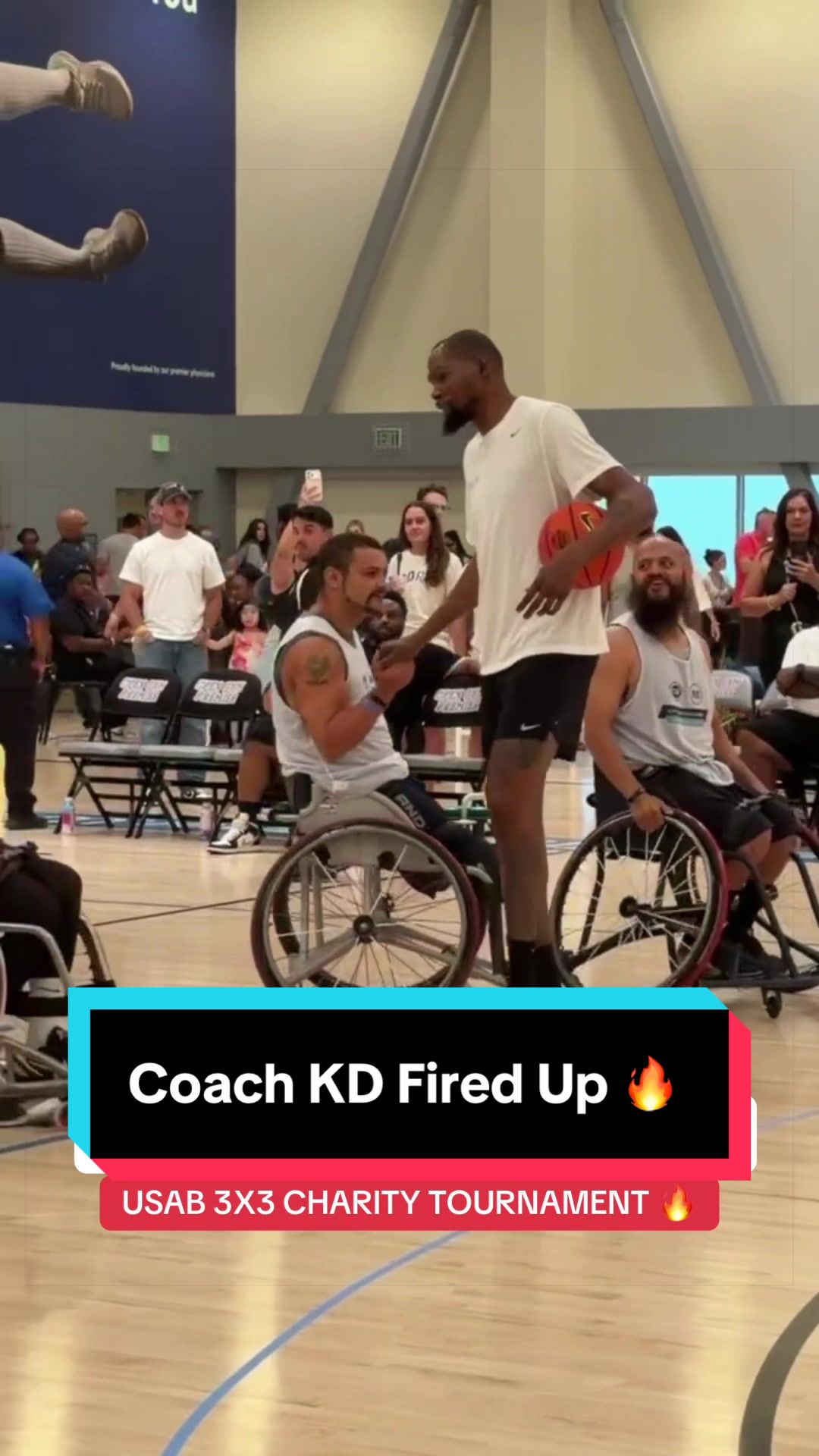
Coach KD celebrating and spreading the love of basketball 🏀
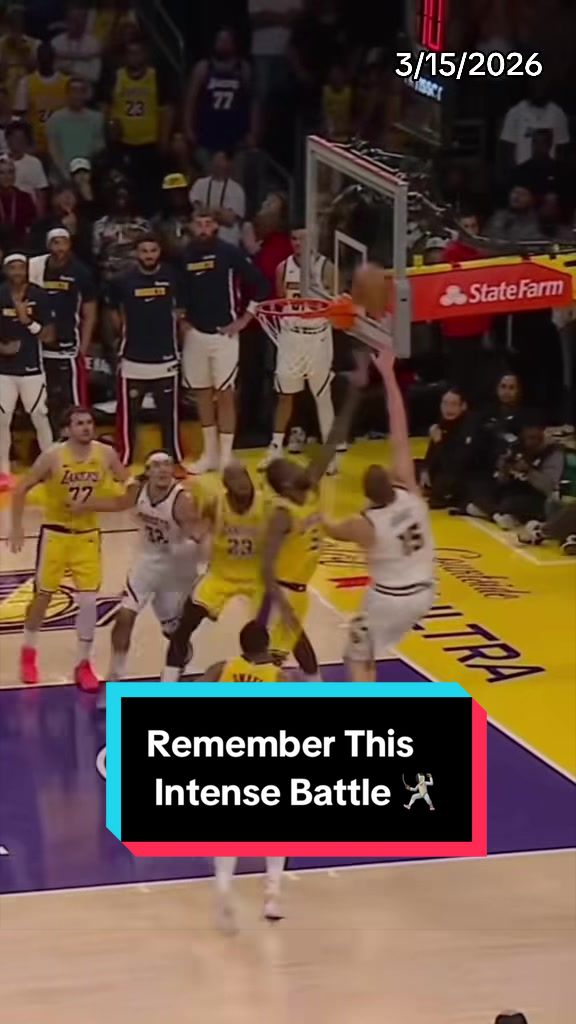
Everybody was on the edge of their seats when this game happened! 💺
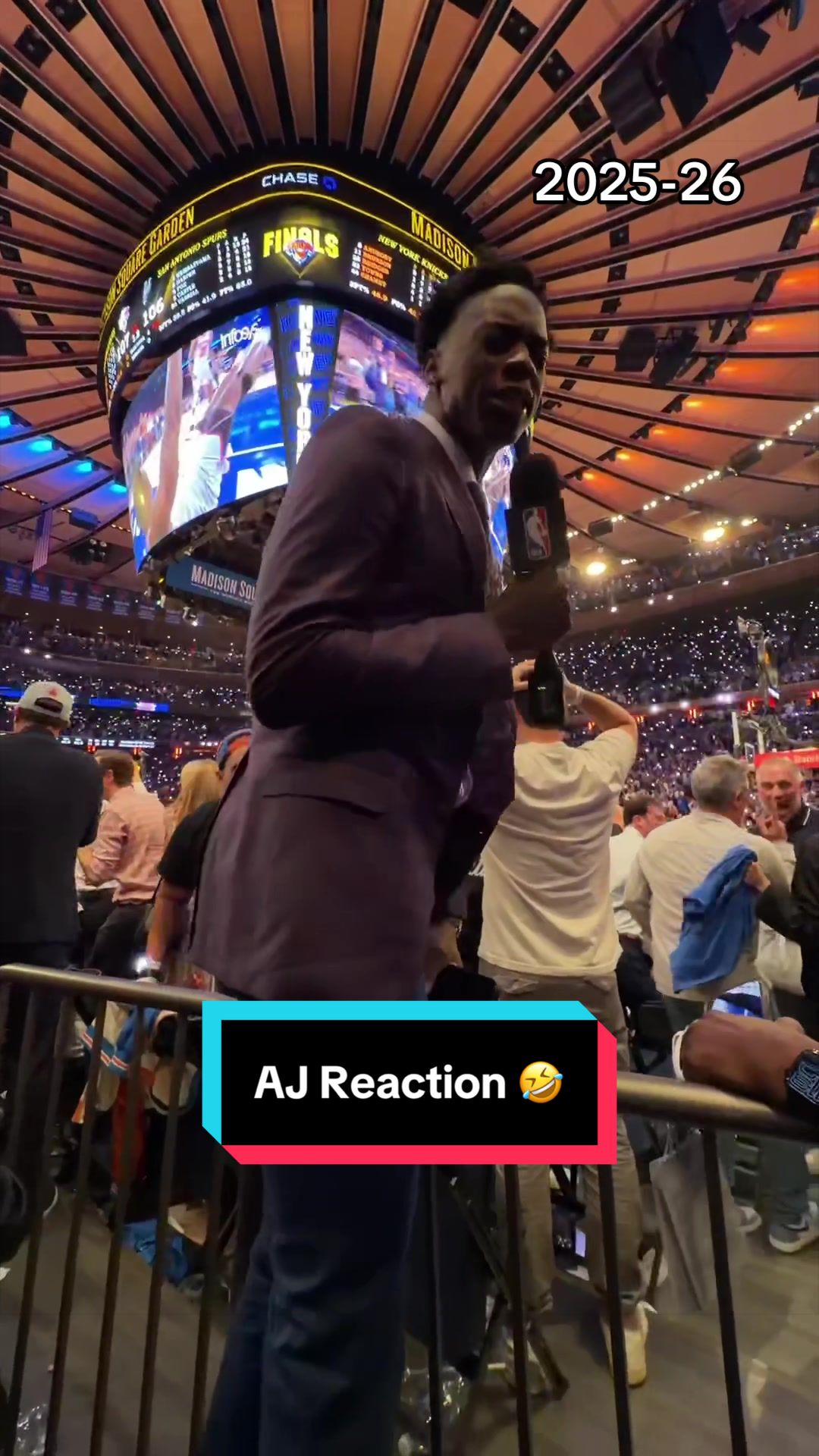
AJ was speechless 😭
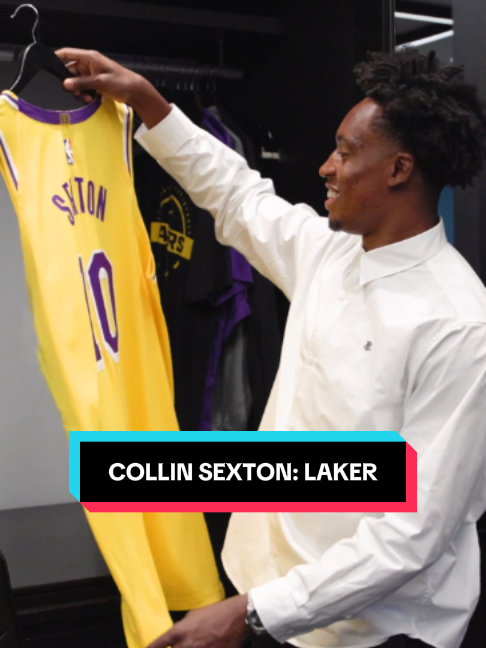
Collin's ready to bring the energy ⚡️
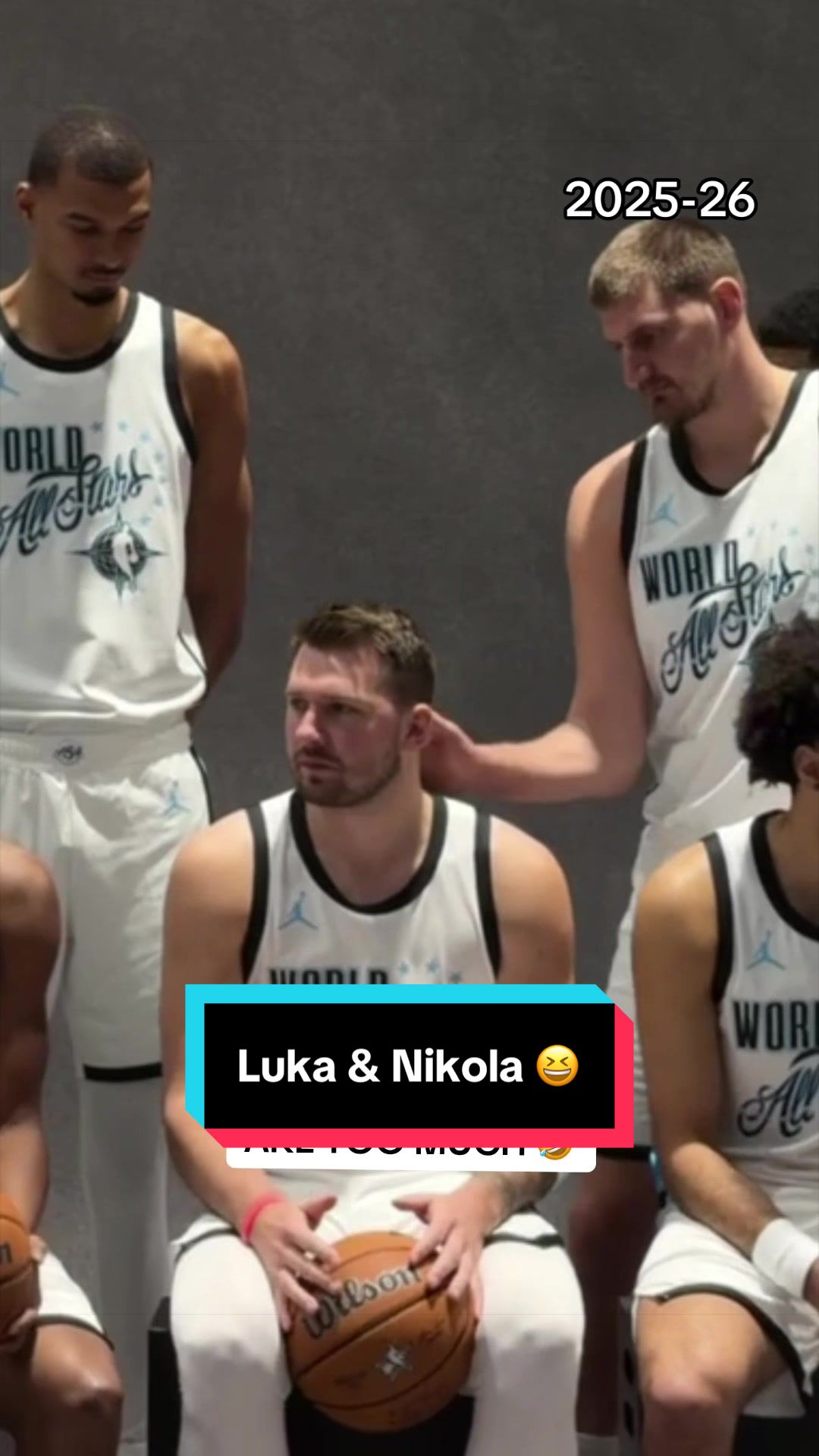
Tomfoolery content of Luka and Nikola at NBA All-Star 😂
 Links
Links
 Contact
 App
App


