



World Cup 2026: The Ball Rolls in the Dreams of Migrant Children in Mexico



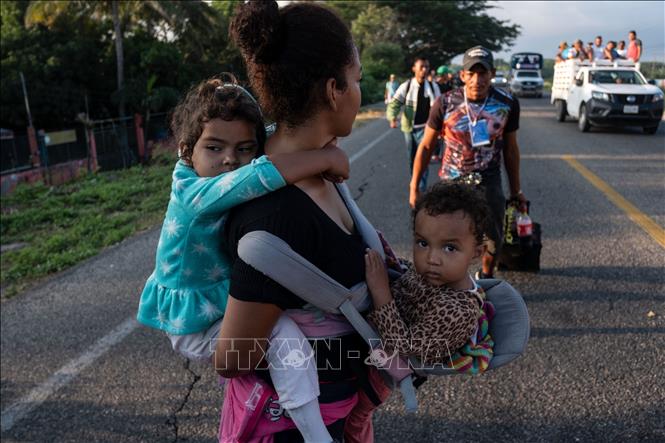
According to VNA reporters in Mexico, as the planet's biggest football festival – FIFA World Cup 2026 – approaches, in another corner of the city, hundreds of migrant and refugee children are also entering their own "World Cup." There are no brightly lit stands, no prestigious golden trophy, only simple jerseys, worn-out shoes, and eyes that light up whenever the ball touches their feet.
The tournament named "Goals for Inclusion" – loosely understood as goals for integration – does not emphasize the score. On makeshift "fields," sometimes just dusty open ground, the children chase the ball as if chasing something greater: the feeling of being themselves, of laughing and playing, of forgetting the long, uncertain journey behind them.
Here, borders between Honduras, Venezuela, or Guatemala disappear. Only calls for passes, clumsy hugs after each goal, and smiles that need no translation remain. The ball, in its own unique way, has become a common language – simple yet powerful.
But behind those innocent plays are stories not easily told. Many left their homeland before fully understanding the world – fleeing violence, poverty, or upheavals created by adults. The migration journey does not end when they reach Mexico; it continues in days of waiting, in a future still unclear.
Temporary shelters, meant to be brief stops, become places where they grow up day by day. Rare play spaces, fragmented childhood memories, and unanswered questions. In that context, each football practice, each small match, suddenly becomes a different sky, where they can breathe, live as their age should.
This program is implemented with support from the UN High Commissioner for Refugees (UNHCR), the International Organization for Migration (IOM), and local authorities, but what keeps the children engaged isn't the big names. It's the feeling of belonging, even for just a few dozen minutes on the field.
When a boy successfully juggles the ball, his eyes shine as if touching something very distant. When a goal is scored, the whole team rushes together, as if conquering something bigger than the match. Here, victory isn't measured by the score, but by fears left behind, by loneliness gradually yielding to trust.
While modern stadiums across Mexico rush to completion to welcome millions of fans, in overlooked corners, simple "finals" are also nearing. No fireworks, no live broadcast, but for these children, each roll of the ball ignites hope. Because sometimes, the World Cup isn't just where national teams compete; it's also where, somewhere beyond the dazzling lights, small balls quietly roll, carrying dreams of a world without borders, and childhoods not left behind.


Wonderfulshortvideo
Kvaratskhelia and Ronaldo 🫶


🇪🇸 Spain 🆚 Argentina 🇦🇷
Arsenal goal today arsenal 2-1 chelsea arteta interview arteta press conference
When Diogo Costa saved EVERY penalty he faced in the shoot-out 🤯🤯🤯
The movement is electric ⚡️
Mbappe injury mbappe surgery real madrid 0-1 getafe mbappe return date mbappe edit
ronaldo almeria ronaldo buying new club ronaldo owner ronaldo manchester united owner
 Links
Links
 Contact
Address:UNIT 1804 SOUTH BANK TOWER, 55 UPPER GROUND,LONDON ENGLAND SE1 9E
Number:+85259695367
E-mali:[email protected]
 App
App


