



A Vietnamese football team transfers its 'registration' from Hanoi to Can Tho



Hoai Duc Club was transferred and renamed to Mekong Can Tho, officially competing in the Second Division 2026 with a new venue in the Western region.
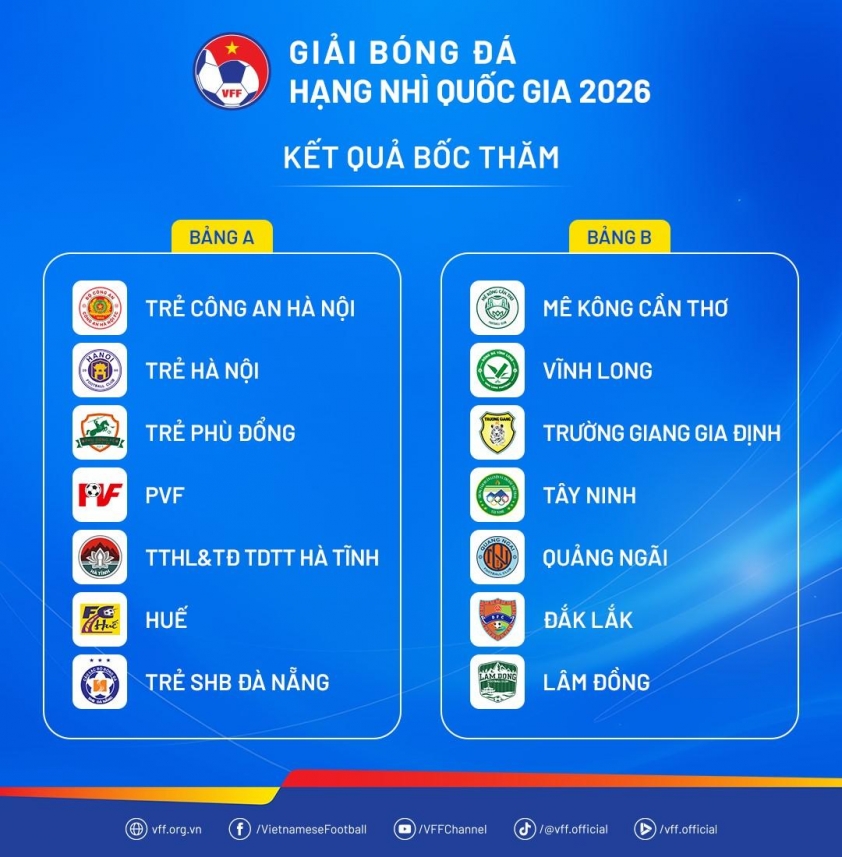
The Second Division 2026 officially kicked off with a draw ceremony in March 2026 in Hanoi, featuring 14 teams competing for 3 promotion spots to the First Division 2026-2027. Besides professional factors, this season attracts special attention from fans due to changes in team composition and playing locations.
Among the participating teams, one name that draws significant attention is Hoai Duc Club, as this team has been transferred and renamed to Mekong Can Tho. The team will compete in Group B, marking its "registration transfer" from Hanoi to the Western region. This is not just a story of renaming, but also sparks many debates about the sustainability of the current football development model.
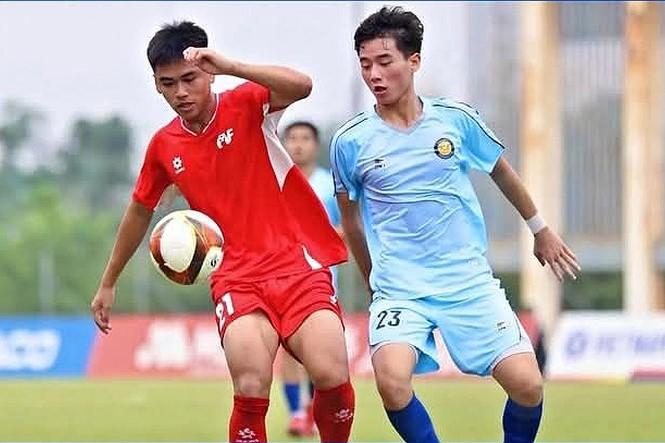
Hoai Duc Club was originally established in October 2024, quickly participated in the Third Division that same year and earned promotion. However, in the Second Division 2025 season, the team disappointed by finishing bottom of Group A with only 1 win and 9 losses, failing to meet its initial goal of further promotion.
Despite poor performance, Hoai Duc Club did not have to be relegated. The reason came from Phu Tho team in the same group being downgraded by FIFA and VFF due to match-fixing involvement. This inadvertently helped Hoai Duc retain its spot, before entering a crucial transfer phase early in 2026.
Information about the team moving to Can Tho actually emerged early in the year and quickly spread across football forums. Many Western region fans expressed excitement about Can Tho stadium having the chance to "light up" again, but there were also many dissatisfied opinions about this approach.
In reality, this is not the first time Vietnamese football has witnessed teams "changing registration." Most recently is the case of Gia Dinh Club moving from Ho Chi Minh City to Phu Tho and being renamed to Xuan Thien Phu Tho in the First Division 2025-2026. Previously, this team also transferred its Second Division playing slot to Bac Ninh Club.
The wave of transfers and buying/selling playing slots has occurred in many localities like Hanoi, Nghe An, Quang Nam, and Ho Chi Minh City. However, many teams later dissolved, showing instability in development strategies. This continues to be a major challenge as Vietnamese football aims for a more sustainable foundation in the future.


Wonderfulshortvideo
Kvaratskhelia and Ronaldo 🫶


🇪🇸 Spain 🆚 Argentina 🇦🇷
Arsenal goal today arsenal 2-1 chelsea arteta interview arteta press conference
When Diogo Costa saved EVERY penalty he faced in the shoot-out 🤯🤯🤯
The movement is electric ⚡️
Mbappe injury mbappe surgery real madrid 0-1 getafe mbappe return date mbappe edit
ronaldo almeria ronaldo buying new club ronaldo owner ronaldo manchester united owner
 Links
Links
 Contact
Address:UNIT 1804 SOUTH BANK TOWER, 55 UPPER GROUND,LONDON ENGLAND SE1 9E
Number:+85259695367
E-mali:[email protected]
 App
App


