



Mikel Arteta: The double-edged sword named "power" at Arsenal



Most of the power and decision-making authority regarding football matters at Arsenal rests on Mikel Arteta's shoulders. And this is a double-edged sword for Arsenal as well as for this manager.
Before Arsenal's match against Brentford in February, Mikel Arteta ordered the separation of U21 players and coaching staff from the first team's training session to eliminate any possibility of tactical leaks.
Arteta's power at Arsenal
This level of vigilance is not uncommon among Premier League managers, while Arsenal is closing in on their first title in 22 years. Much has changed since Arteta arrived in December 2019. Those who appointed him at that time, and the system that evolved in the following years, have largely disappeared. Except for Josh Kroenke, the son of owner Stan, and Stan himself, no one holds more power at Arsenal than Arteta.
In the Premier League, Arsenal leads by 9 points and is brimming with championship potential. Additionally, they also have opportunities to win the FA Cup and the Champions League. However, the "Gunners" recently lost to Man City in the FA Cup final. On the pitch, Arsenal is still enjoying a promising season, but off the field, the club faces challenges in the near future. Arteta's contract expires at the end of the next season, and his decision regarding his next move will shape Arsenal for years to come. But there are other issues as well. At Colney, staff refer to Arteta as a "unicorn" manager because Arteta oversees everything, at least in football matters.
When he joined Arsenal, the club was still under the direction of Raul Sanllehi and Vinai Venkatesham, who held the positions of head of football and chief executive. Later, this system was replaced by Tim Lewis, executive vice-chairman. Arsenal also has sporting director Edu Gaspar, who along with Tim Lewis placed their trust in Arteta.
In 2020, Arteta's title was changed from head coach to manager, granting him broader authority. In December of that year, Arteta and Lewis flew to Denver, Colorado, to present Arteta's future vision to Stan Kroenke. Kroenke agreed to support them, and the rebuilding process began in the summer transfer window of 2021.
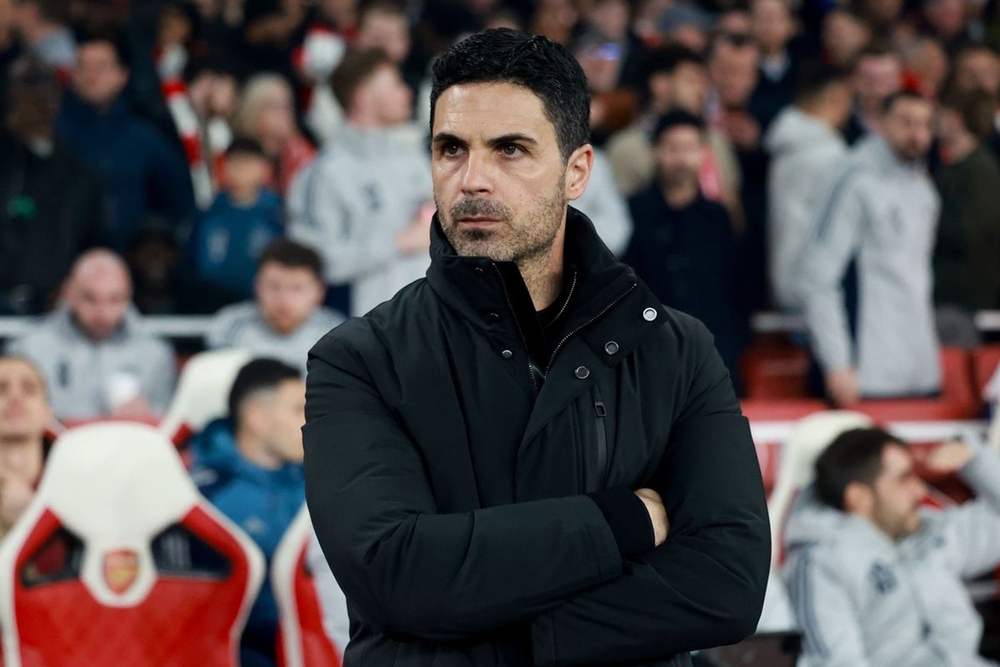
As Mikel Arteta's power increases, so does his responsibility
In 2022, Arteta agreed to a new contract just weeks before finishing the season in 5th place in the Premier League. At that time, Arteta's power was very different from what it is today. If Arteta wins the Premier League after three runner-up finishes and possibly the Champions League, he will be in a position to make unprecedented decisions. The key figures in September 2024, when his last contract was signed, have now all departed.
The double-edged sword for Arteta
The major question for Arsenal now is: Who manages Arteta? After 22 years under Arsene Wenger, this is a club that knows the feeling of being entirely dependent on one person. After Wenger's departure, Arsenal sought to build an organization where such individual power would not recur. Less than a decade later, they have nearly returned to the same state, with most of the power and decision-making authority resting on Arteta's shoulders.
Power is a sensitive issue at every football club, shaped over years by the strongest individuals and the internal politics among them.
Did Arteta seek this control, or did it naturally form around him? For Arteta, increased power also means he faces greater burdens.
On the touchline, Arteta appears as tense as any managerial colleague. There is reason to wonder how long this can last. Jurgen Klopp exhausted his energy after 9 years at Liverpool. Arteta is now entering his 7th year at Arsenal.
According to Arsenal's latest financial report, the Kroenke family has invested £336 million since taking full control in 2018, but Arsenal also reports annual losses. This is both unsustainable and not in Kroenke's interest. As costs rise, Premier League broadcast revenue plateaus, and player salaries soar, Arsenal must find other ways to generate revenue. If Arteta signs a new contract, Arsenal could face demands. The question is how Arsenal will meet those salary demands, and what happens if they cannot?
Arsenal will need to balance Arteta's ambitions with their own financial capabilities, guided by the Kroenke family, as well as with how they can grow future revenue. But who will be the key figure to tell Arteta what is possible and what is not? Within the hierarchy, that can only be Josh Kroenke, co-owner of Arsenal. He cannot fulfill all of Arteta's wishes, yet also does not want to lose this manager.
If Arsenal wins the Premier League this season, it will be a success for Arteta and the entire club setup. But immediately afterward, they will face a series of new challenges to sustain that success.
In Arteta's first season at Arsenal (2019/20), the team's average age was 26 years 134 days, with 29 players used and 104 lineup changes; Arsenal finished 8th. The 2020/21 season was similar, but lineup changes increased to 124. In 2021/22, the average age dropped to 24 years 308 days, the number of players used was 27, and lineup changes decreased to 27, helping Arsenal rise to 5th place. In the three subsequent seasons (2022/23 – 2024/25), Arsenal's average age fluctuated around 25–26 years, the number of players used decreased to 25–26, with more stable lineup changes, leading the club to consistently finish 2nd in the Premier League. In the 2025/26 season, the lineup continues to be stable with 24 players and an average age of 26 years 189 days, and Arsenal is leading the Premier League.


Wonderfulshortvideo
🇪🇸 Spain 🆚 Argentina 🇦🇷


Arsenal goal today arsenal 2-1 chelsea arteta interview arteta press conference
When Diogo Costa saved EVERY penalty he faced in the shoot-out 🤯🤯🤯
The movement is electric ⚡️
Mbappe injury mbappe surgery real madrid 0-1 getafe mbappe return date mbappe edit
ronaldo almeria ronaldo buying new club ronaldo owner ronaldo manchester united owner
de bruyne edit de bruyne passing kdb edit kdb passing highlights rodrygo kevin de bruyne neymar kevin de bruyne
 Links
Links
 Contact
Address:UNIT 1804 SOUTH BANK TOWER, 55 UPPER GROUND,LONDON ENGLAND SE1 9E
Number:+85259695367
E-mali:[email protected]
 App
App


