



England vs Uruguay (02:45, 28/3): Tuchel aims for maximum experimentation



In the final stage before the World Cup, Thomas Tuchel is implementing a series of notable adjustments to refine the core framework of the England team.
The decision to call up 35 players for the two friendly matches against Uruguay and Japan at Wembley not only signifies experimentation but also demonstrates the systematic and long-term approach of the German coach.
Why did Tuchel call up 35 players?
Expanding the squad to 35 players is an unprecedented move in recent England team history. However, given the limited preparation time remaining, this is considered a reasonable solution for Tuchel to comprehensively evaluate the available resources. Instead of quickly establishing a fixed starting lineup, he proactively creates a competitive environment where every position must be validated through practical performance.
The upcoming two friendlies are designed as two distinct tests. Uruguay represents the physically robust and combative South American style, while Japan offers disciplined, fast-paced, and tightly organized play. Through these matches, the coaching staff can observe the tactical adaptability of each individual in contrasting scenarios.
In the attacking midfield, the competition for the "number 10" position behind Harry Kane is a notable focal point. Jude Bellingham was previously considered the default choice, but the emergence of Morgan Rogers has created significant pressure. Additionally, Cole Palmer and Phil Foden remain viable options capable of producing breakthroughs. Tuchel's personnel arrangements indicate that he prioritizes role suitability over individual reputation, focusing on specific functions within his system.
For the central striker role, the inclusion of Dominic Calvert-Lin carries considerable meaning. After a long period interrupted by injury, this forward shows signs of recovery and is given an opportunity to return. However, his selection also reflects a reality: the gap in quality between backup options and Harry Kane remains substantial. With Ollie Watkins absent and Dominic Solanke lacking consistency, Tuchel is compelled to broaden his choices to find the appropriate solution.
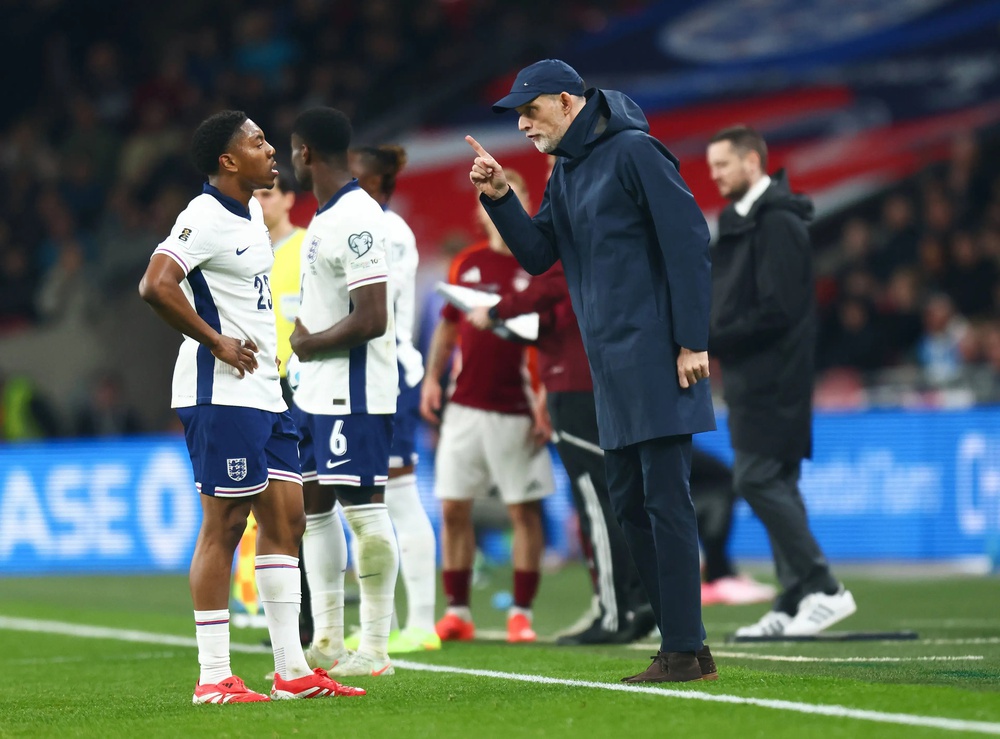
Thomas Tuchel has called up 35 players with the goal of maximum experimentation
Competition extends beyond the attack to multiple positions. New names like James Garner are given opportunities to prove themselves, while players who have been absent or had reduced roles also get chances to return. This creates clear competitive motivation and helps prevent complacency within the squad.
Establishing tactics and the core framework
Beyond personnel factors, this training camp is also an opportunity for Tuchel to test tactical approaches. His philosophy relies on high-intensity movement, continuous pressing, and tight organizational structure. These demands require players not only to possess skill but also to meet high standards of physical fitness and tactical understanding.
In this context, the return of Harry Maguire attracts attention. This defender has improved his form at his club, but still needs to demonstrate his adaptability to a high defensive line system. His weaknesses in speed and agility have previously caused difficulties in similar setups, so the upcoming two friendlies will be an important test.
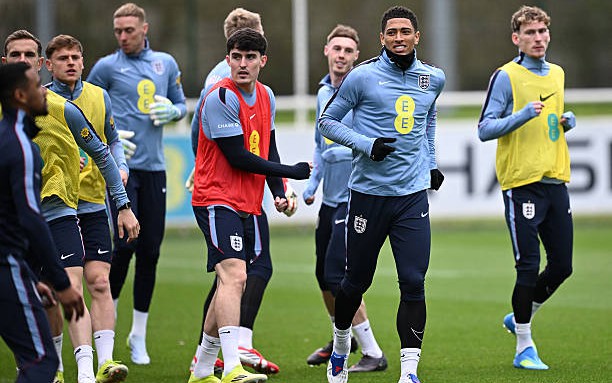
The case of Ben White is also noteworthy. After a long absence due to various reasons, the Arsenal defender is recalled thanks to his versatility, being able to play both as a center-back and a right-back.
In the midfield, Tuchel will allocate playing time to evaluate different options. Key figures like Declan Rice and Bukayo Saka will be used judiciously, allowing younger or less experienced players opportunities to showcase themselves. This is a balanced approach, ensuring the condition of core players while expanding selection possibilities.
One notable point is the form of Phil Foden. After a standout previous season, Foden is currently experiencing a difficult phase. His continued inclusion indicates Tuchel's high regard for Foden's potential, but also sets a clear requirement for short-term improvement.
Conversely, Trent Alexander-Arnold's omission is a signal that Tuchel's selection criteria are very specific. Despite possessing outstanding attacking and passing abilities, this defender has not fully met the defensive requirements within Tuchel's system. This decision reflects Tuchel's longstanding viewpoint: prioritizing tactical fit over isolated individual capability.
Thomas Tuchel's approach demonstrates a priority for organizational structure and overall efficiency. Instead of building a team centered around a few standout individuals, he aims to create a stable operating system where each position has corresponding alternative options.


Wonderfulshortvideo
🇪🇸 Spain 🆚 Argentina 🇦🇷


Arsenal goal today arsenal 2-1 chelsea arteta interview arteta press conference
When Diogo Costa saved EVERY penalty he faced in the shoot-out 🤯🤯🤯
The movement is electric ⚡️
Mbappe injury mbappe surgery real madrid 0-1 getafe mbappe return date mbappe edit
ronaldo almeria ronaldo buying new club ronaldo owner ronaldo manchester united owner
de bruyne edit de bruyne passing kdb edit kdb passing highlights rodrygo kevin de bruyne neymar kevin de bruyne
 Links
Links
 Contact
Address:UNIT 1804 SOUTH BANK TOWER, 55 UPPER GROUND,LONDON ENGLAND SE1 9E
Number:+85259695367
E-mali:[email protected]
 App
App


