



Xi'an Training Drill, U23 National Football Team Gains Experience



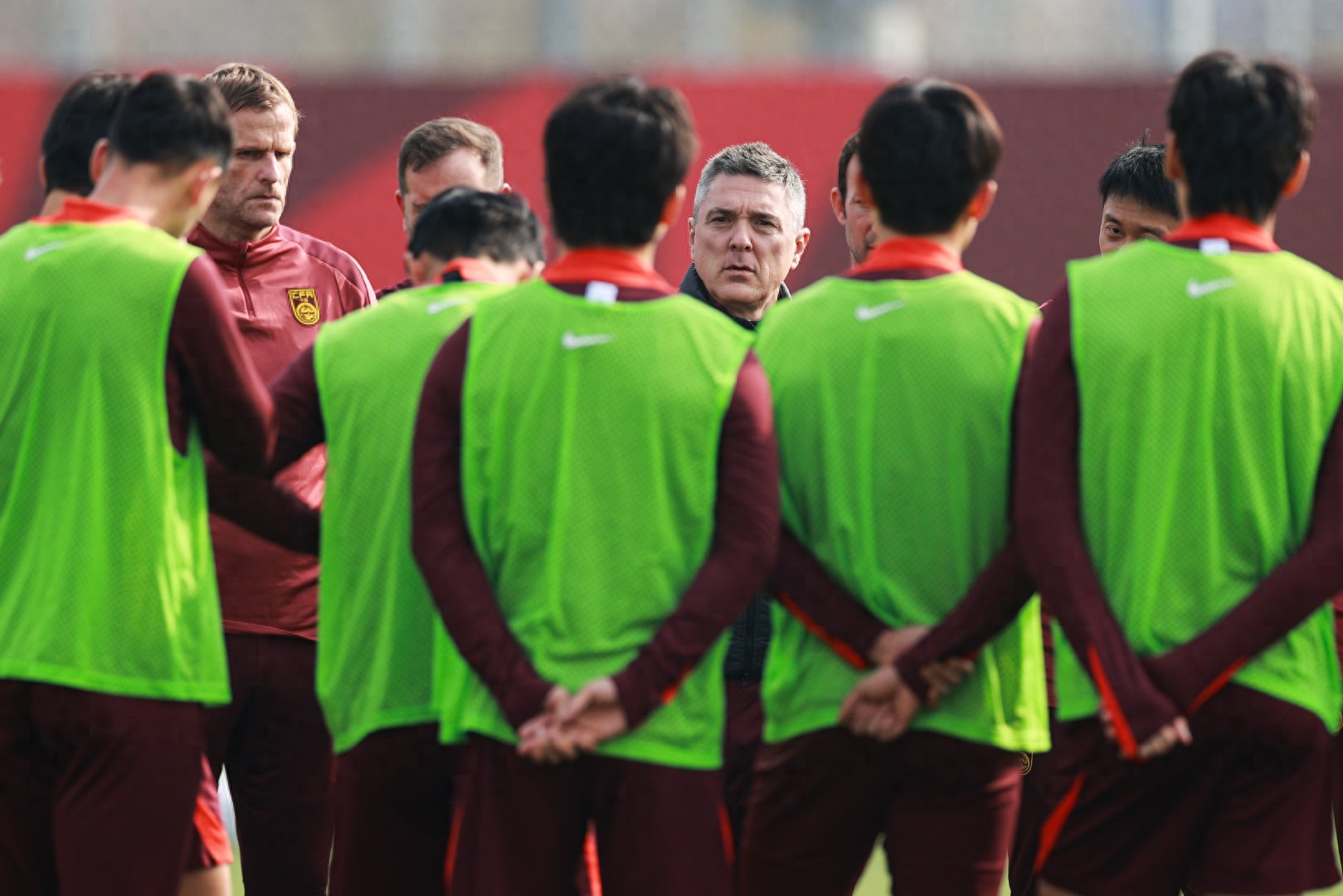
Journalist Lu Mi reports from Xi'an At the Xi'an International Football Center, during the U23 International Youth Football Invitational Tournament, China's U23 men's football team successively drew with Thailand U23 and North Korea U23. In both matches, they tenaciously equalized after falling behind, completing practical tests against opponents of different styles and providing important reference for coach Antonio in assembling the Asian Games squad.
With ten key players from the U23 Asian Cup squad called up and the team significantly younger, they tested their ability to handle different tactical styles and comprehensively assessed new U21 players. After two rounds, the U23 men's team stands second in the standings with two draws and will face bottom-placed Vietnam U23 on the 31st, still having a chance to compete for the championship.

In this invitational tournament, the U23 national team encountered Thailand and North Korea, two distinct styles: the former being a technical, fast, and agile approach, and the latter a strong, high-pressure, aggressive style. From the responses and adjustments in both matches, the players performed reasonably well.
The first opponent, Thailand U23, featured delicate technique, quick passing combinations, and flexible positioning, focusing on ground penetration and flank attacks. In the first half, the U23 national team's new lineup exposed issues such as insufficient defensive coordination, hesitation in handling key plays, and relatively weak confrontation, with defensive gaps leading to a 0-2 deficit by halftime. Antonio made adjustments during the break. In the second half, the team increased pressing intensity and compressed the opponent's passing space, with offensive tempo also speeding up. Bao Shimeng assisted captain Xiang Yuwang to score one back, followed by Chen Zeshi delivering a precise long pass, and substitute Li Xinxiang volleying home a goal, allowing the U23 national team to dramatically equalize 2-2.
Against a technical opponent, the U23 national team transitioned from passive endurance to active balance, narrowing the gap through more determined movement and clearer passing, ultimately leveling the score.
The second-round opponent, North Korea U23, is known for high-intensity physical confrontation, rapid transition between attack and defense, and sustained forward pressing, employing a robust, direct, and impactful style with strong stamina. In the first half, North Korea took initiative through intense scrambling, with the U23 national team falling behind early and remaining largely passive for extended periods. In the second half, Antonio made tactical substitutions, bringing on players like Xiang Yuwang to enhance offensive intensity, while goalkeeper Yao Haoyang made multiple crucial saves to stabilize the defense. Finally, Li Xinxiang created a penalty, converted by Xiang Yuwang, once again drawing with the opponent.
In both matches, facing opponents that were respectively soft and hard, fast and strong, the U23 national team managed to equalize after passive and trailing situations, indicating that the players could withstand adversity and that Antonio's adjustments were effective.

This invitational tournament served as the most crucial practical assessment for Antonio before finalizing the roster for the Nagoya Asian Games. The core objective was not victory or defeat, but comprehensively evaluating U21 players, testing tactical execution and pressure resistance, with clear and logical selection criteria.
The 25-player training roster included 17 U21 players, following the principle of experienced players guiding newcomers and selecting through competition. In the first match against Thailand U23, only three U23 mainstays—Peng Xiao, He Yiran, and Xiang Yuwang—started among the 11, with nine U21 players getting playing opportunities overall. In the second match against North Korea U23, the coaching staff rotated six starters, continuing to give newcomers practical chances, with seven U21 players starting and eleven U21 players appearing, further expanding the assessment scope.
Antonio persisted with the mature 3-5-2 system used in the U23 Asian Cup, observing new players within a fixed tactical framework to ensure all were evaluated under uniform standards. After two matches, several U21 players initially entered the selection radar, with notably standout performances: Chen Zeshi demonstrated strong midfield organizational ability and penetrating key passes; Li Xinxiang scored immediately after substitution, showing excellent finishing ability and composure; Bao Shimeng adjusted from error to assist, highlighting pressure resistance; Zhang Yingkai and Mao Weijie significantly enhanced defensive solidity and midfield control after entering as substitutes.
Through two matches, the coaching staff identified issues such as insufficient confrontation and unfamiliar coordination, but also pinpointed a group of potential players capable of handling pressure and fighting courageously, completing a talent assessment for the Asian Games and laying groundwork for subsequent roster filtering.

In both consecutive matches, the U23 national team equalized after trailing. After the second match, media asked Antonio about the reasons. Antonio frankly attributed it to his long-term work in China, understanding the players' mental state and knowing how to adjust and guide under different circumstances.
In the first match, not giving up nor collapsing amid a 0-2 deficit and prolonged passive困境 stemmed from the coaching staff's precise control and psychological guidance. During halftime, Antonio did not criticize the players but encouraged them and pointed out issues targetedly, stabilizing morale with clear adjustment plans. He told the players to shed burdens and fight freely. Antonio深知 that young players容易紧张 and are easily affected by mistakes in international matches; only trust and guidance can激发 their fighting spirit.
From the players' perspective, whether it was Bao Shimeng quickly adjusting after a mistake to deliver an assist, Li Xinxiang creating关键 goals in consecutive matches, or Xiang Yuwang scoring to rescue the team in both games, all demonstrated the精神特质 of not collapsing under adversity and fighting courageously. This spirit reflects both the young players' sense of responsibility toward the team and the long-term guidance and psychological construction by the coaching staff. Antonio emphasized that even though the tournament is an invitational, each match should be treated as a formal international competition, requiring players to give their all and exert maximum effort—an attitude deeply ingrained in the team's playing style.
Although merely two draws, their value transcends胜负本身. For this new team aiming at the Asian Games, with one match remaining, the Xi'an Invitational undoubtedly served as a successful practical training drill. For the final match, the team will continue refining the lineup and optimizing details, carrying the confidence and experience gained from two draws to strive for victory—after all, there is still hope for the championship.


Wonderfulshortvideo
Arsenal goal today arsenal 2-1 chelsea arteta interview arteta press conference


The movement is electric ⚡️
Mbappe injury mbappe surgery real madrid 0-1 getafe mbappe return date mbappe edit
ronaldo almeria ronaldo buying new club ronaldo owner ronaldo manchester united owner
de bruyne edit de bruyne passing kdb edit kdb passing highlights rodrygo kevin de bruyne neymar kevin de bruyne
Never gives up 💪
tottenham relegation tottenham relegated
 Links
Links
 Contact
Address:UNIT 1804 SOUTH BANK TOWER, 55 UPPER GROUND,LONDON ENGLAND SE1 9E
Number:+85259695367
E-mali:[email protected]
 App
App


