



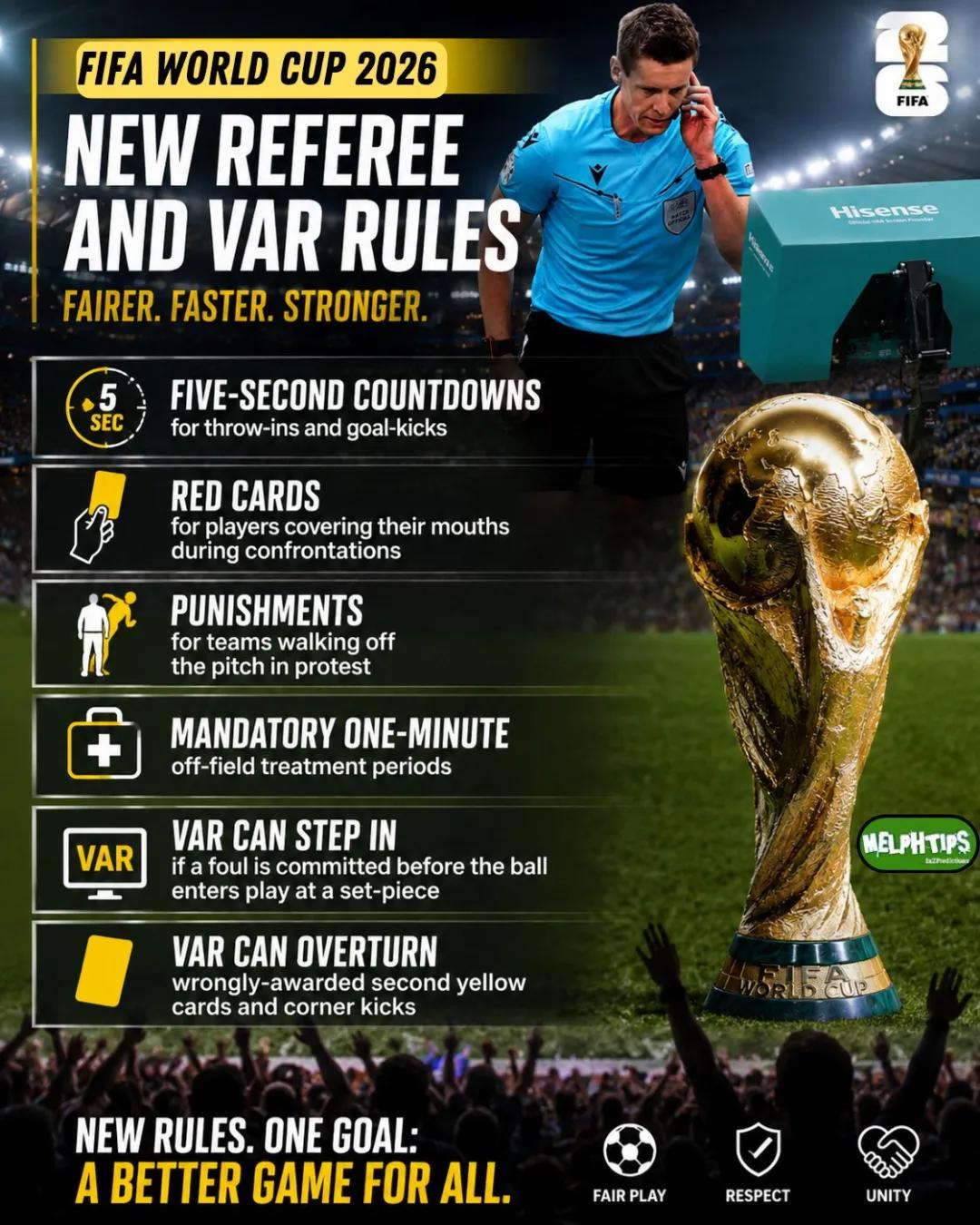
The World Cup fully adopts new regulations: three time limits, a "red card for covering the mouth," and a strict crackdown on "crowded subway" behavior.



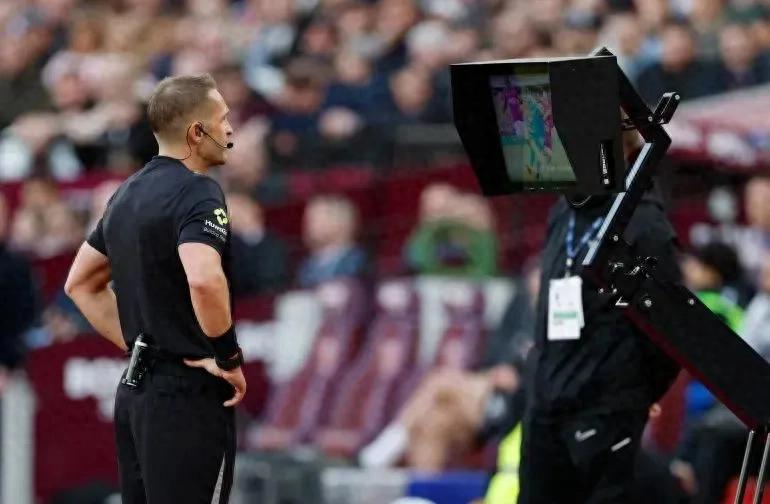
Written by Han Bing. The USA-Canada-Mexico World Cup will serve as a "testing ground" for several new football rules, including three time-limit rules to speed up the game and curb feigning injury, expanded VAR intervention for controversial calls, and red card rules targeting "trouble caused by words." These will all be implemented in this World Cup. Moreover, given North America's hot climate, the rule of three-minute hydration breaks in each half will continue to apply.
The most notable new rules being trialed in this World Cup are the three "time-limit rules": the "10-second substitution rule" requires a substitution to be completed within 10 seconds; otherwise, the incoming player must wait at least one minute before entering at the next stoppage, forcing the team to play with 10 players. The "5-second countdown rule" means that for throw-ins or goal kicks, the referee will signal and start a 5-second countdown. If the ball is not played within 5 seconds, the offending team loses possession: the opponent gets a throw-in for a throw-in violation, or a corner kick for a goal kick violation. The "1-minute injury treatment rule" states that if a player other than the goalkeeper receives treatment off the field, after being cleared to return, they must wait at least one minute before re-entering.
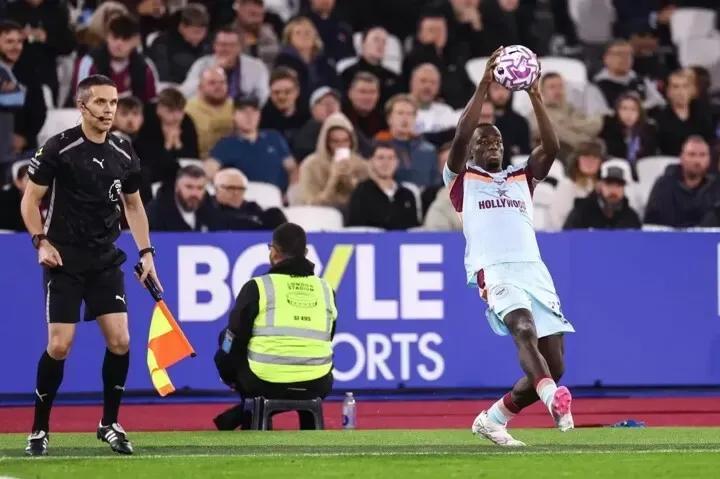
These three time-limit rules aim to quicken the pace of play and minimize opportunities for time-wasting. The "10-second substitution rule" has been widely tested in pre-World Cup friendlies, with some teams already penalized and conceding goals while a man down. In a friendly between Japan and Iceland on May 31, Iceland's 85th-minute substitution exceeded the time limit, leaving them with 10 players. Two minutes later, Japan took advantage of the numerical superiority to score and win. After the match, Iceland's coach criticized the new rule as harsh. However, the new regulations are obviously fair to all teams. Additionally, in a friendly between Singapore and Mongolia on May 31, Mongolia was penalized three times for substitution delays, conceding goals twice while short-handed. Mongolia's new coach, Rajini, described this as a basic mistake that should never have occurred.
Furthermore, the "1-minute injury treatment rule" will force a team with an injured player receiving treatment off the field to play with one fewer player for at least one minute. However, this rule has sparked controversy regarding player injuries. Many media outlets believe the Premier League's "30-second injury treatment rule" is more reasonable, as it largely reduces feigned injuries and time-wasting while having a smaller impact on teams with genuinely injured but not seriously hurt players.
The swift implementation of the three "time-limit rules" may cause teams accustomed to unlimited time to inadvertently violate them, putting them at a disadvantage by playing with fewer players and potentially affecting match outcomes.
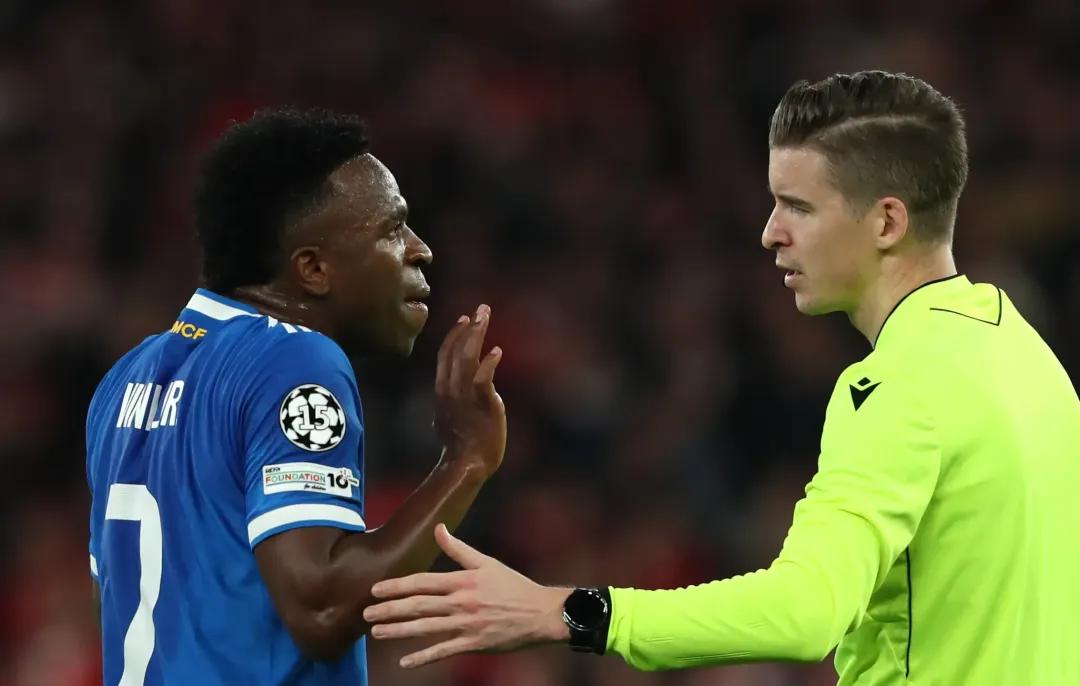
The "red card for covering the mouth" rule targets players who verbally attack opponents, particularly for racial slurs. Players who habitually cover their mouths while speaking may face consequences for "trouble arising from hand gestures." Of course, the strictness of this red card penalty may vary by referee, leading to further controversy. The rule can only penalize targeted mouth-covering behavior during conflicts between players, but similar mouth-covering at other times or in different areas of the field may not trigger a red card.
Additionally, the World Cup's new regulations will severely penalize walk-offs in protest of referee decisions. This follows the cautionary example of this year's Africa Cup of Nations final. FIFA has adopted a strict zero-tolerance policy. Any player who leaves the field in protest will be immediately shown a red card, and any team staff member who instructs players to walk off will also be shown a red card. If a team collectively walks off in protest, they will be declared to have lost the match immediately, unlike in most previous cases where there was room for communication between the referee and the departing team.
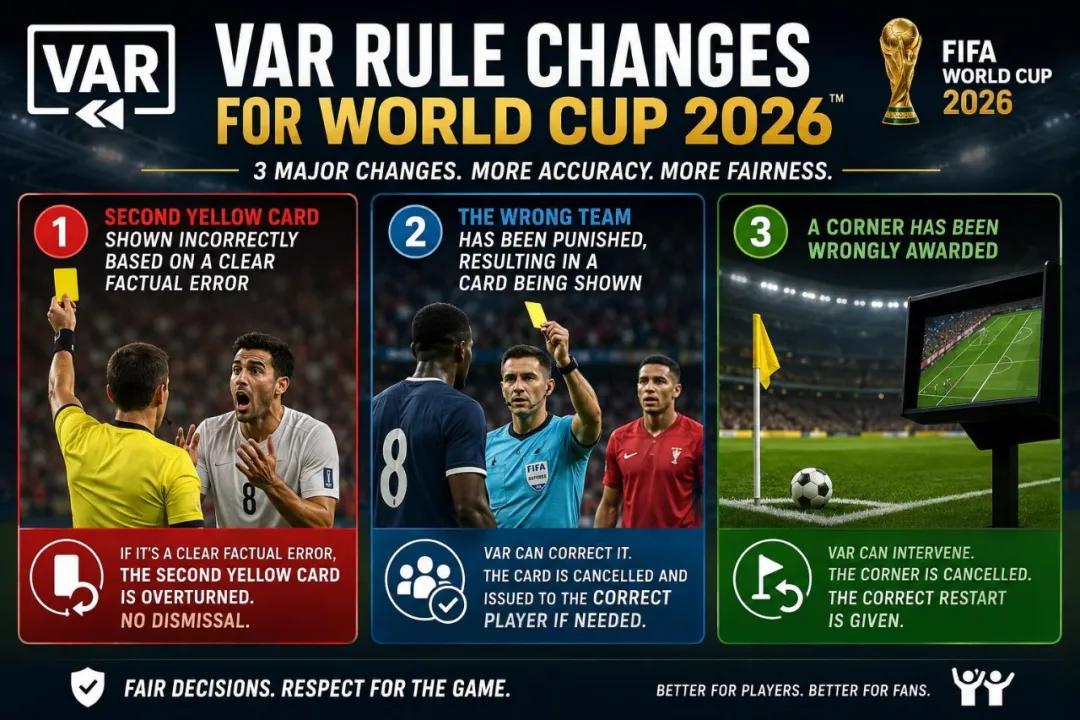
The expansion of VAR's scope will also reduce more subjective referee errors leading to incorrect decisions. At the World Cup, VAR can intervene in decisions for goals, penalties, corner kicks, or free kicks, including fouls during dead-ball situations, and clear errors that result in a player receiving a second yellow card and being sent off. The new rule emphasizes that VAR can intervene in clear fouls before a corner kick or free kick is taken that directly lead to a goal or penalty. This is considered an effective measure against the tactic of using multiple players to disrupt opponents in the penalty area, which has become common in the Premier League. Teams attempting to imitate Premier League-style crowding, pushing, and pulling during set pieces to interfere with opponents, especially the goalkeeper, will see such situations significantly reduced.
For the World Cup, these new rules at least help enhance match spectacle and fairness, but they also pose challenges for teams unfamiliar with them. The teams that adapt and become accustomed to the new rules more quickly will likely gain more benefits from them.


Wonderfulshortvideo
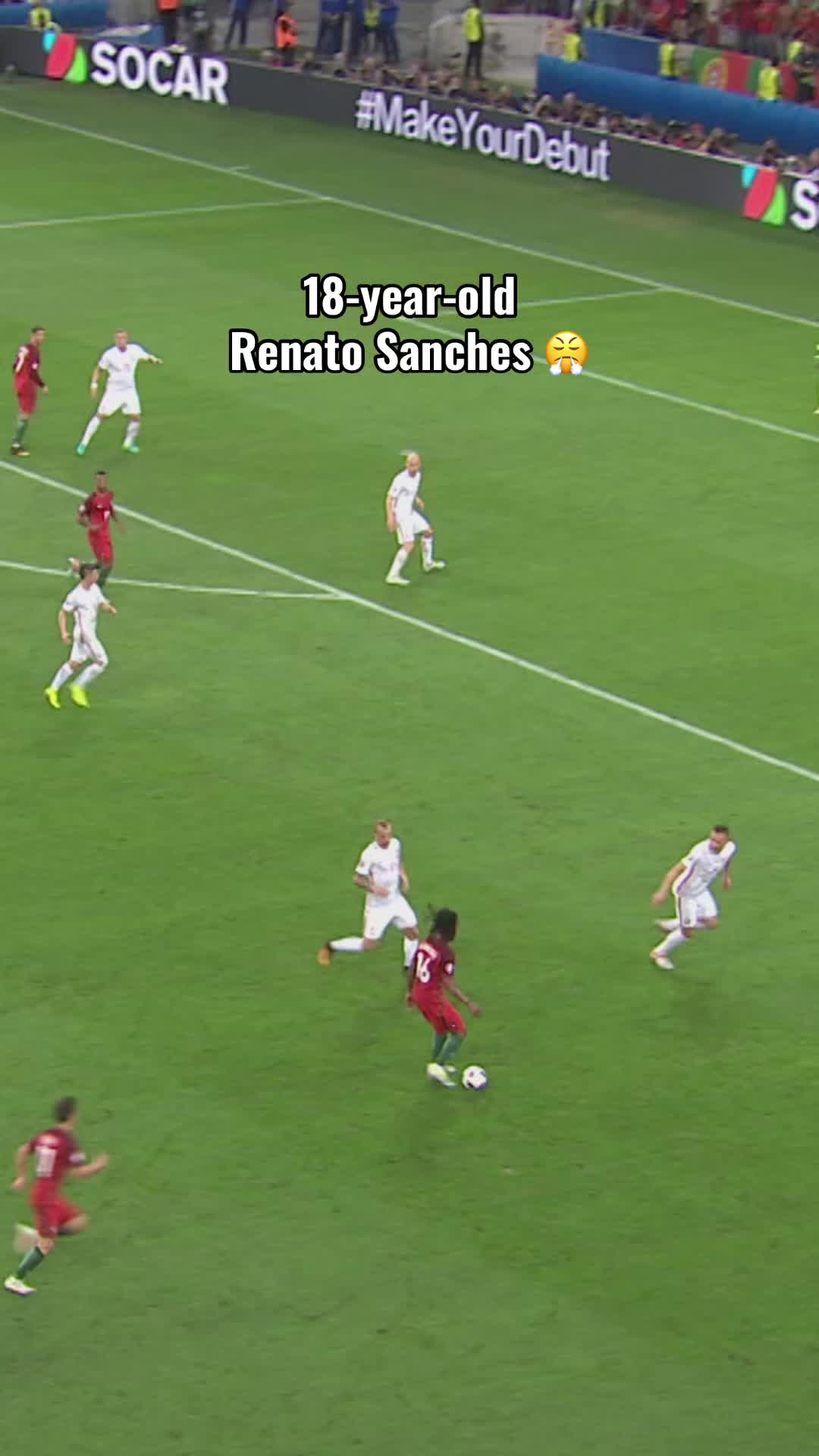
Unforgettable EURO moment 🙌


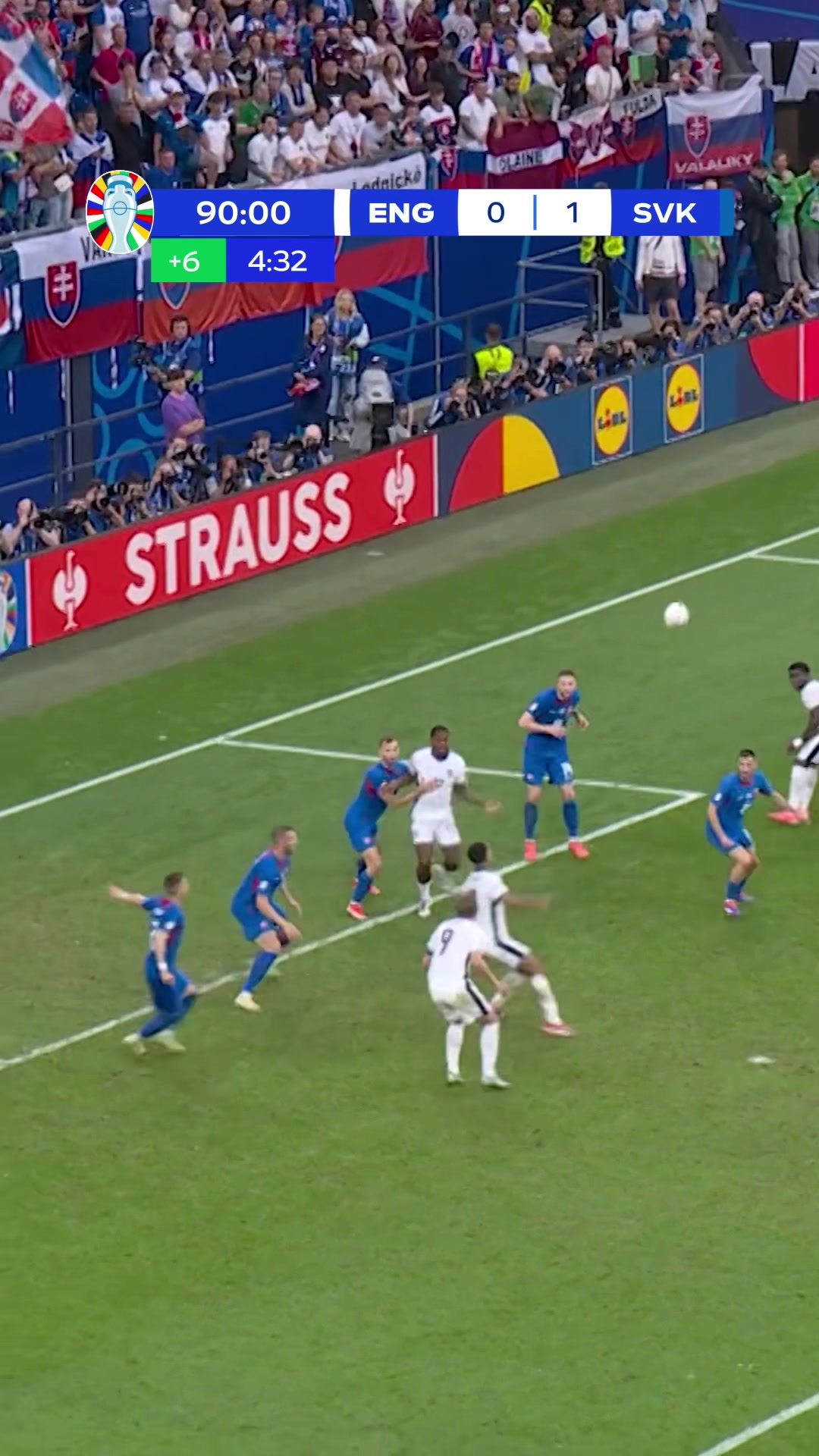
Jude Bellingham. Who else? 🌟

Cristiano and Mateo training

Cristiano's training
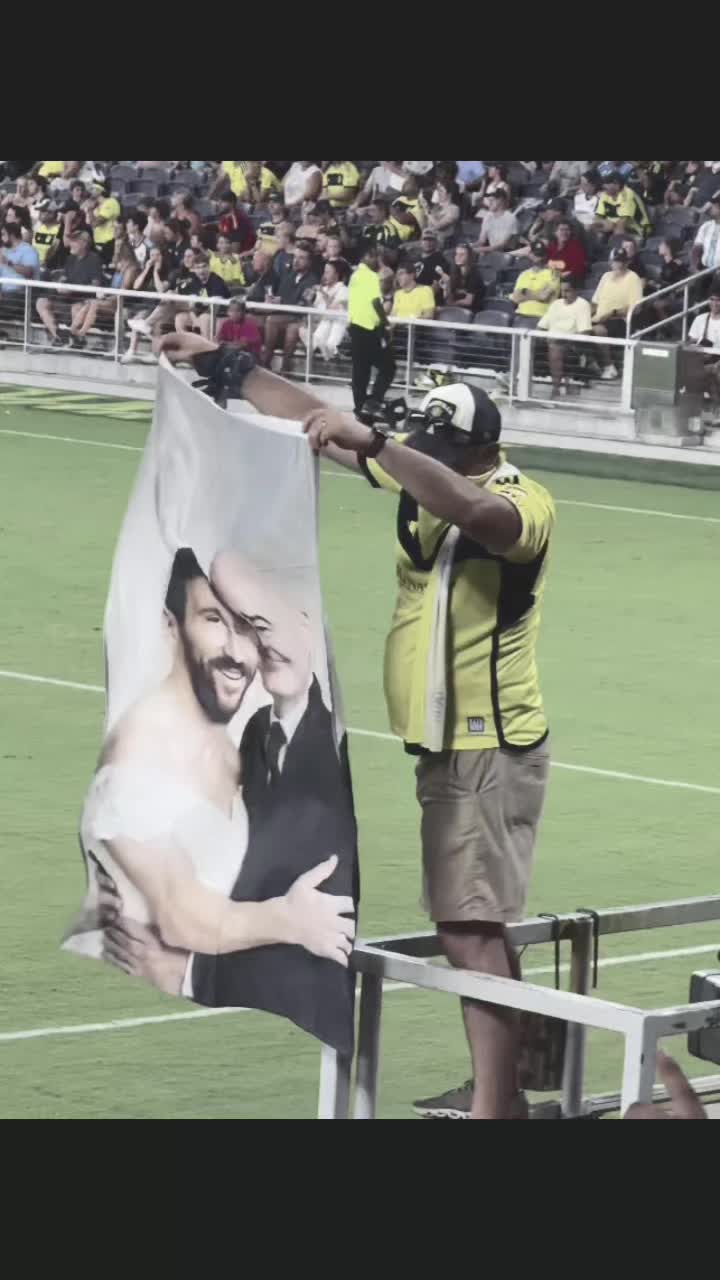
an unusual banner
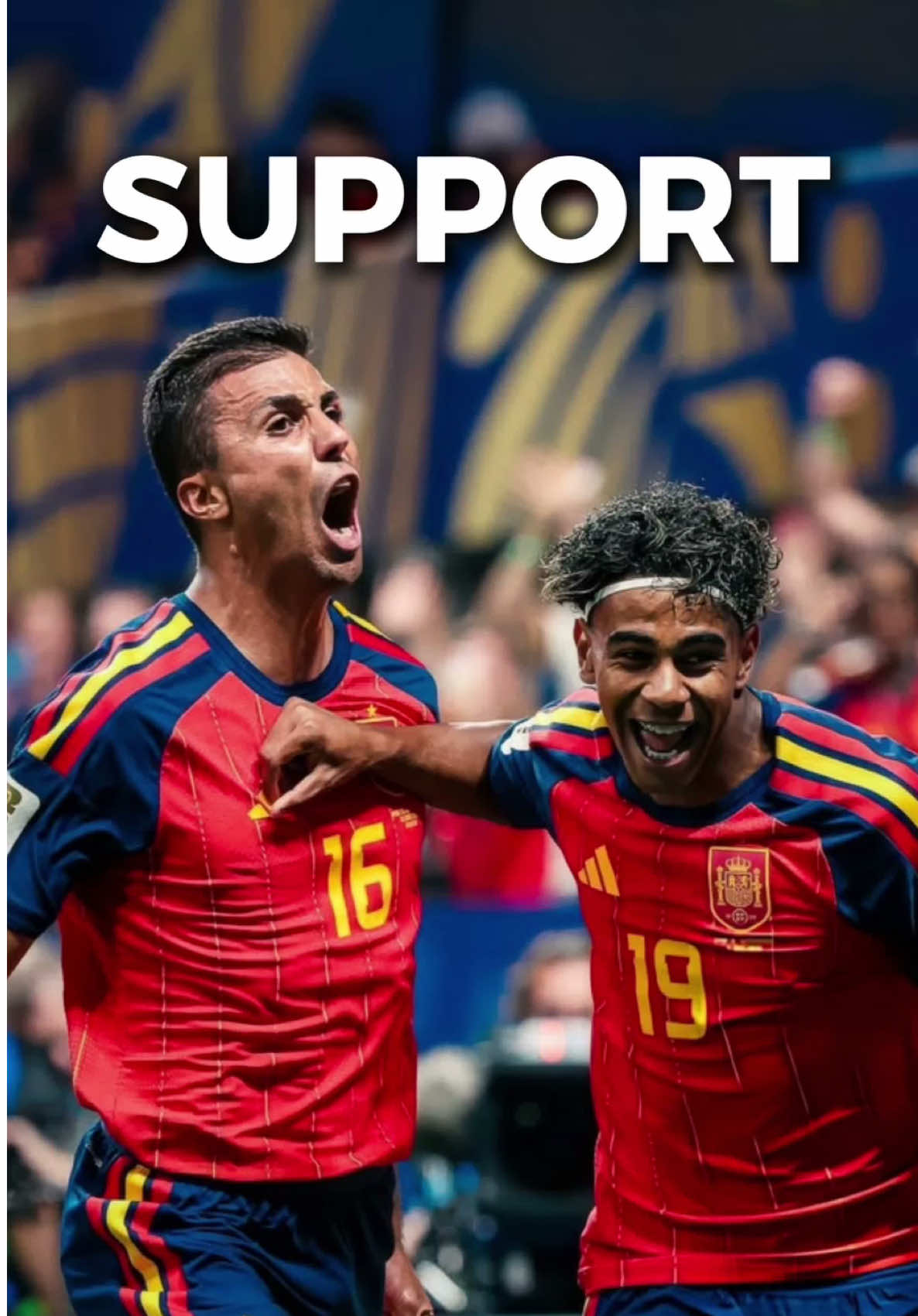
rodri barcelona news rodri barcelona reveal interview

here are the controversial FPL picks that will win you your mini league this season
 Links
Links
 Contact
 App
App


