



Top-tier IP generates top-tier buzz: Four directions showcase the future of the Chinese Super League



Reported by journalist Chen Yong The Chinese Super League is demonstrating a pattern of steady improvement. In the 2025 season, the league's attention level rose, with on-site spectators increasing by 32.54% compared to the 2024 season. In the 2026 season, the CSL remained extremely popular, with first-half attendance in 2026 climbing another 24.3% from the same period in 2025, an increase of roughly one quarter.
The popularity of the Chinese Super League has exceeded almost everyone's predictions. This indicates that the value of the CSL has actually been consistently underestimated: after years of development, its competition system has become more stable; by focusing on veteran fans while attracting new followers, its audience targeting is more precise; football self-media actually originated from the CSL, giving it more sustained traffic; and with both box office revenue and consumption stimulation being emphasized, its industrialization capabilities are stronger.

In the first half of the 2026 Chinese Super League season, 120 matches attracted a total live audience of 3,646,611, averaging 30,388 per game—the first time in Chinese professional league history that the average attendance has exceeded the 30,000 mark. Compared to the average of 24,449 per game in the same period of 2025, this represents an increase of 24.3%.
During this year's first half, among the 15 rounds of matches, seven rounds had an average attendance of over 30,000. Of the remaining eight rounds, aside from three midweek games with slightly lower attendance, four of the other five rounds averaged over 29,000, and one round averaged over 28,000. Round 8 of the CSL saw a single-round attendance exceeding 300,000, with an average of 38,326 per game, approaching the 40,000 mark.
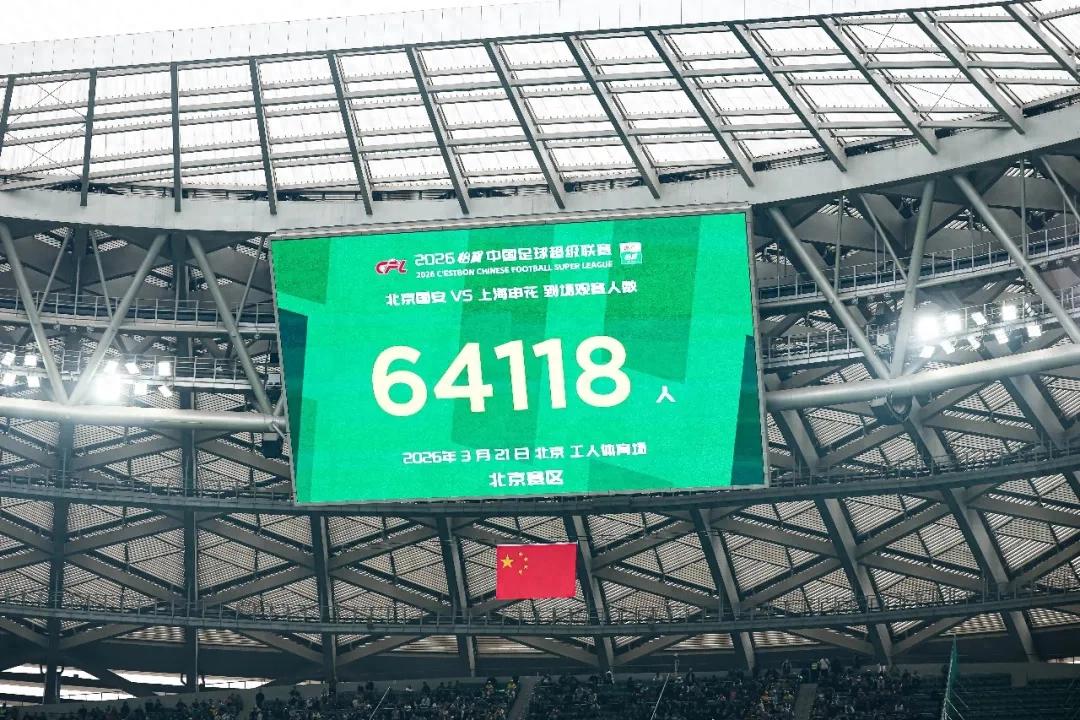
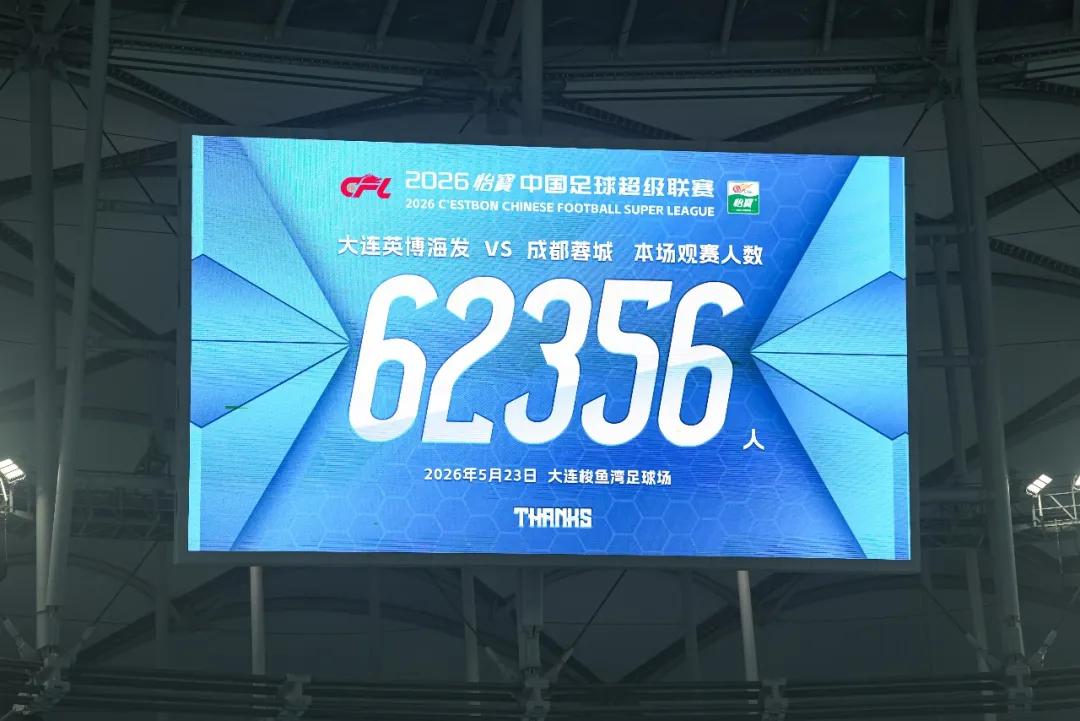
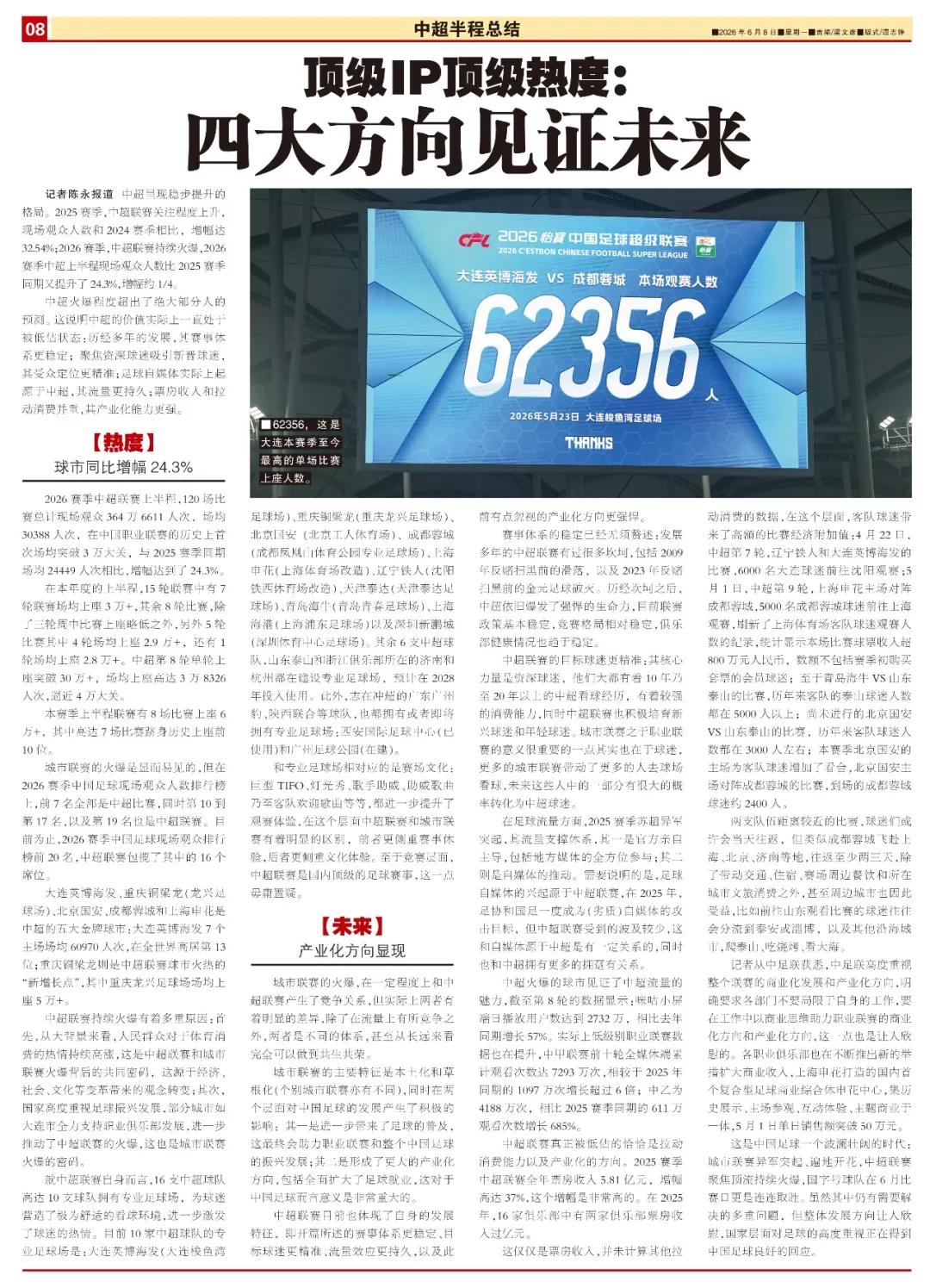
In the first half of this season, eight matches had attendances of over 60,000, with seven of those ranking among the top ten in league history.
The popularity of city leagues is obvious, but in the 2026 season's Chinese football live attendance rankings, the top seven spots are all CSL matches, as are positions 10 through 17, and position 19 as well. So far, among the top 20 in the 2026 season Chinese football attendance rankings, the CSL occupies 16 spots.
Dalian Yingbo Haifa, Chongqing Tongliang Long (Longxing Football Stadium), Beijing Guoan, Chengdu Rongcheng, and Shanghai Shenhua are the five biggest home-market teams in the CSL: Dalian Yingbo Haifa averages 60,970 per home game across seven matches, ranking 13th worldwide; Chongqing Tongliang Long is a "new growth point" for the CSL's hot market, with the Chongqing Longxing Football Stadium averaging over 50,000 spectators per game.
The sustained popularity of the Chinese Super League has multiple causes: First, from a broader context, the public's enthusiasm for sports consumption continues to rise—this is the common secret behind the popularity of both the CSL and city leagues, stemming from changes in economic, social, and cultural attitudes; second, the state places great importance on football revitalization, with some cities like Dalian fully supporting professional club development, further driving the CSL's popularity, which is also a key factor for city league success.
As for the CSL itself, 10 out of 16 clubs now have professional football stadiums, providing fans with extremely comfortable viewing environments and further igniting their enthusiasm. The current 10 CSL clubs with professional stadiums are: Dalian Yingbo Haifa (Dalian Suoyuwan Football Stadium), Chongqing Tongliang Long (Chongqing Longxing Football Stadium), Beijing Guoan (Beijing Workers' Stadium), Chengdu Rongcheng (Chengdu Fenghuangshan Sports Park Professional Football Stadium), Shanghai Shenhua (Shanghai Stadium, renovated), Liaoning Tieren (Shenyang Tiexi Stadium, renovated), Tianjin Teda (Tianjin Teda Football Stadium), Qingdao Hainiu (Qingdao Youth Football Stadium), Shanghai Haigang (Shanghai Pudong Football Stadium), and Shenzhen Xinpengcheng (Shenzhen Sports Center Football Stadium).
The remaining six CSL clubs—Shandong Taishan and Zhejiang Club, based in Jinan and Hangzhou respectively—are building professional stadiums, expected to be operational by 2028. In addition, teams aiming for promotion to the CSL, such as Guangdong Guangzhou Bao and Shaanxi Union, either already have or will soon have professional stadiums: Xi'an International Football Center (already in use) and Guangzhou Football Park (under construction).
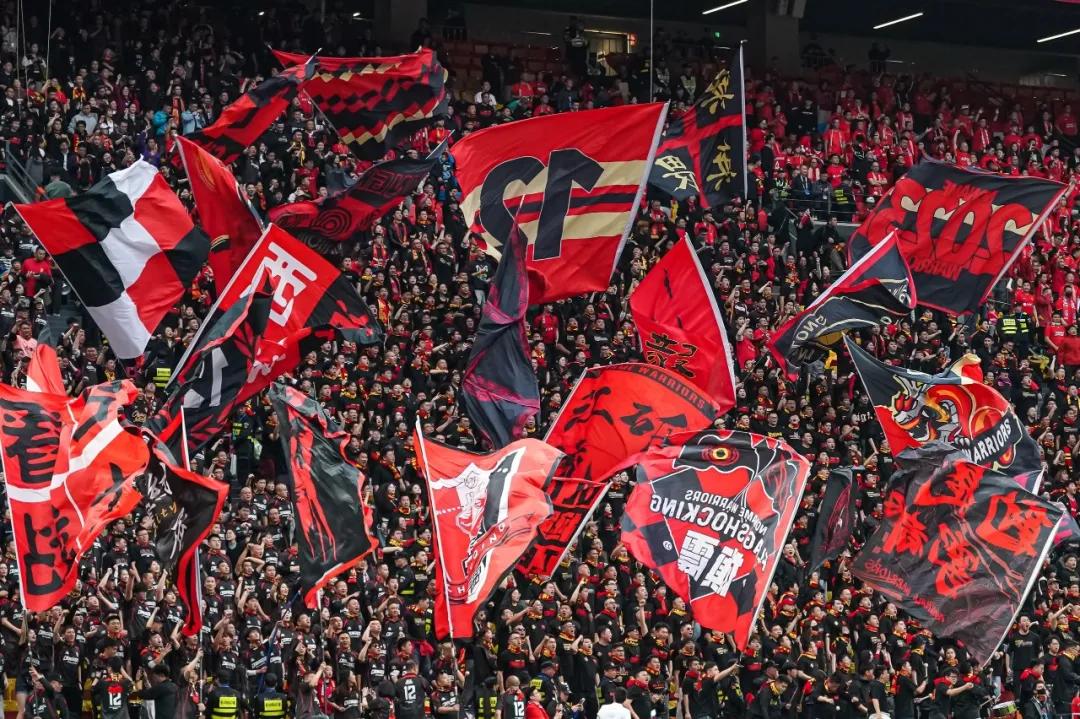
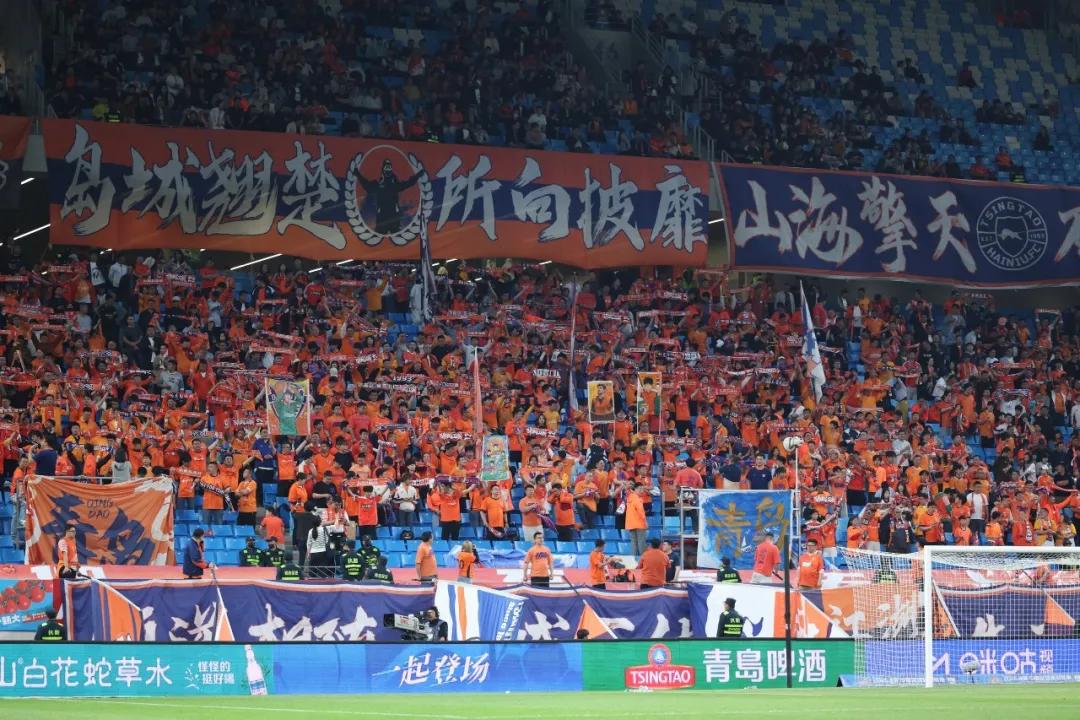
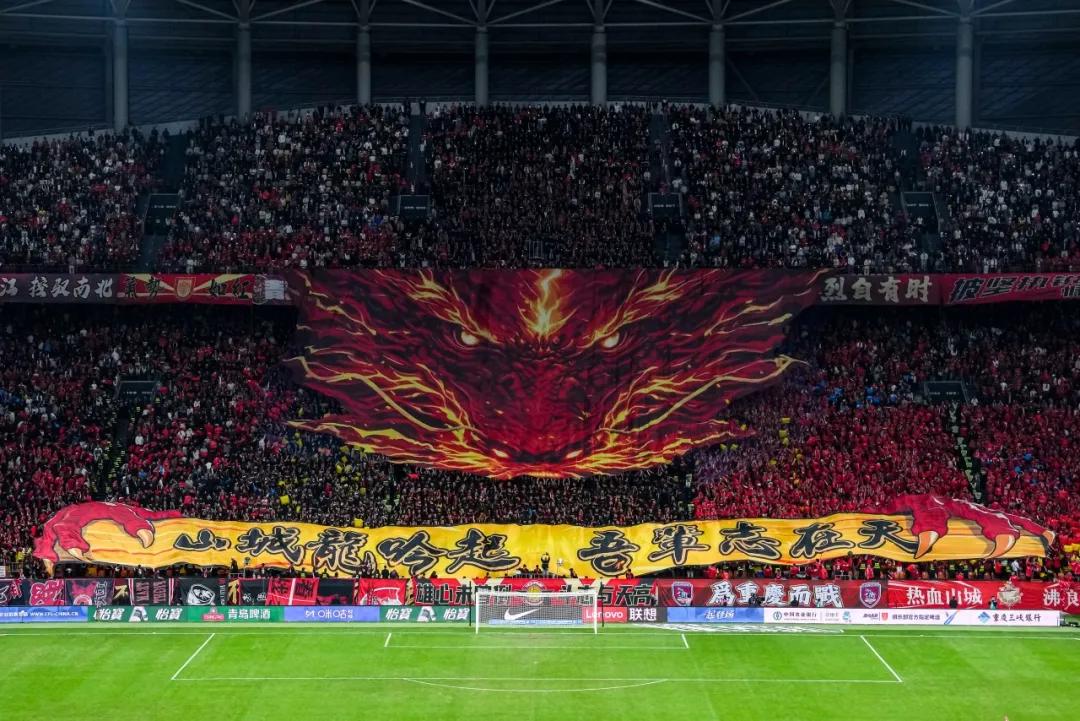
Corresponding to the professional stadiums is the match-day culture: giant TIFOs, light shows, singers cheering, supporter songs, and even welcome songs for visiting fans all further enhance the spectator experience. At this level, there is a clear difference between the CSL and city leagues: the former focuses more on the match experience, while the latter emphasizes cultural experience. As for the competitive level, the CSL is undoubtedly the top domestic football competition.

The popularity of city leagues has, to some extent, created competition with the CSL, but in reality there are clear differences. Aside from competition for traffic, they belong to different systems, and in the long term they can actually coexist and thrive together.
The main features of city leagues are localization and grassroots appeal (with some individual city leagues differing), and they positively impact Chinese football development on two levels: first, they further popularize football, which ultimately contributes to the revitalization of professional leagues and Chinese football as a whole; second, they create a larger industrialization direction, including expanding football-related employment, which is highly significant for Chinese football.
The CSL currently also demonstrates its own development characteristics, as mentioned at the outset: a more stable competition system, more precise targeting of fans, more sustained traffic effects, and—previously somewhat overlooked—stronger industrialization capabilities.
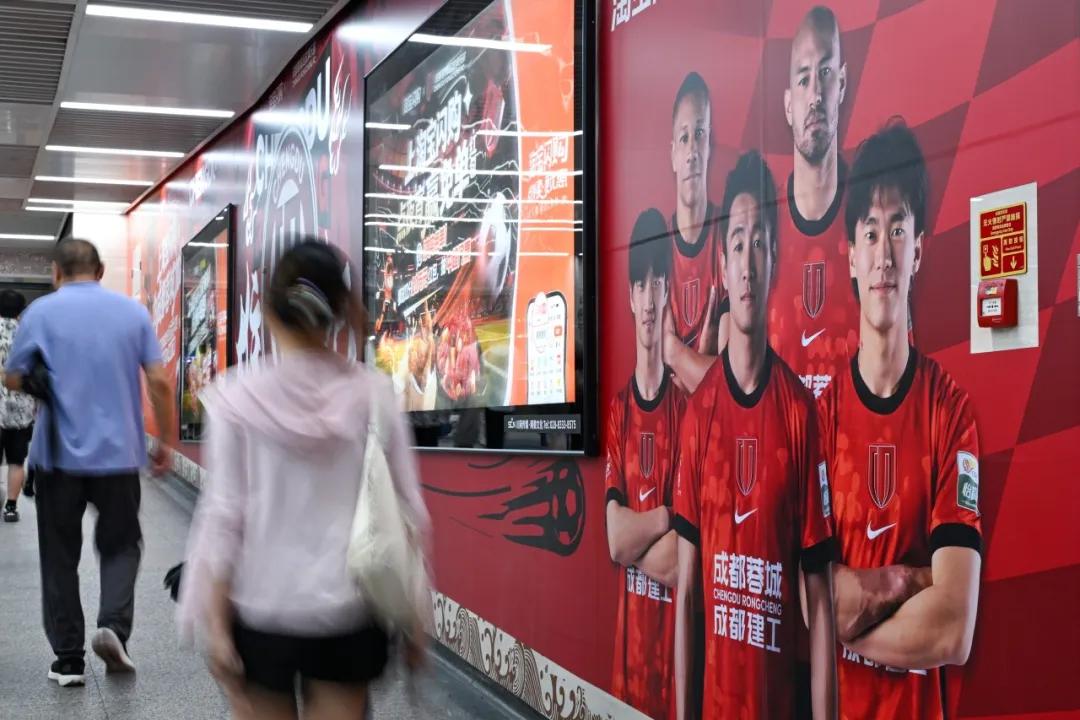
The stability of the competition system hardly needs elaboration: the CSL, after many years of development, has weathered many storms, including the decline before the anti-gambling and anti-corruption campaign in 2009, and the collapse of the "golden dollar" football era before the 2023 campaign. After all these trials, the CSL has still shown strong vitality. Currently, league policies are basically stable, the competitive landscape is relatively stable, and the financial health of clubs is also tending toward stability.
The CSL's target fans are more precise: its core strength lies in veteran fans, most of whom have been watching CSL matches for 10 or even 20 years and have relatively strong spending power. At the same time, the CSL actively cultivates new and younger fans. An important aspect of city leagues' significance for professional leagues is precisely the fan base: more city leagues bring more people to the stadium to watch matches, and a certain proportion of these people are likely to become CSL fans in the future.
In terms of football traffic, the 2025 season saw the sudden rise of the Suzhou City League. Its traffic support system includes, first, official leadership with full participation from local media, and second, the push from self-media. It should be noted that football self-media originated from the CSL. In 2025, the CFA and the national team once became targets of (low-quality) self-media attacks, but the CSL was less affected, partly because self-media originated from the CSL and also because the CSL has more supporters.
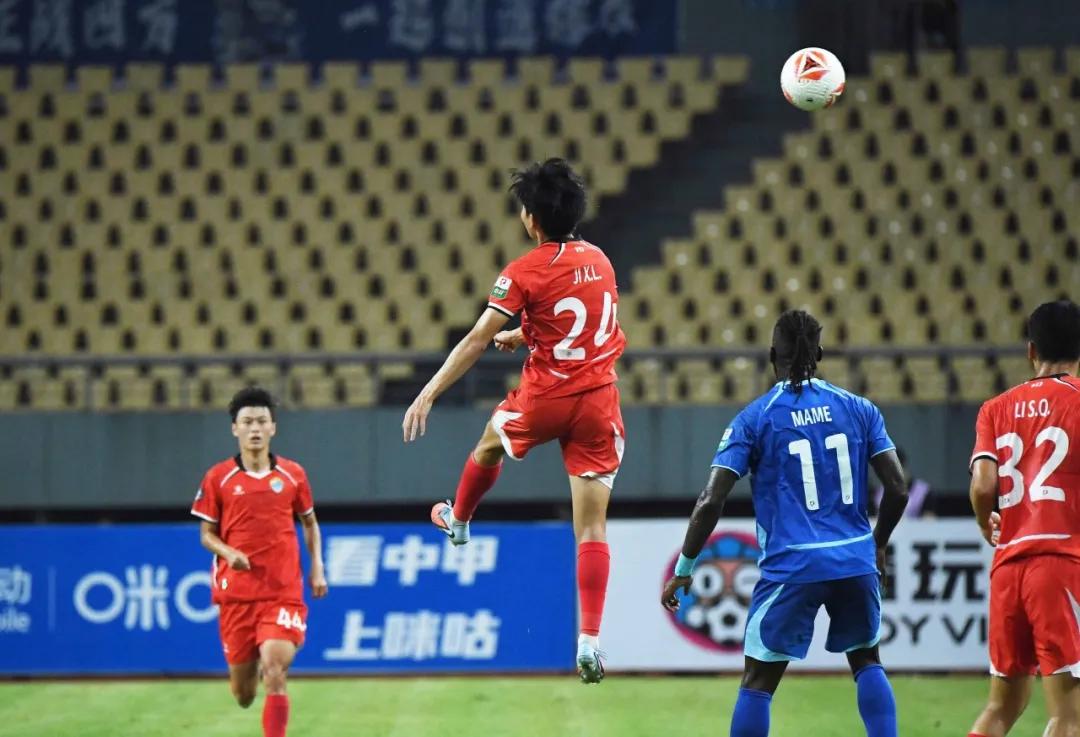
The hot CSL market demonstrates the charm of CSL traffic. Data through Round 8 show that the Migu app's daily playback users reached 27.32 million, a 57% increase compared to the same period last year. In fact, data for lower-tier professional leagues are also rising. For the China League One, the total cumulative views across all media in the first ten rounds reached 72.93 million, a more than six-fold increase from 10.97 million in the same period of 2025. For the China League Two, it was 41.88 million, up 685% from 6.11 million in the same period of 2025.
What has truly been underestimated about the CSL is precisely its ability to stimulate consumption and its direction toward industrialization. In the 2025 CSL season, annual box office revenue reached 581 million yuan, a growth of 37%, which is a very high rate. In 2025, two of the 16 clubs had box office revenues exceeding 100 million yuan.
This is only box office revenue, not including other consumption-driving data. At this level, visiting fans bring substantial economic added value to matches: On April 22, in CSL Round 7, the match between Liaoning Tieren and Dalian Yingbo Haifa saw 6,000 Dalian fans travel to Shenyang to watch. On May 1, in CSL Round 9, Shanghai Shenhua hosted Chengdu Rongcheng, with 5,000 Chengdu fans traveling to Shanghai, setting a new record for away-fan attendance at Shanghai Stadium. Statistics show that match ticket revenue exceeded 8 million yuan, not including season-ticket holders who purchased packages before the season. As for matches between Qingdao Hainiu and Shandong Taishan, over the years the away team's Taishan fans have numbered over 5,000. For the yet-to-be-played match between Beijing Guoan and Shandong Taishan, the away fan count has historically been around 3,000. This season, Beijing Guoan's home stadium added a stand for away fans; during the match between Beijing Guoan and Chengdu Rongcheng, about 2,400 Chengdu fans attended.
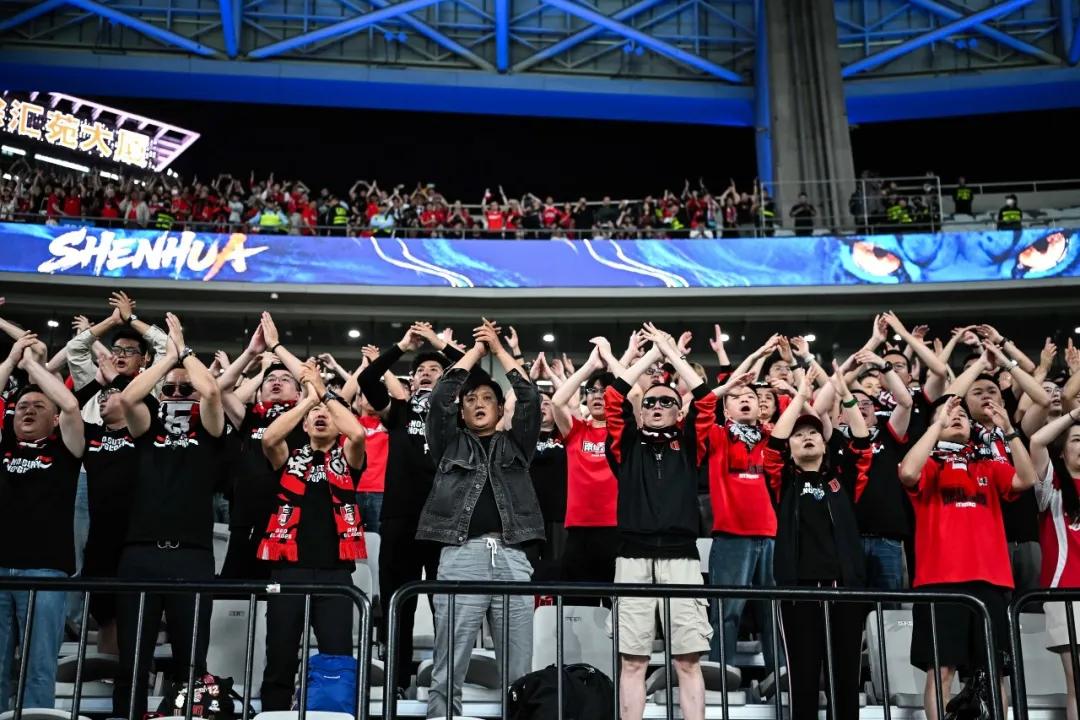
For matches between teams that are geographically close, fans might travel back and forth in a single day, but for trips like Chengdu Rongcheng flying to Shanghai, Beijing, or Jinan, the round trip takes at least two or three days. This drives not only transportation, accommodation, match-day dining, and cultural tourism in the host city, but also benefits surrounding cities. For example, fans traveling to Shandong for matches often go to Tai'an or Zibo, as well as other coastal cities, climbing Mount Tai, eating barbecue, and seeing the sea.
The reporter learned from the Chinese Football League that the CFL places great importance on the commercial development and industrialization direction of the entire league, explicitly requiring all departments not to limit themselves to their own tasks but to use commercial thinking to support the league's commercialization and industrialization. This is reassuring. Various professional clubs are also continuously launching new initiatives to expand commercial revenue. Shanghai Shenhua has created the first multi-functional football commercial complex in China, the Shenhua Center, which integrates historical display, home stadium tours, interactive experiences, and themed retail. On May 1, its single-day sales exceeded 500,000 yuan.
This is a magnificent era for Chinese football: city leagues have emerged and flourished everywhere, the CSL continues to be white-hot by focusing on top-tier traffic, and the national team has achieved consecutive victories during the June match days. Although there are still multiple issues to be resolved, the overall direction of development is encouraging. The high level of national attention to football is receiving a positive response from Chinese football.


Wonderfulshortvideo
Unforgettable EURO moment 🙌


Jude Bellingham. Who else? 🌟

Cristiano and Mateo training

Cristiano's training

an unusual banner

rodri barcelona news rodri barcelona reveal interview
here are the controversial FPL picks that will win you your mini league this season
 Links
Links
 Contact
 App
App


