



Why does Chelsea favor talents from Man City's academy?



Even though Chelsea has its own Cobham academy, a prestigious training ground in England, they continue to sign players developed by Man City's academy. Why does the Etihad club become a 'goldmine' for Chelsea's talent scouting?
Morgan Rogers, the £117 million signing from Aston Villa, is the sixth player to come from Man City's academy to join Stamford Bridge. Six years earlier, Rogers had scored against Chelsea's U18s in the FA Youth Cup final. Interestingly, his two teammates in that match, Cole Palmer and Liam Delap, are now also playing for Chelsea.
Inspiration from the Palmer deal
In addition to the trio above, Chelsea also have Tosin Adarabioyo, Romeo Lavia, and Jamie Gittens - all products of Man City's youth system. Over the past three years, the London club has spent nearly £300 million to bring these six players to Stamford Bridge.
On the other hand, the number of players who came through Cobham and remain in Chelsea's first team is only four: Captain Reece James, Levi Colwill, Trevoh Chalobah, and Josh Acheampong. However, Chalobah is also facing a possible departure to join Como.
Chelsea's constant targeting of Man City's talents stems from several reasons. First is the unexpected success of Cole Palmer, who was signed for £42.5 million in the summer of 2023 and quickly became the team's number one star. Another factor is the role of Joe Shields, former head of youth recruitment at Man City, who now oversees player development for both the youth and first teams at Chelsea.
Financial factors also play a key role. Academy graduates often provide significant book value, as profits from their transfers are recorded more favorably in financial reports, helping clubs meet the Premier League and UEFA's profit and sustainability rules. The deal where Chelsea sold Tyrique George to Everton for £24 million is a typical example.
Chelsea has even more opportunities to approach Man City's young talents because Pep Guardiola cannot give enough playing time to everyone under the pressure of competing for titles. Rogers didn't have enough chances to break into the first team, while Palmer felt he needed a new environment to fully realize his potential.
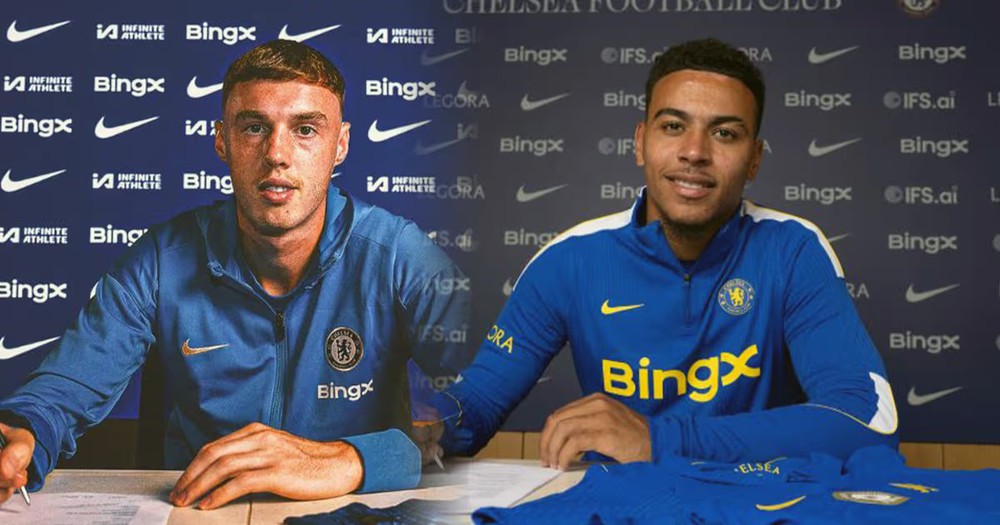
Chelsea is increasingly favoring young talents from Man City like Palmer and Rogers
Replicating Man City's model at Chelsea
Before turning their attention to Man City's academy, Chelsea was once very proud of Cobham under the leadership of Neil Bath and Jim Fraser. The club won the UEFA Youth League in 2015 and 2016, becoming the only English club to win the tournament. Seven years ago, the transfer ban also inadvertently opened the door for the generation of Reece James, Mason Mount, Tammy Abraham, and Andreas Christensen to make their mark under Frank Lampard.
For many years, Man City has been Chelsea's biggest rival in youth development. The two academies have often produced intense matches and emotional celebrations in youth competitions. Liam Delap acknowledged this last year: We always play with a hostile attitude whenever we face "Chelsea".In fact, there used to be an informal agreement between the two clubs to avoid recruiting each other's young players in order not to drive up wages and transfer fees.
But things have changed. The back-and-forth deals at the academy level in recent years have surprised many within both clubs. Chelsea has gradually realized that Man City's training model is worth learning from, not only in discovering talent but also in building a consistent football philosophy.
Not only players, but many Man City staff have also moved to Chelsea. Notably, Calum McFarlane, who served as Chelsea's interim head coach twice last season. Most recently, Glenn van der Kraan officially took over as Chelsea's Academy Director in July, bringing significant changes in coaching methods. The coaches at Cobham have also had to adapt to the new philosophy.
According to Gareth Taylor, who spent nine years working at Man City's youth system before moving to coach Liverpool's women's team, the secret to Man City's continuous production of talent lies in maintaining a unified football philosophy from the U11, U12 teams all the way to U23. This very model is becoming the inspiration for Chelsea to both hunt for talent and reshape its own football development strategy.


Wonderfulshortvideo

vinicius junior transfer real madrid arsenal vini here we go arsenal news today real madrid news today ronaldo real madrid ronaldo edit



A sneak peak at yesterdays opener 👀

Think we might side with Francesca’s idea 😂

The highs & lows of racing 🐎

A different view to yesterday’s Stewards enquiry 👀

Perfectly explained by Francesca 🫶🏻

Keep an eye out for Adaay of Scarlett 👀
 Links
Links
 Contact
 App
App


