



FIFA ASEAN Cup 2026: Replacement Sought for China's Guest Slot



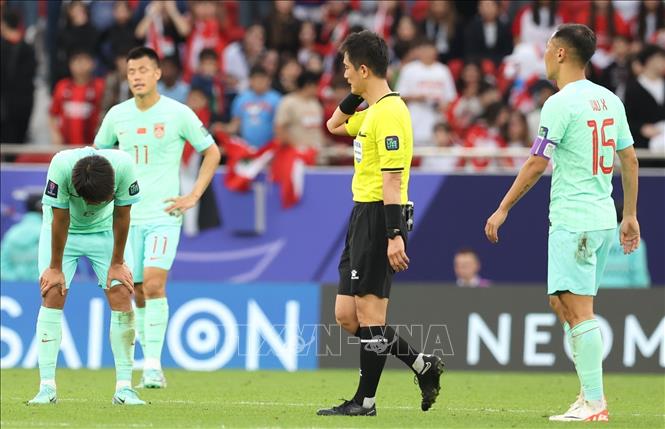
Under the original plan, the FIFA ASEAN Cup 2026 was scheduled to take place in September and October this year, featuring 14 teams: 11 from Southeast Asia and three guest teams—China, Hong Kong (China), and India. The tournament would be divided into two tiers based on FIFA rankings. The first tier comprises eight teams, while the second tier includes six. Indonesia and Hong Kong (China) are the two host venues.
China's withdrawal leaves the tournament with 13 teams, including only two non-ASEAN guest teams: India and Hong Kong (China). FIFA has not yet announced which team will be invited as a replacement.
According to Chinese media, the Chinese Football Association (CFA) decided to skip the FIFA ASEAN Cup 2026 in order to focus on preparations for the ASEAN Cup 2027 finals and the 2030 World Cup qualifiers. Instead, the Chinese team will participate in a five-team international friendly tournament scheduled from late September to early October in Chongqing, where they will face Uzbekistan, North Korea, Tajikistan, and Palestine in sequence.
This move is seen as part of a plan to enhance the professional quality of the Chinese team by competing against opponents with diverse styles and levels, all in support of their goal for the ASEAN Cup 2027. In that tournament, China is placed in Group C along with Iran, Syria, and Kyrgyzstan.
Unlike the traditional ASEAN Cup organized by the ASEAN Football Federation (AFF), the FIFA ASEAN Cup 2026 is an official tournament recognized by FIFA, and matches will count toward the FIFA world rankings. The event is expected to contribute to raising the professional level and competitiveness of regional football.
As planned, the Vietnam national team will be placed in the first tier alongside Thailand, Indonesia, the Philippines, Malaysia, Singapore, India, and the team replacing China if FIFA completes the additional invitation. This is seen as an opportunity for Southeast Asian teams to accumulate FIFA ranking points and gain experience against non-regional opponents.


Wonderfulshortvideo
vinicius junior transfer real madrid arsenal vini here we go arsenal news today real madrid news today ronaldo real madrid ronaldo edit



A sneak peak at yesterdays opener 👀

Think we might side with Francesca’s idea 😂

The highs & lows of racing 🐎

A different view to yesterday’s Stewards enquiry 👀

Perfectly explained by Francesca 🫶🏻

Keep an eye out for Adaay of Scarlett 👀
 Links
Links
 Contact
 App
App


