



How will the Italy team play when Roberto Mancini returns to the helm?


Italian football officially opens a new chapter as Roberto Mancini is reappointed as head coach of the national team. How will the Azzurri play in Mancini's second term?
Mancini's return brings great expectations. He not only led Italy to glory at EURO 2020 (held in 2021) but is also the most recent coach to restore the Azzurri to the status of a top European powerhouse.
Although the current squad is vastly different from the European championship-winning team of a few years ago, Mancini's tactical imprint and football philosophy are still seen as a solid foundation for building the future.
Mancini returns and new expectations
In the official announcement from FIGC, Roberto Mancini will return to the helm of the Italian national team, while Claudio Ranieri takes on the role of Technical Director of the Federation and also serves as President of Club Italy.
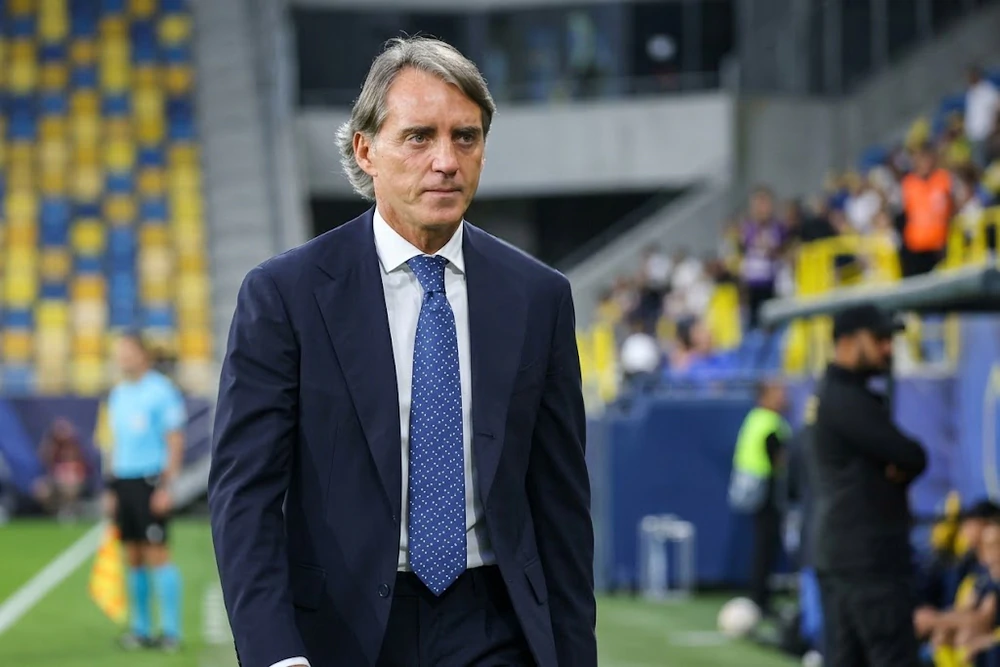
Italy will face tough matches in the coming period, and Coach Roberto Mancini has less than two months to prepare. Photo: AFP/TTXVN
In his first term, which lasted from May 2018 to August 2023, Mancini not only led Italy to win the EURO but also took the team to two UEFA Nations League finals, finishing third in the 2020/21 and 2022/23 seasons.
More notably, he set a record of 37 consecutive unbeaten matches with the national team, a rare display of stability at the international level.
With that experience, Mancini's return is seen as an opportunity for Italy to kick-start a new development cycle while creating conditions for many young talents to emerge.
How did Italy play in Roberto Mancini's first term?
To envision the look of the Italian team in the new era, we need to look back at Mancini's last match as head coach of the Azzurri.
On June 18, 2023, Italy beat the Netherlands 3-2 to claim third place in the UEFA Nations League. In that match, the Azzurri's starting lineup was:
Donnarumma in goal; Toloi, Acerbi, Buongiorno, Dimarco in defense; Frattesi, Cristante, Verratti in midfield; Gnonto, Retegui, and Raspadori up front.
The familiar 4-3-3 formation was again employed by Mancini, clearly reflecting his football philosophy: ball possession, proactive attack, and pressing opponents with quick ball circulation.
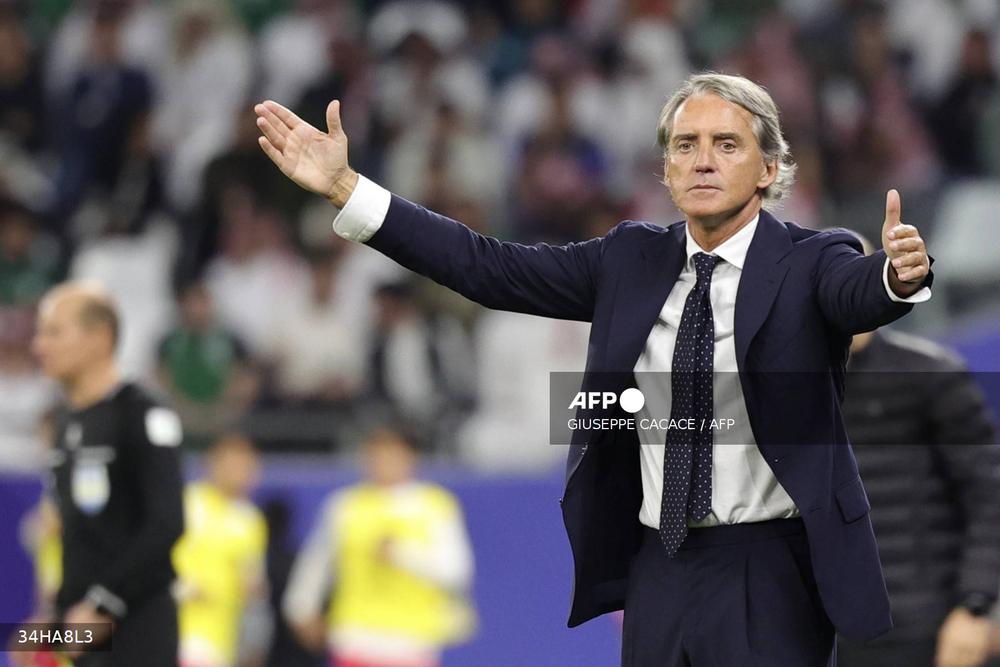
Italian football officially opens a new chapter as Roberto Mancini is reappointed as head coach of the national team. How will the Azzurri play in Mancini's second term? Photo: AFP/TTXVN
4-3-3 will likely remain the foundation
Looking at Mancini's consistent coaching philosophy throughout his career, it is hard to imagine him abandoning the 4-3-3 formation.
This system helped Italy become European champions and also suits the current squad's strengths. The 4-3-3's advantage lies in controlling the midfield, creating width in attack, and maintaining a stable defensive structure.
However, Mancini is not a stubborn coach. He is always ready to adjust based on player characteristics.
Therefore, the 4-2-3-1 option is also entirely possible. Having an attacking midfielder behind the striker would help Italy maximize the creative young talents emerging in recent years.
This could be a solution to increase unpredictability while maintaining balance in the midfield area.
Defense: a mix of experience and youth
In goal, Gianluigi Donnarumma remains an irreplaceable choice. The current Manchester City goalkeeper not only possesses proven class but also serves as the team's spiritual leader.
At right-back, Palestra is considered a strong candidate for the starting spot, while Giovanni Di Lorenzo offers an experienced backup option.
The left flank remains Federico Dimarco's domain. His excellent attacking support and quality crosses make him one of the most important cogs in Italy's tactical system.
Behind Dimarco, there are notable options like Bartesaghi, Cambiaso, or Destiny Udogie.
In the center of defense, competition will be fierce. Alessandro Bastoni and Riccardo Calafiori are likely the preferred duo due to their good ball-playing ability, fitting the possession-based philosophy.
However, Gianluca Mancini, Buongiorno, Giorgio Scalvini, and Matteo Gabbia are all quality alternatives.
Additionally, young talents like Reggiani, Ahanor, Chiarodia, or Mane are seen as long-term projects for the future.
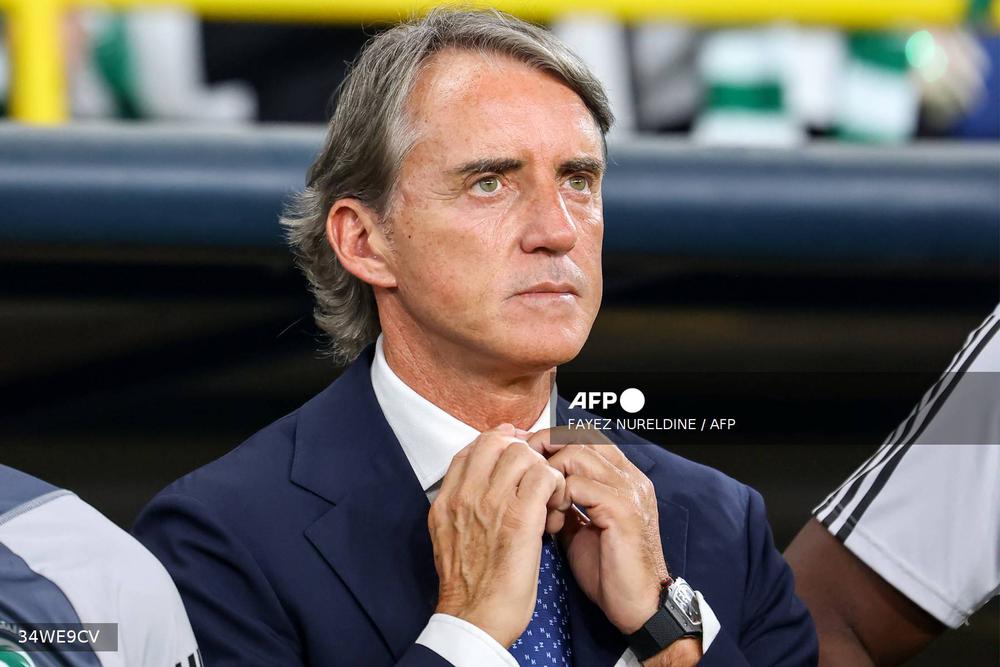
With Roberto Mancini, the most recent coach to bring a major trophy to the Azzurri, fans have every reason to hope for a promising new journey. Photo: AFP/TTXVN
Midfield revolves around Tonali and Barella
If two names are almost certain to be in the starting lineup, they are Sandro Tonali and Nicolo Barella.
Barella has long been one of the most complete midfielders in Italian football. His tireless movement, strong tackling, and effective attacking contributions make him an indispensable figure.
Meanwhile, Tonali increasingly asserts his leadership role in the midfield. His maturity, composure, and ability to control the game make him one of the biggest stars of the current generation.
Alongside these two, the deep-lying playmaker role will be a competition between Manuel Locatelli, Bryan Cristante, and Nicolo Fagioli.
Each brings unique qualities, from ball distribution and tempo control to creativity in building attacks.
In addition, Lorenzo Pellegrini remains an experienced card, while Pisilli and Ndour represent the promising young crop.
Attack: rich in talent and fierce competition
The forward line is perhaps the most exciting area for Italy fans.
Pio Esposito is seen as a leading candidate for the center-forward role due to his physique, power, and huge potential. However, Moise Kean and Mateo Retegui are also ready to compete for this position.
In particular, Mancini is known for giving opportunities to young players. Therefore, talents like Francesco Camarda or Samuele Inacio could well be given chances in the near future.
On the wings and in the attacking midfield role, Italy has abundant resources with names like Riccardo Orsolini, Nicolo Zaniolo, Federico Chiesa, Mattia Zaccagni, and Matteo Politano.
Additionally, there is a promising young generation including Fini, Koleosho, and Mattia Liberali. Among them, Liberali is rated as the player most likely to make a breakthrough under Mancini's new era, thanks to his technique, creativity, and ability to make a difference at crucial moments.
Clearly, Italy possesses a highly potential squad blending experience and youth. And with Roberto Mancini, the most recent coach to bring a major trophy to the Azzurri, fans have every right to expect a new, promising journey where the next generation will continue to write the glorious history of Italian football.


Wonderfulshortvideo
vinicius junior transfer real madrid arsenal vini here we go arsenal news today real madrid news today ronaldo real madrid ronaldo edit


A sneak peak at yesterdays opener 👀

Think we might side with Francesca’s idea 😂
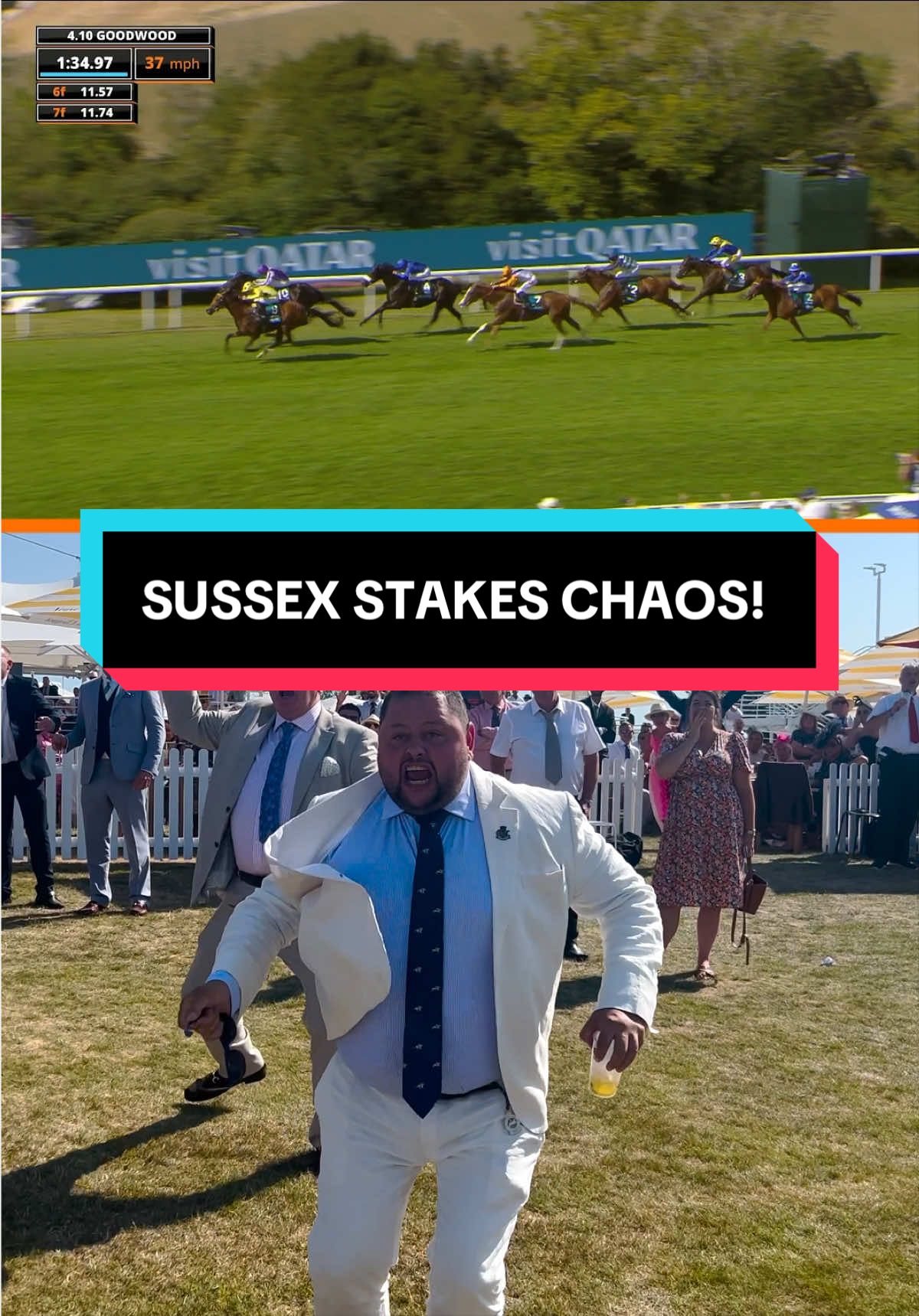
The highs & lows of racing 🐎
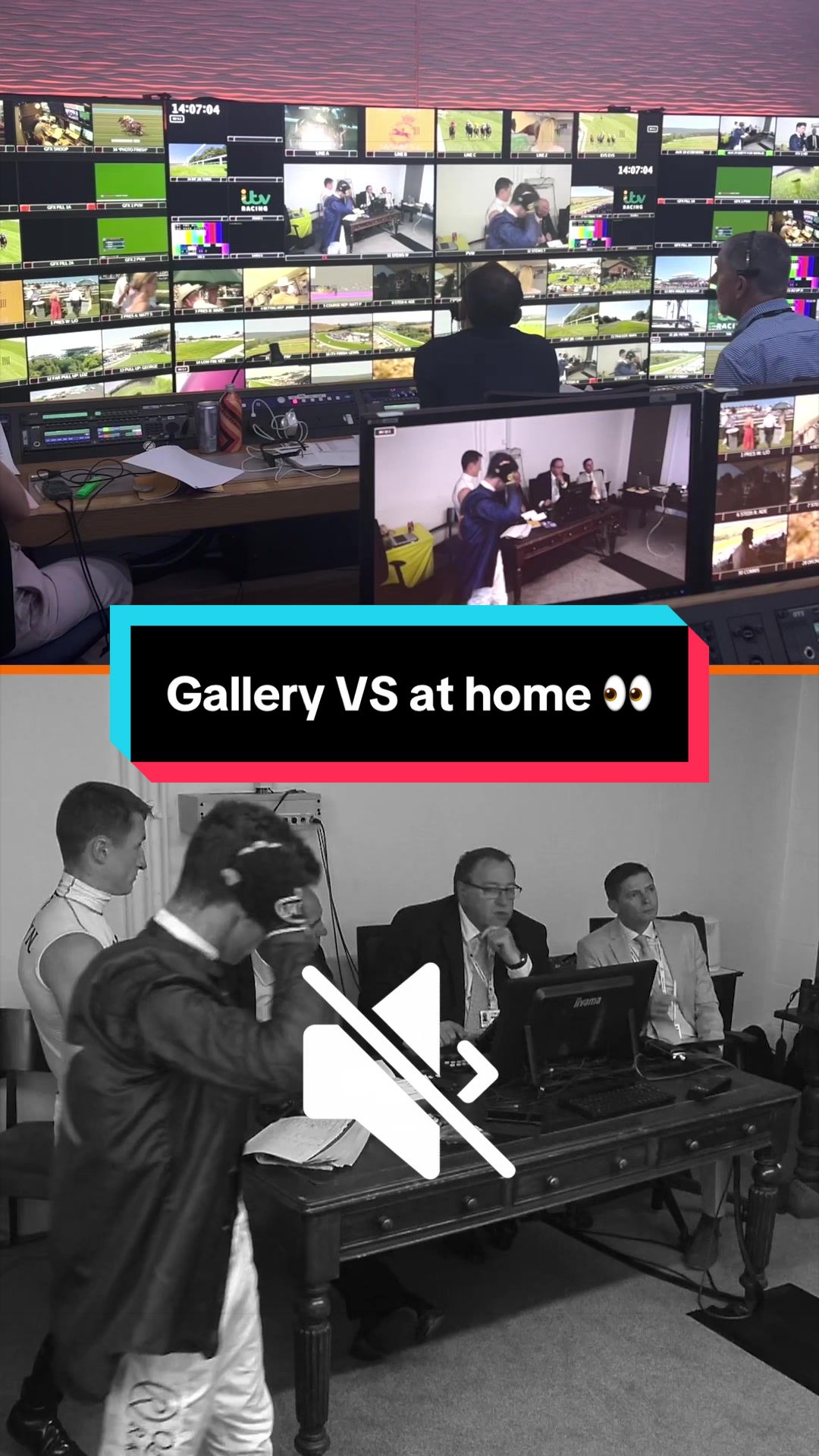
A different view to yesterday’s Stewards enquiry 👀

Perfectly explained by Francesca 🫶🏻

Keep an eye out for Adaay of Scarlett 👀
 Links
Links
 Contact
 App
App


