



OFFICIAL: Former Pep Guardiola's Club Declared Dissolved



The city court of Brescia has officially issued a liquidation order for Brescia Calcio, ending the 114-year journey of one of Italy's most traditional football clubs. The team, which spent many years competing in Serie A and Serie B, is forced to disappear from the professional football map due to debts amounting to 20 million euros.
Main content
Brescia officially disappears due to financial crisis
The Brescia court has issued a judicial liquidation order for Brescia Calcio, confirming the end of the club after more than a century of existence. The main cause of the collapse is a debt of nearly 20 million euros, along with a series of prolonged financial issues that left the club unable to continue operating within the professional football system.
Brescia's crisis began to become serious about a year and a half ago, when violations related to the payment of salaries and social insurance for players were discovered.
Subsequent investigations led to sporting sanctions, including an 8-point deduction and relegation, worsening the already difficult financial situation. Afterwards, Brescia was unable to complete the registration procedures to participate in Serie C and had its operating license revoked by the Italian Football Federation, officially ending any chance of survival within the professional football system.
All rescue efforts have failed
The restructuring plans proposed by owner Massimo Cellino, along with negotiation options with creditors, failed to convince the court.
The judges concluded that Brescia was in a "state of clear insolvency," and considered the proposed solutions insufficient to guarantee the club's future. Therefore, one of Italy's most traditional football clubs has been officially declared dissolved.
A major shock for Italian football
The disappearance of Brescia is seen as a great loss for Italian football, as it is a place where many legends played and developed.
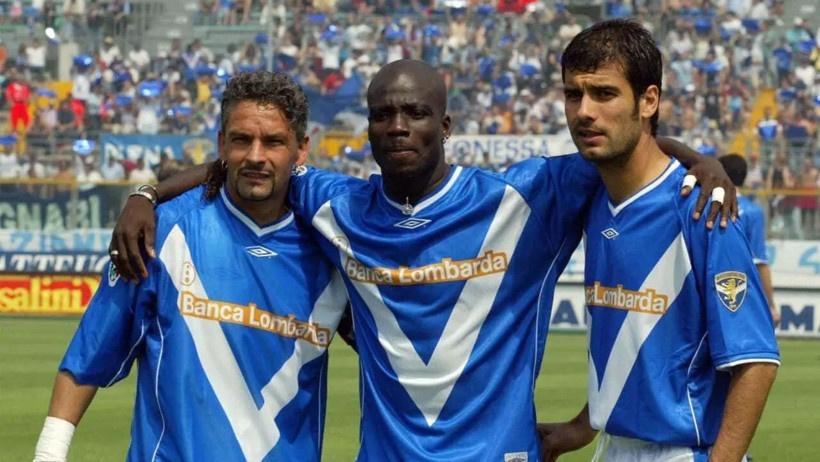
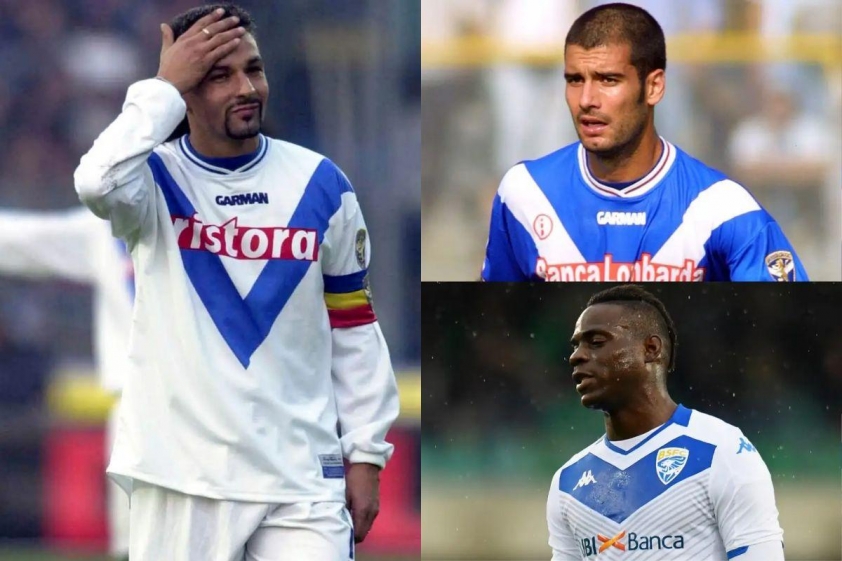
Roberto Baggio shone in his final years there, Andrea Pirlo grew up through Brescia's youth academy before becoming a global football legend, and Pep Guardiola also played for the club during the final stages of his playing career. More recently, Brescia was where Sandro Tonali, one of the best midfielders in modern Italian football, was discovered and trained.
After the court's ruling, owner Massimo Cellino did not hide his disappointment. The Italian businessman shared: "This is simply a punishment. I didn't think bitterness could overshadow reason."
He also warned that creditors would suffer heavy losses, with a risk of losing more than 5 million euros, while admitting that there is almost no chance of reversing this decision.
Closing after 114 years of history, Brescia leaves behind a memorable legacy with famous names like Baggio, Guardiola, Pirlo and Tonali, but ultimately could not overcome the prolonged financial crisis.


Wonderfulshortvideo
vinicius junior transfer real madrid arsenal vini here we go arsenal news today real madrid news today ronaldo real madrid ronaldo edit



A sneak peak at yesterdays opener 👀

Think we might side with Francesca’s idea 😂
The highs & lows of racing 🐎

A different view to yesterday’s Stewards enquiry 👀

Perfectly explained by Francesca 🫶🏻

Keep an eye out for Adaay of Scarlett 👀
 Links
Links
 Contact
 App
App


