



Behind the Comeback Story of Vietnamese Football


In the 71st minute of the 1998 Tiger Cup final at Hàng Đẫy Stadium, a long clearance unintentionally hit the back of defender Sasi Kumar and went into the net past goalkeeper Trần Tiến Anh. That was the most heartbreaking goal in Vietnamese football history, closing the dream of a home victory and granting Singapore their first ever Southeast Asian title.
1. Nearly three decades later, that "wound" likely remains only in the hearts of fans from the 60s and 70s generations. When the Vietnamese national team steps onto the pitch at Mỹ Đình on the evening of July 31 to face Singapore, both Vietnamese and Singaporeans will talk about a different memory: the two semi-final matches at the 2024 ASEAN Cup, when Vietnam made Singaporean football hearts ache helplessly with goals from naturalized striker Nguyễn Xuân Son.
That was the moment when Singapore thought they had revived the strength of one of Southeast Asia's former kings, but instead they learned a costly lesson: their football had fallen too far behind and needed a major overhaul. Now meeting again, that feeling remains intact. It is the story of two football nations that have completely reversed roles: the one who came later in the title race now stands on the verge of overtaking the other.
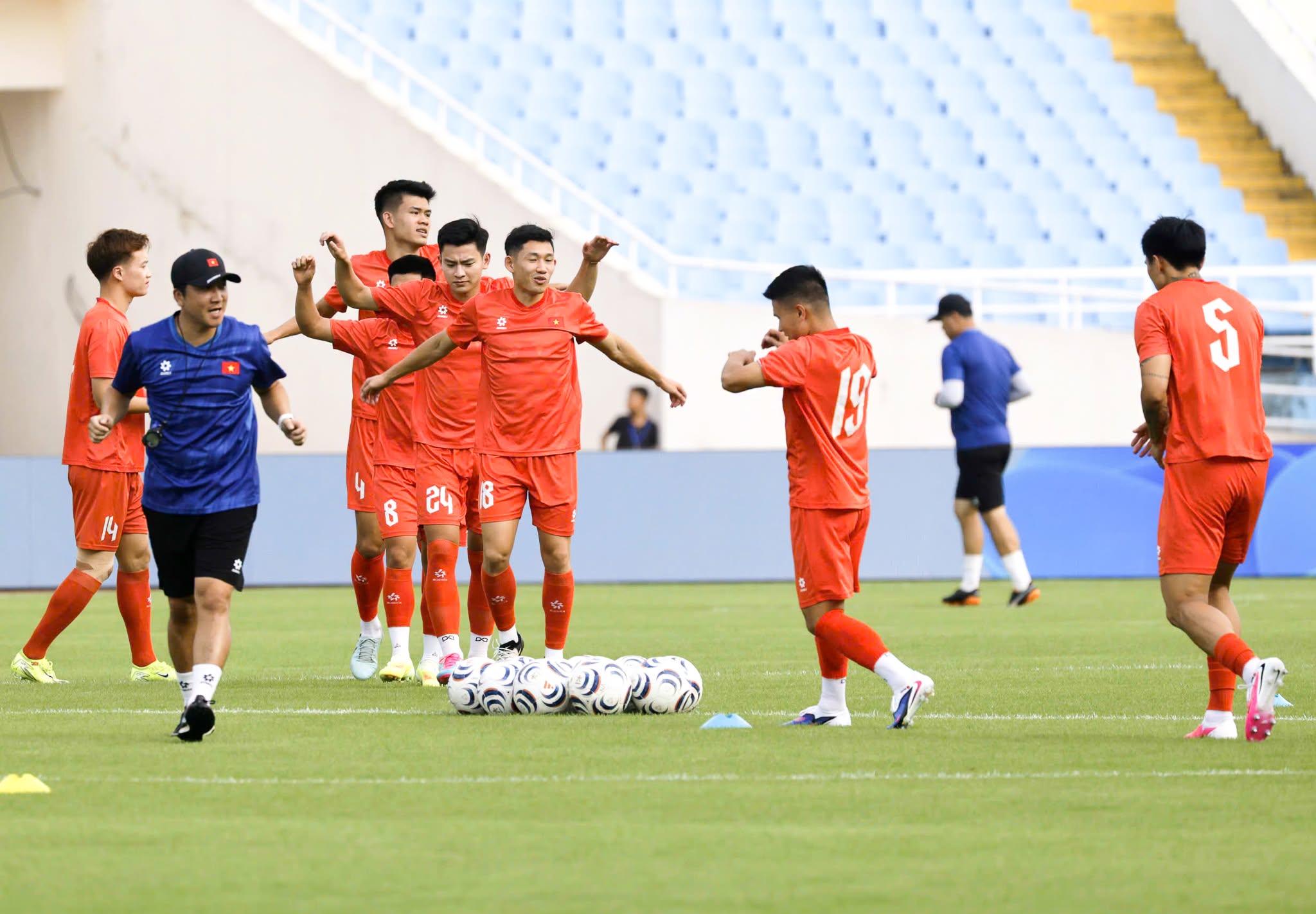
The Vietnamese national team is confident of extending their unbeaten run against Singapore. Photo: VFF
After Sasi Kumar's goal in 1998, Singapore went on to win three more titles in 2004, 2007, and 2012, becoming the second most successful team in Southeast Asia, behind only Thailand. Meanwhile, as late as 2007, when Singapore already had three championships, Vietnam had never been crowned at the region's highest level. That was nearly a decade of Vietnamese football trailing behind, enduring missed opportunities, regret, and self-doubt.
But football, like any long-term development story, is not measured by a single moment but by an entire process of accumulation. In 2008, Vietnam won their first title. Ten years later, in 2018, they won their second. And by the end of 2024, a third ASEAN Cup championship was secured with a convincing victory over Thailand in the final, after having overcome Singapore in the semi-finals with an aggregate score of 5-1 over two legs. The 4-0 gap between the two teams in the title count is now only 4-3. If Vietnam wins the 2026 ASEAN Cup, they will officially equal Singapore's record in less than three decades since losing to a fateful back-touch goal. It is a journey of coming from behind but steadily moving forward.
What is noteworthy is not just the numbers. The 1-5 aggregate defeat in the 2024 ASEAN Cup semi-finals, where naturalized striker Nguyễn Xuân Son scored in both legs, became the catalyst that forced Singaporean football to take a hard look at itself. Witnessing Xuân Son's brilliance and how Vietnam ran their team, Singaporean football decided to undergo a comprehensive change. They understood that if they kept relying on veterans like Shawal Anuar (35 years old) or limited domestic resources, the gap with the top group would only widen. Singapore began to expand its naturalization policy with names like Kyoga Nakamura, while also stepping up youth development. Those efforts have already yielded early fruits: at the end of 2025, Singapore qualified for the Asian Cup for the first time in history, ending a 43-year drought of only having appeared once as hosts in 1984.
That is a real step forward. But even Singaporean media are not delusional about the remaining gap. The Straits Times, commenting on the upcoming clash, frankly stated that Singapore is still a long way from reaching Vietnam's level and adding a fifth star to their jersey. A rare and thought-provoking admission: the former four-time regional champion now has to look up to Vietnam's development path as a model to learn from.
2. Singapore's story, viewed from a broader perspective, is also a wake-up call for the entire region: the ASEAN Cup has never been a strong enough launchpad to elevate a football nation to the continental level. Even during their golden era with four Southeast Asian titles between 1998 and 2012, Singapore could not earn a spot in the Asian Cup finals on merit.
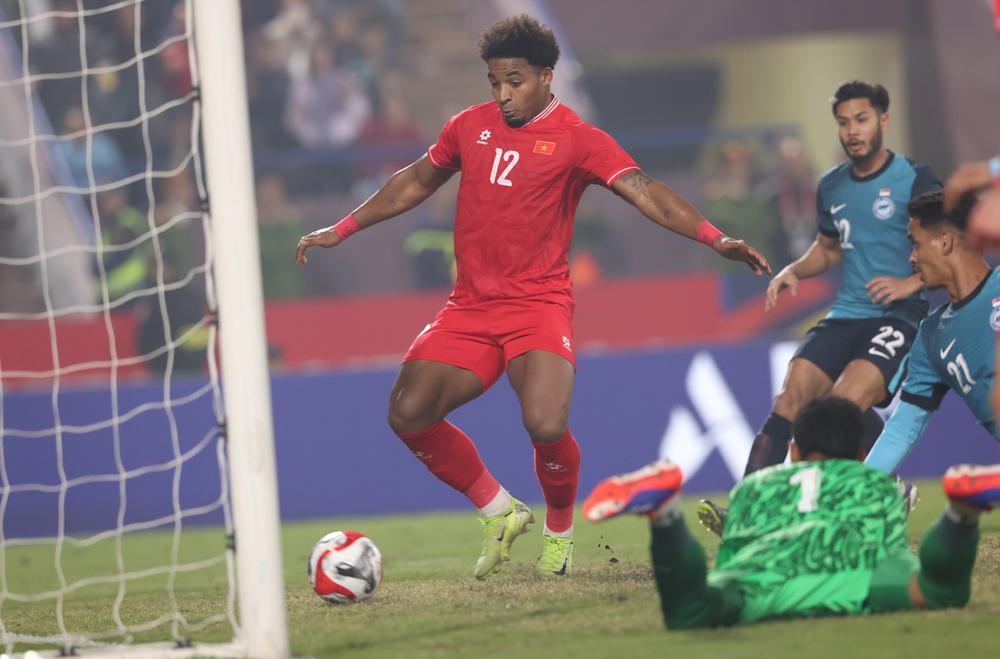
Xuân Son is truly the name that haunts Singaporean fans, with 3 goals in the two-legged semi-final of the 2024 ASEAN Cup. Photo: Hoàng Linh
The ticket to the 2027 Asian Cup they just earned did not come from past glory, nor is it necessarily the result of any long-term strategy. In the upcoming 2027 Asian Cup, Southeast Asia will have four representatives: Vietnam, Thailand, Indonesia, and Singapore—a record number—but largely due to the tournament expansion to 24 teams, not necessarily reflecting a simultaneous rise in quality. To be fair, Southeast Asian football is still lagging in the race for higher standards.
That is precisely why Vietnam's rise makes rivals from Singapore to Thailand, Indonesia, and Malaysia see it as a "thorn in their side." It seems nothing special, yet it is still irritating. Because Vietnam is the only football nation in the region that balances youth development while keeping up with the trend of naturalizing players. While Indonesia is on a massive naturalization spree with 12 foreign-born players, Vietnam maintains a steady stream of young talent like Nguyễn Đình Bắc, who just scored a hat-trick in the opening match. We do not close the door to foreign or overseas players, but we selectively bring in only those who truly fit, such as Xuân Son, Đỗ Hoàng Hên, or goalkeeper Lê Giang.
This explains why Vietnam has become a closely watched, even wary, opponent for football nations that once considered themselves superior. A rival that came from behind but knows how to close the gap through a sustainable path, rather than relying on short-term boosts, is always the most dreaded kind of opponent.
3. But that is not the whole story. The fact that Singapore has gone 16 consecutive matches without beating Vietnam, since the defeat in 1998, carries great symbolic weight. It is not a streak of temporary luck, but a sign of stable, systematic development that spans multiple generations of coaches and players.
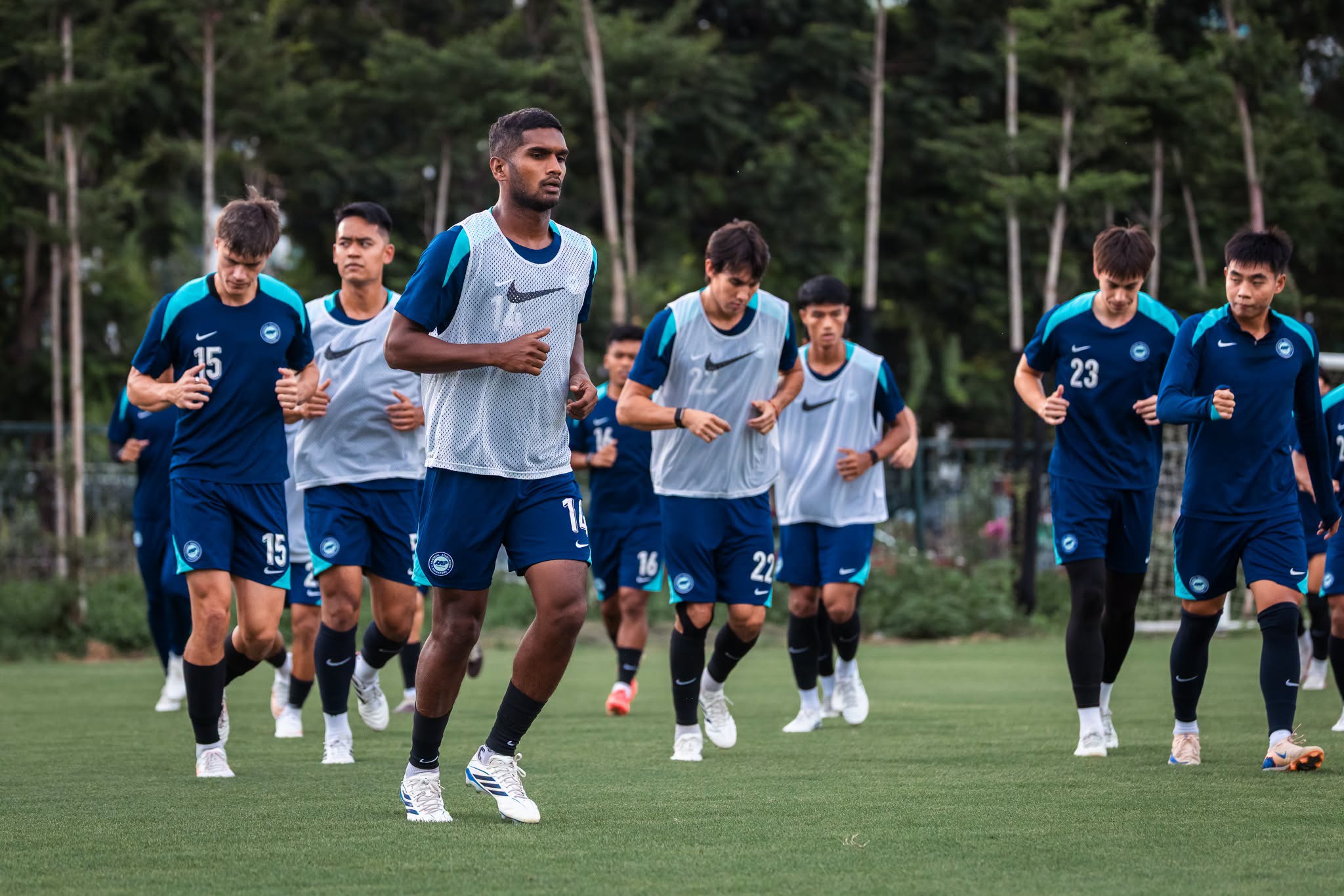
Singapore remains a challenge for the Vietnamese team even when playing at Mỹ Đình Stadium. Photo: FAS
Compared to Singapore, which has the highest per capita income in the region, Vietnamese football possesses "soft power" advantages that money cannot easily buy. That is the passionate love for football of a 100-million-strong nation, the political stability, and the unified support of the entire society for the beautiful game. These qualities help Vietnam maintain a tough V-League system, attract investors to build top-tier stadiums, and create a highly competitive environment.
Conversely, Singaporean football faces a major problem with its "training mindset." Experts there admit that many players in the Singapore Premier League are "training for entertainment rather than for improvement." The lack of intensity in training and matches causes Singaporean players to often run out of steam in the final 45 minutes of international games. This is a gap in football culture that Singapore will need much time to bridge.
But that is also the reason why, now, raising the national team's playing level to new heights, not just within the Southeast Asian pond, is an unavoidable challenge. It is not just our own desire given our current advantages, but also a greater expectation: to become a model, a guiding light for a region that is struggling, stuck between ambitions to reach the continental stage and inconsistent approaches to football development.
In tonight's match at Mỹ Đình, coach Kim Sang Sik and his players have the task of asserting the position of those who "came from behind to overtake." This is not merely a group stage encounter in the 2026 ASEAN Cup. It is a new chapter in the long story of two football nations that have swapped places.
But regional football history has shown many times that the leading position is not a fixed destination, but an endless relay race. For Vietnam, the most important question now is not whether they will equal the championship tally, but whether they can maintain the clarity and long-term vision to avoid repeating the cycle of ups and downs that their current opponent has already experienced.


Wonderfulshortvideo

vinicius junior transfer real madrid arsenal vini here we go arsenal news today real madrid news today ronaldo real madrid ronaldo edit



A sneak peak at yesterdays opener 👀

Think we might side with Francesca’s idea 😂

The highs & lows of racing 🐎

A different view to yesterday’s Stewards enquiry 👀

Perfectly explained by Francesca 🫶🏻

Keep an eye out for Adaay of Scarlett 👀
 Links
Links
 Contact
 App
App


