



The Uncertain Future of the FIFA ASEAN Cup



FIFA disclosed the group draw and classification outcomes for the 2026 FIFA ASEAN Cup last week, yet due to the intricate situation involving the supreme governing body of global football, there is uncertainty about the tournament's ability to take place on schedule.
According to international media reports from yesterday (August 3), FIFA members are considering convening an emergency meeting to examine the removal of President Gianni Infantino over his "World Cup for sale" plan.
Troubles for Mr. Infantino over the decision to suspend the red card for US striker Folarin Balogun just before the match against Belgium at the 2026 World Cup are not yet over, and even greater turmoil has erupted following the leak of his £15 billion "World Cup for sale" plan.
So far, many organizations and high-ranking figures in world football have called for Mr. Infantino to resign, or else face the risk of a no-confidence vote during an extraordinary meeting of the FIFA Council.
Against this backdrop, it is hard to believe that FIFA will devote much energy and effort to the FIFA ASEAN Cup, a regional international football tournament being managed and operated directly by FIFA for the first time, separate from the traditional Southeast Asian football championship (ASEAN Cup, formerly the AFF Cup/Tiger Cup).
Although the tournament's group draw and seeding results were announced last week, no one has yet been informed of the specific match schedule or prize structure for the 2026 FIFA ASEAN Cup, even though the tournament is set to kick off in just over a month.
Some reports indicate that although this is a tournament founded, managed, and operated by FIFA, the funding allocated for the 2026 FIFA ASEAN Cup appears insufficient to run the event.
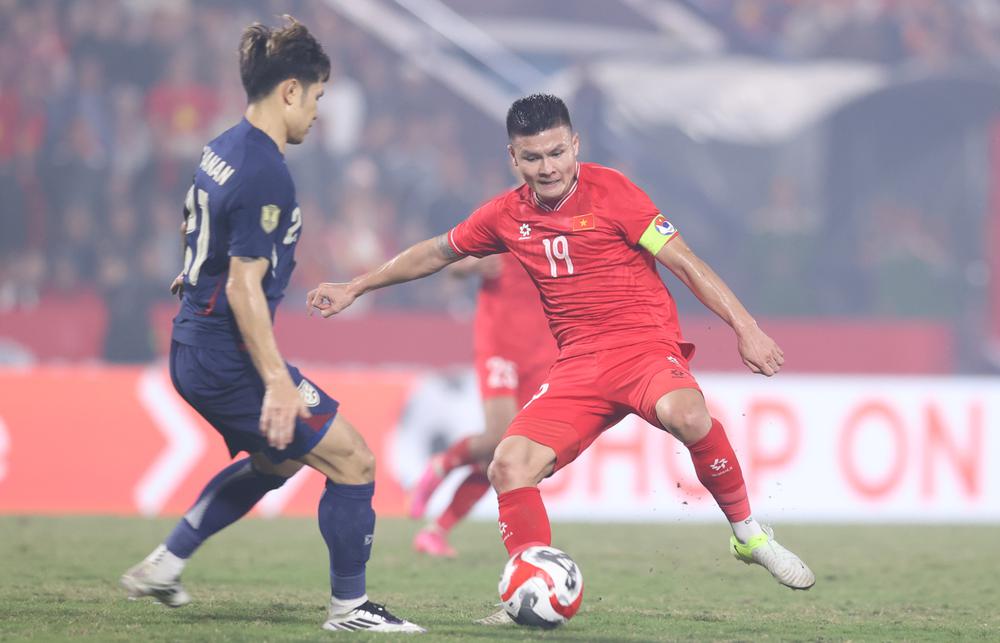
In the 2026 FIFA ASEAN Cup, the Vietnamese national team is grouped with opponents Thailand, Pakistan, and the Philippines. Photo: Hoang Linh
Meanwhile, if teams were left to arrange their own international friendly matches within the FIFA Days window of the 2026 FIFA ASEAN Cup (from September 24 to October 3), they might actually gain greater benefits than participating in the tournament itself.
With guests such as Pakistan, India, or Hong Kong (China), the 2026 FIFA ASEAN Cup can hardly be considered an attractive event for regional football fans, and the top Southeast Asian teams themselves may not be particularly interested in opponents ranked far below them on the FIFA rankings.
In essence, the 2026 FIFA ASEAN Cup is not much different from the ongoing ASEAN Cup 2026, as the competition for the top spot still revolves around a few familiar names in Southeast Asian football. In such a case, the distinctiveness of the FIFA ASEAN Cup 2026 could only emerge if a truly high-quality guest list were present, but unfortunately that scenario did not materialize.
In reality, the formula for organizing a new tournament that can immediately attract widespread fan interest lies in one or two principles: either the guest participants are highly competitive, or the prize structure is extremely attractive. On the first aspect, the 2026 FIFA ASEAN Cup seems to be at a disadvantage, and regarding the second, no one can be certain given the current turmoil within FIFA over President Infantino's position.
Therefore, even with the FIFA label attached, the 2026 FIFA ASEAN Cup may not necessarily become a football event eagerly anticipated by the entire region.


Wonderfulshortvideo

vinicius junior transfer real madrid arsenal vini here we go arsenal news today real madrid news today ronaldo real madrid ronaldo edit



A sneak peak at yesterdays opener 👀

Think we might side with Francesca’s idea 😂

The highs & lows of racing 🐎

A different view to yesterday’s Stewards enquiry 👀

Perfectly explained by Francesca 🫶🏻

Keep an eye out for Adaay of Scarlett 👀
 Links
Links
 Contact
 App
App


