



Manchester United's return to the Champions League but cost-saving reasons! Sir Jim Ratcliffe's £1 billion saving rationale, new stadium construction affecting transfers.



Manchester United remains the only club among the Premier League's 'Big Six' that has never signed a player worth £100 million. Since Sir Alex Ferguson's retirement, the club has spent over £2.1 billion on transfer fees, but no single player has ever surpassed the £100 million mark, with the most expensive still being Paul Pogba at £89 million.

Another statistic shows that in seasons when Manchester United qualified for the Champions League, the club's spending was actually lower than in seasons without it. Since 2013, in Champions League years: 2013 spent £27 million, 2015 spent £110 million, 2017 spent £140 million, 2018 spent £74 million, 2020 spent £57 million, 2021 spent £121 million, 2023 spent £174 million, with an average of £100 million.
In non-Champions League years: 2014 spent £147 million, 2016 spent £156 million, 2019 spent £144 million, 2022 spent £205 million, 2024 spent £181 million, 2025 spent £212 million, with an average of £174 million. This means that without Champions League football, United spent an average of £74 million more per year on transfers. The reduction in spending after qualifying for the Champions League in the past was due to the club's management being content with the status quo, believing that the squad was good enough for the Champions League and only needed to be maintained. They lacked the determination to continuously invest heavily to compete for titles, which once led to a fallout between former manager Jose Mourinho and then-CEO Ed Woodward.
Manchester United's spending this summer so far stands at £93 million. Whether Sir Jim Ratcliffe's management team will spend more on new players has been seriously questioned. First, it must be emphasized that the Red Devils' basic revenue from the Champions League in the new season will be lower than other Premier League participants, because the current financial distribution system places more weight on the five-year ranking. United ranks only 21st in that ranking, lower than Manchester City, Liverpool, Arsenal, Chelsea, Aston Villa, and Tottenham.
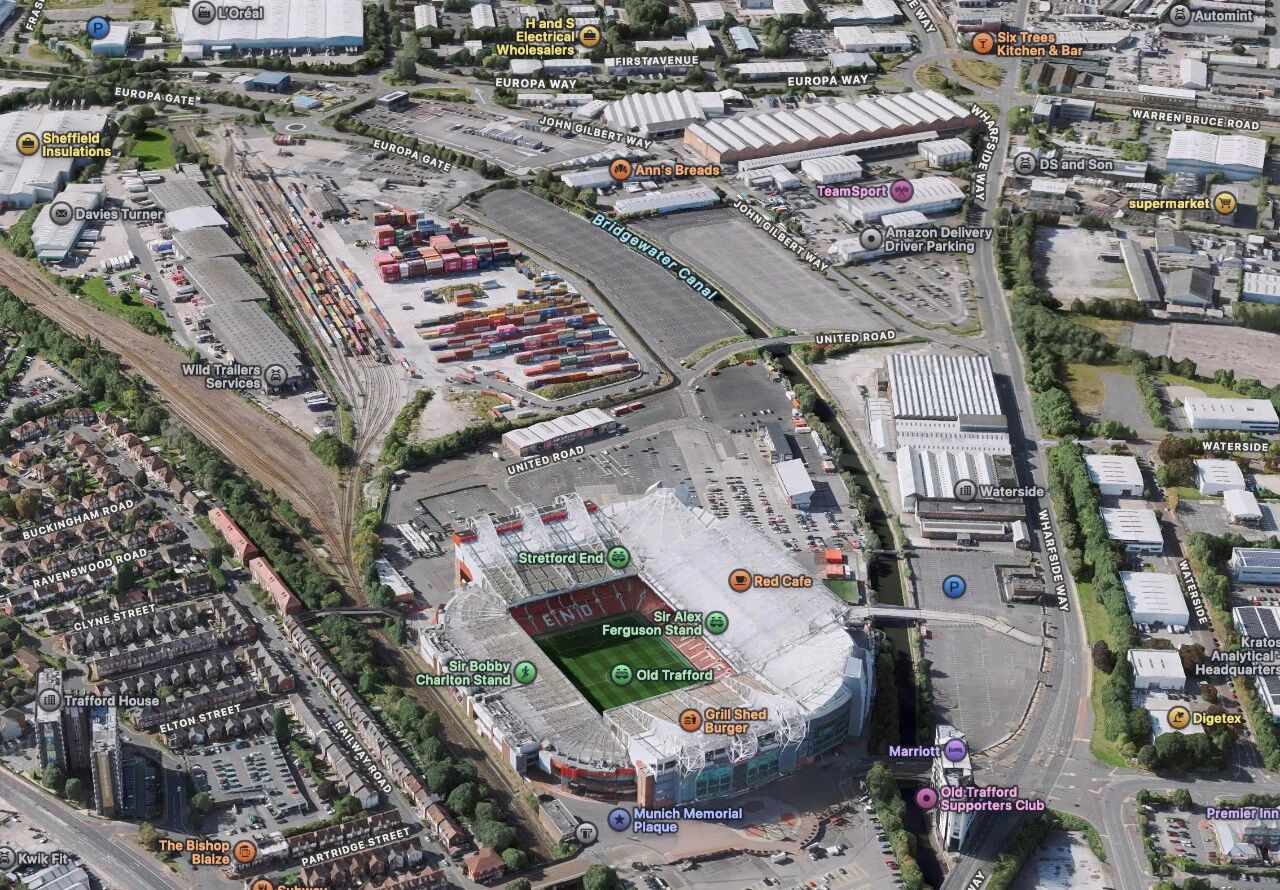
Another reason forcing Ratcliffe to reduce investment in the team is that he is raising funds to build a new 100,000-seat stadium for Manchester United. According to financial experts, the stadium cannot be built with loan financing alone; United and its owners need an additional £1 billion to achieve the goal.
Tottenham completed their fundraising in September 2019 with an interest rate of about 3.16%, coinciding with historically low rates. However, the market environment has since completely changed. Manchester United now faces a financing environment with interest rates of at least 6%, putting them at a disadvantage.
Ratcliffe hopes to use the new stadium's matchday and commercial revenue to help repay the debt, letting the stadium pay for itself. The most relevant benchmark for matchday and stadium commercial revenue is Real Madrid's renovated Bernabéu, which seats 84,000 people.
According to Deloitte's Football Money League, the Bernabéu's stadium revenue for the 2024/25 season is about £196 million. Converting this to a 100,000-seat scale, the revenue would be about £233 million. Even considering Manchester United's global commercial level, the new stadium's revenue is unlikely to significantly exceed this level. Currently, Old Trafford's similar revenue is about £160 million. Therefore, the annual incremental revenue from the new stadium is about £70 million.
For other events, the most relevant public data comes from the July 2025 fiscal year financial report of London's Wembley Stadium. Wembley's concert and large event capacity ranges from 75,000 to 90,000 depending on stage setup.
Data shows that in the 2024/25 season, Wembley hosted 42 major events, including 15 concerts. The financial report shows that Wembley's box revenue was £39.8 million, the 42 events generated total revenue of £74 million, sponsorship revenue was £7.3 million, and total revenue was £127.3 million.
According to Wembley's financial report, the 2024/25 season saw an additional 5 concerts compared to the previous year, bringing in £22.8 million in incremental revenue, or about £4.4 million per concert. This is considered the true revenue level for large high-end outdoor stadiums hosting major tours in the UK.
Manchester United's new stadium is located in Manchester, which is not as bustling as London. Under normal operations, it could host about 8 concerts per year, with total revenue of about £35.2 million. Adding other large events of about £10 million, the total incremental event revenue would be about £45 million.
The profit margin for non-Manchester United events is naturally lower, as the club is essentially just renting out the venue. With a cost rate of 65% covering security, cleaning, event operations, logistics, etc., the profit margin is about 35%, generating about £16 million in profit.
It is worth noting that Wembley is England's unique national stadium, with a mature event portfolio including the FA Cup final, NFL games, England national team home matches, and more concerts, yet it still recorded an operating loss.
Old Trafford currently has no naming rights revenue. Ratcliffe may consider selling the naming rights for the new stadium, which is expected to generate £25 million in net naming revenue per year.
At the same time, operating a 100,000-seat stadium will bring significant additional operating costs. As Manchester United itself describes, these typically include variable costs such as matchday catering, policing, security, cleaning, domestic cup ticket sharing, media and commercial sponsorship fulfillment costs, as well as fixed costs such as property, maintenance, human resources, training and development, and professional service fees. It is expected to be 10% higher than the Theatre of Dreams, meaning an additional £20 million in annual operating costs.
Calculating the above items, Manchester United's new stadium could generate an annual operating surplus of nearly £100 million. How much debt can this surplus cover? Under a 6% interest rate and a bullet repayment structure, a £100 million pre-tax operating surplus can cover about £1.67 billion in debt.

But the funding required to build the new stadium is at least £2.2 billion, and the total financial debt is about £2.9 billion to £3 billion, with annual interest payments of £170 million. Therefore, the stadium's own cash flow is far from sufficient to cover costs, with an annual shortfall of at least £30 million. Experts calculate that Ratcliffe, the Glazer family, or Manchester United itself need to find an additional £870 million to £1.1 billion over the coming years. Spending £50 million less on transfers each year is one way.


Wonderfulshortvideo

vinicius junior transfer real madrid arsenal vini here we go arsenal news today real madrid news today ronaldo real madrid ronaldo edit



A sneak peak at yesterdays opener 👀

Think we might side with Francesca’s idea 😂

The highs & lows of racing 🐎

A different view to yesterday’s Stewards enquiry 👀

Perfectly explained by Francesca 🫶🏻

Keep an eye out for Adaay of Scarlett 👀
 Links
Links
 Contact
 App
App


