



Headquarters raided, "sex bribery" of referees: Korea Football Association scandal becomes a "domino effect"



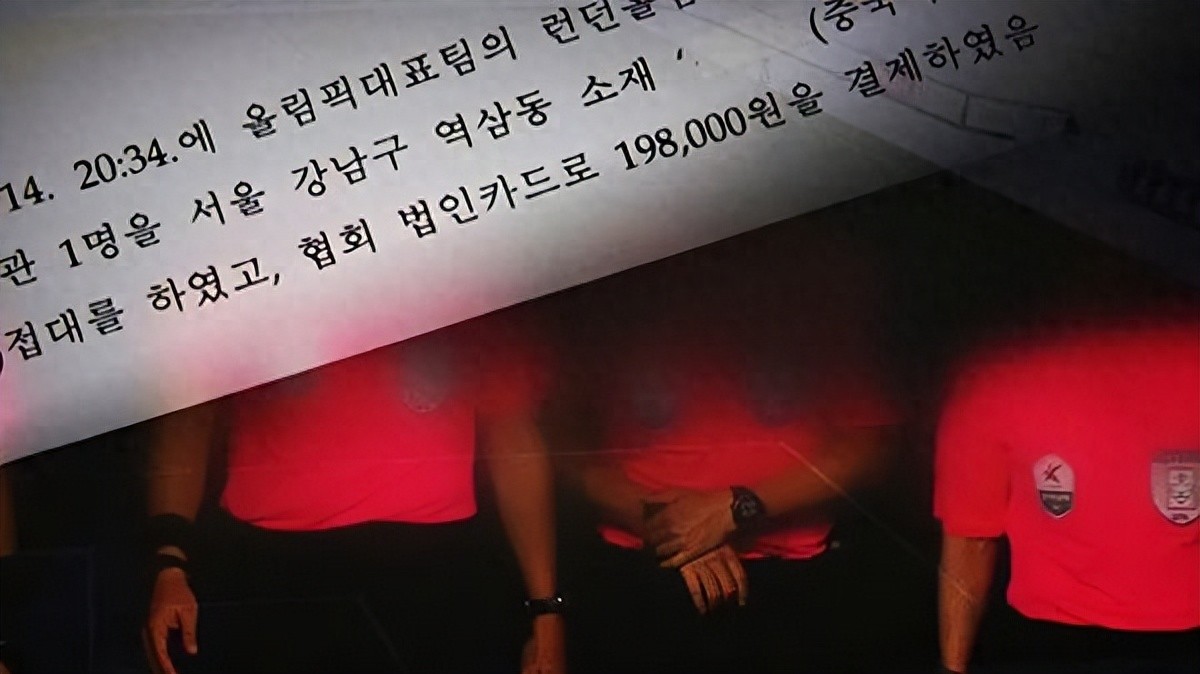
Written by Han Bing. After the World Cup, South Korean football is experiencing an unprecedented "domino effect" of scandals. The resignations of KFA President Chung Mong-gyu and head coach Hong Myung-bo are just the beginning: at the end of July, the National Assembly held a hearing on the KFA's "mismanagement"; in early August, the Seoul High Court began hearing the KFA's appeal; on August 6, the Seoul Metropolitan Police's financial crime investigation unit raided the KFA headquarters and the football hall; on August 7, JTBC reported that from 2011 to 2012, the KFA provided "sex bribery" to foreign referees officiating matches for the Korean national team and Olympic team, shocking the football world.
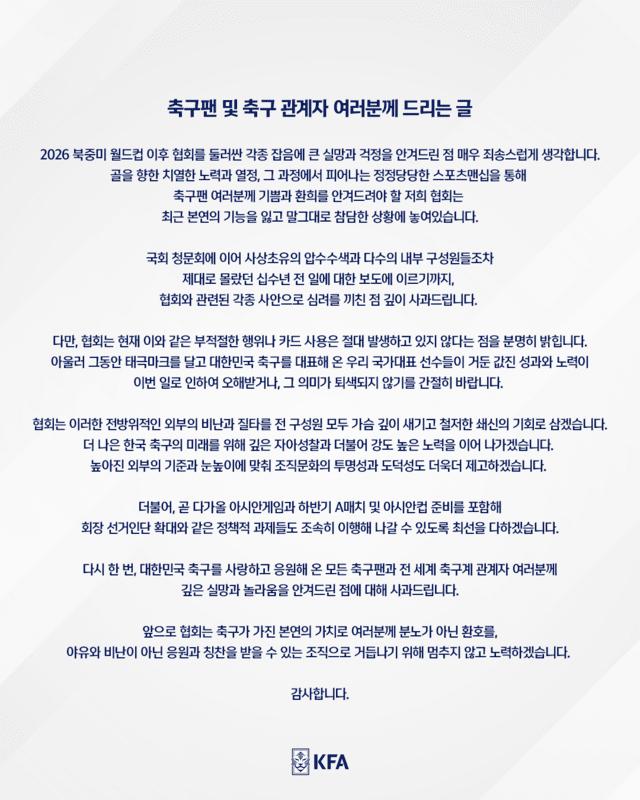
On the morning of August 8, the KFA publicly issued an apology letter, admitting that it is "in a difficult situation and has lost its fundamental function," and pledged to improve transparency and ethical standards within the association.
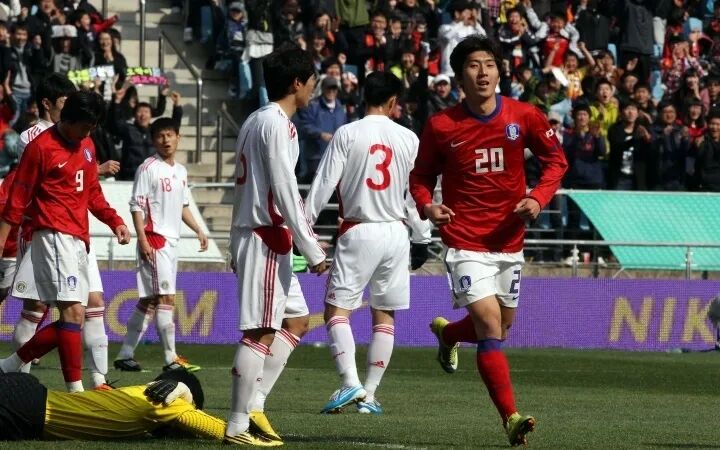
Among the KFA's series of scandals, the most shocking to the global football community is the "sex bribery" of foreign referees. South Korea's JTBC (Joongang Tongyang Broadcasting Company) revealed that between March 2011 and March 2012, the KFA provided "sex bribery" to a total of 20 foreign referees who officiated 7 matches for the national team and Olympic team. These referees came from Japan, Uzbekistan, the UAE, and Bahrain, and the matches included one World Cup Asian qualifier, two Olympic Asian qualifiers, and four friendlies, including the March 27, 2011 friendly where the South Korean Olympic team beat the Chinese Olympic team 1-0.
In February 2012, during the fifth round of the Asian World Cup qualifiers (third round), South Korea suffered an upset away loss to Lebanon, leaving both teams tied with 10 points. South Korea only led their final opponent Kuwait by 2 points, and a home loss could have meant missing the final round. The KFA sacked head coach Cho Kwang-rae and appointed Choi Kang-hee as interim coach. The Japanese referee for this crucial match was one of the foreign referees who received "sex bribery" from the KFA. It was reported that two Japanese referees actually requested to "relax," and the KFA then provided the bribe. The main referee for this match was Yuichi Nishimura, who won the AFC Referee of the Year award in 2012.
FIFA has a five-year statute of limitations for bribery of referees, and the KFA's "sex bribery" scandal has passed that period, so FIFA will not penalize them. However, the KFA's bribery also included foreign referees who officiated the 2012 London Olympics men's football Asian qualifiers against Oman and Qatar. South Korean media are concerned about the International Olympic Committee (IOC), which has no statute of limitations. If the IOC launches an investigation and finds that the KFA bribed referees, even if it happened during the qualifiers, the South Korean Olympic team's results in London could be annulled.
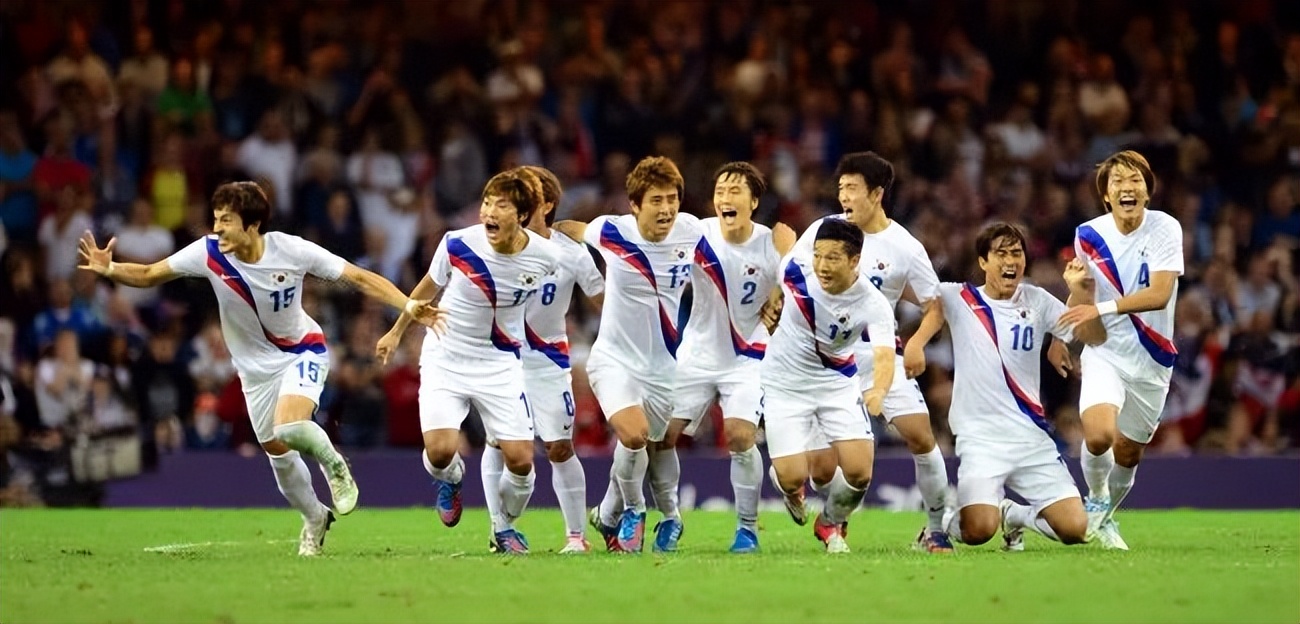
The South Korean Olympic team won a bronze medal at the 2012 London Olympics, marking the first time the men's team earned an Olympic medal and the peak of Hong Myung-bo's coaching career. If the medal is stripped by the IOC due to the "sex bribery" scandal, it would be one of the biggest scandals in South Korean sports history. Players who were exempted from military service due to the bronze medal would also face the cascading crisis of having to serve. The "sex bribery" scandal originated from a 2016 audit report by the Ministry of Culture, Sports and Tourism titled "Results of Corruption Investigation of KFA Employees," but it was concealed for 10 years before being exposed, sparking further questions about the sports authorities' lack of oversight and cover-up of misconduct.
South Korean website SportalKorea reported that the KFA's "sex bribery" scandal has triggered widespread doubts among global media and fans about the Korean team's past achievements, with the most controversial being the series of matches that led to the semifinals of the 2002 World Cup. Some media and fans have called for an investigation into whether the KFA also bribed referees during the 2002 World Cup. If confirmed, it would be a devastating blow to the image of Korean football.
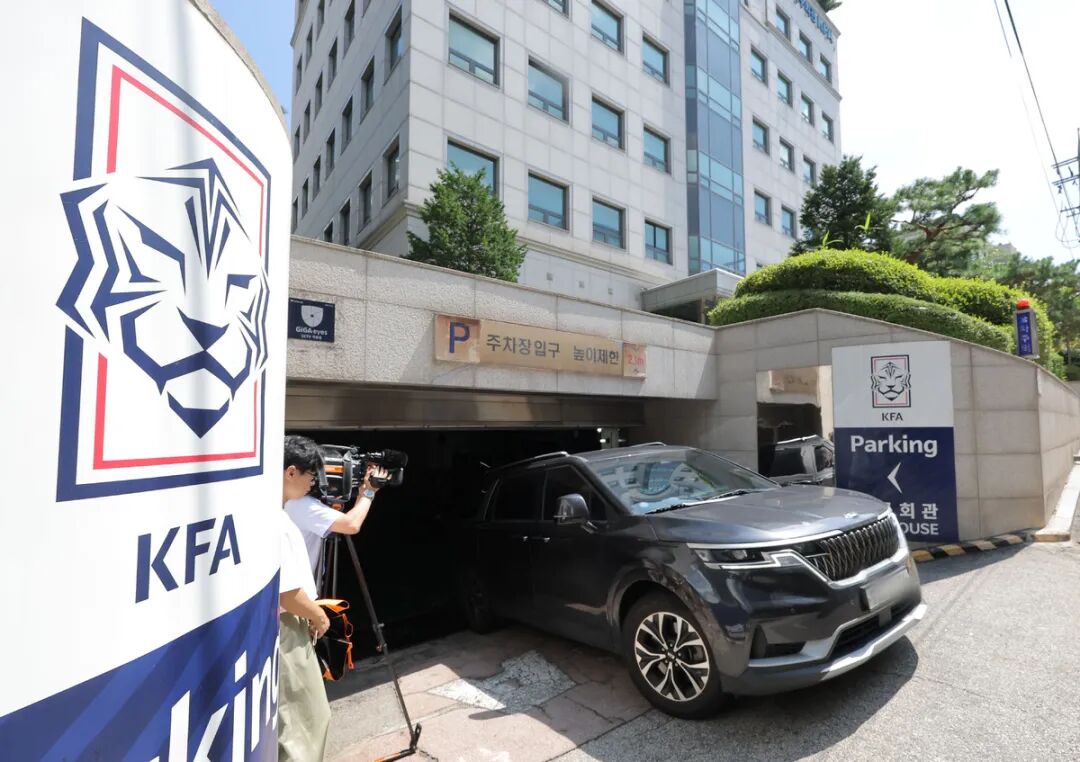
After completing the search and seizure, the police left the parking lot of the KFA building in Jongno-gu, Seoul.
Additionally, the Seoul police's financial crime investigation unit conducted an 11-hour and 22-minute search of the KFA headquarters and the football hall in Jongno-gu, Seoul. The search team seized mobile phones and internal computer data from relevant personnel, but did not obtain the phones of the main investigation targets, Chung Mong-gyu and former KFA technical director Lee Lim-saeng. Lee Lim-saeng, who was working in Cambodia, returned to South Korea on August 4 to testify in the Seoul High Court. Meanwhile, the Seoul court has a total of 9 lawsuits related to Chung Mong-gyu and Hong Myung-bo.
The ongoing scandals of the KFA may not only delay the election of a new KFA president before November but also directly affect the appointment of a new head coach for the national team. The KFA has decided to appoint an interim coach to lead the team through the remaining six friendlies this year. Whether a permanent coach can be appointed in time for the Asian Cup early next year remains uncertain.
After all, no one knows whether more scandals will be exposed next. The darkest moment for Korean football, at least for now, seems to be just the tip of the iceberg.
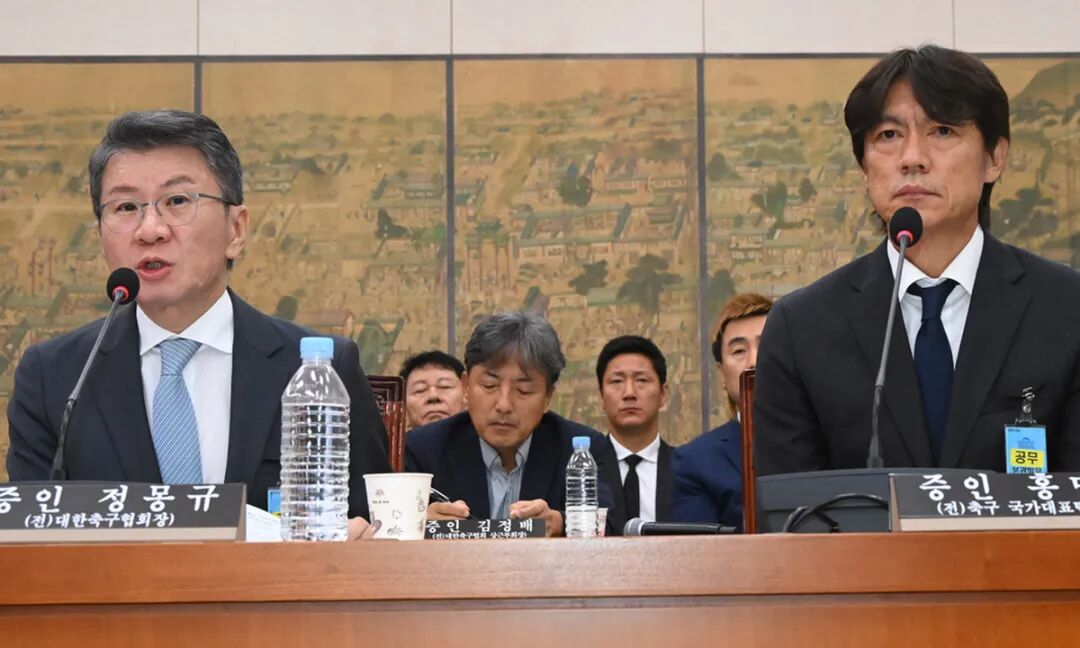
Former KFA President Chung Mong-gyu and


Wonderfulshortvideo
vinicius junior transfer real madrid arsenal vini here we go arsenal news today real madrid news today ronaldo real madrid ronaldo edit



A sneak peak at yesterdays opener 👀

Think we might side with Francesca’s idea 😂
The highs & lows of racing 🐎

A different view to yesterday’s Stewards enquiry 👀

Perfectly explained by Francesca 🫶🏻

Keep an eye out for Adaay of Scarlett 👀
 Links
Links
 Contact
 App
App


