



Barcelona: Losing Torres Means Losing a Lot



For years, Ferran Torres has consistently strived to earn a greater role at Barcelona. And at the moment when he appeared ready to take over as the leading forward at Camp Nou after Lewandowski left, things changed.
Instead of taking an easy option, he is set to join Paris Saint-Germain, a club already boasting a formidable array of attacking stars, placing himself in an even more competitive and pressure-filled environment. That includes Ballon d'Or winner Dembele, Kvaratskhelia, Doue, and Barcola.
This is the irony of a decision that could alter his career forever. Several factors are driving his departure. First, after scoring the decisive goal that helped Spain win the 2026 World Cup, the number 7 felt undervalued by Barcelona's management.
On one hand, Barcelona delayed contract renewal talks; on the other, they kept searching for a new number 9 to replace Lewandowski. Meanwhile, PSG quickly offered an attractive salary (around €14 million per season) along with a long-term contract. Most importantly, Luis Enrique had a clear tactical plan and highly valued his versatility, as he can play on both wings and as a center forward.
Enrique's tactics at the Parc des Princes have shifted entirely from relying on individual superstars to building a collective football system based on a 4-3-3 formation focused on control and high pressing.
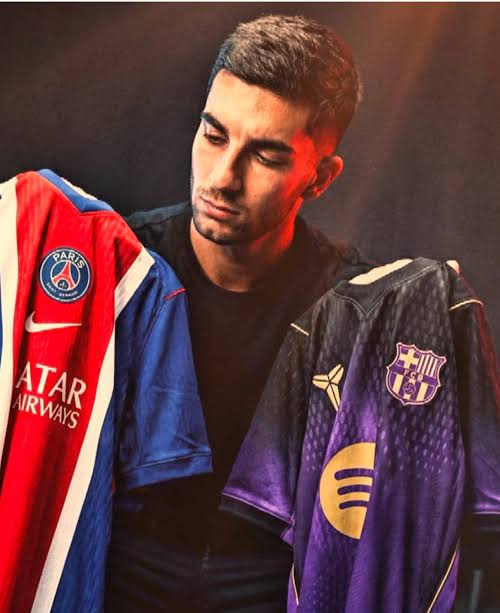
Ferran Torres Chooses PSG
The coach, known as Lucho, favors a player who tends to drop deep to receive the ball, linking up play with midfielders like Vitinha or Neves, and creating space for the two speedy wingers to exploit. The number 7's greatest strengths are his tactical discipline and movement intelligence. In PSG's persistent ball circulation system, he will perform diagonal runs from the wing into central areas or vice versa to break offside traps and receive direct through balls.
And most importantly, despite not being a regular starter, Torres consistently scores decisive goals in big matches, such as the goal in the 2026 World Cup final—a quality any coach would want to have.
Meanwhile, Barcelona faces major problems: they will no longer have a true center forward in the squad who can score over 20 goals and demonstrate the ability to excel in multiple attacking positions. Finding another striker capable of consistent scoring, understanding Flick's philosophy, and accepting competition is not easy, and will certainly cost far more than the transfer fee Hansi Flick's team receives.
Short-term financial gain could very well lead to much greater professional losses in the future. With Torres, the German tactician had an invaluable advantage during this transitional period, as the player understood the system, tactics, and always provided reliability. Selling a proven goalscorer means losing options that have been tested, all within a single summer—which is rarely a formula for success.


Wonderfulshortvideo
vinicius junior transfer real madrid arsenal vini here we go arsenal news today real madrid news today ronaldo real madrid ronaldo edit



A sneak peak at yesterdays opener 👀

Think we might side with Francesca’s idea 😂

The highs & lows of racing 🐎

A different view to yesterday’s Stewards enquiry 👀

Perfectly explained by Francesca 🫶🏻

Keep an eye out for Adaay of Scarlett 👀
 Links
Links
 Contact
 App
App


