



Where is the future heading for Shenzhen Xinpeng City?



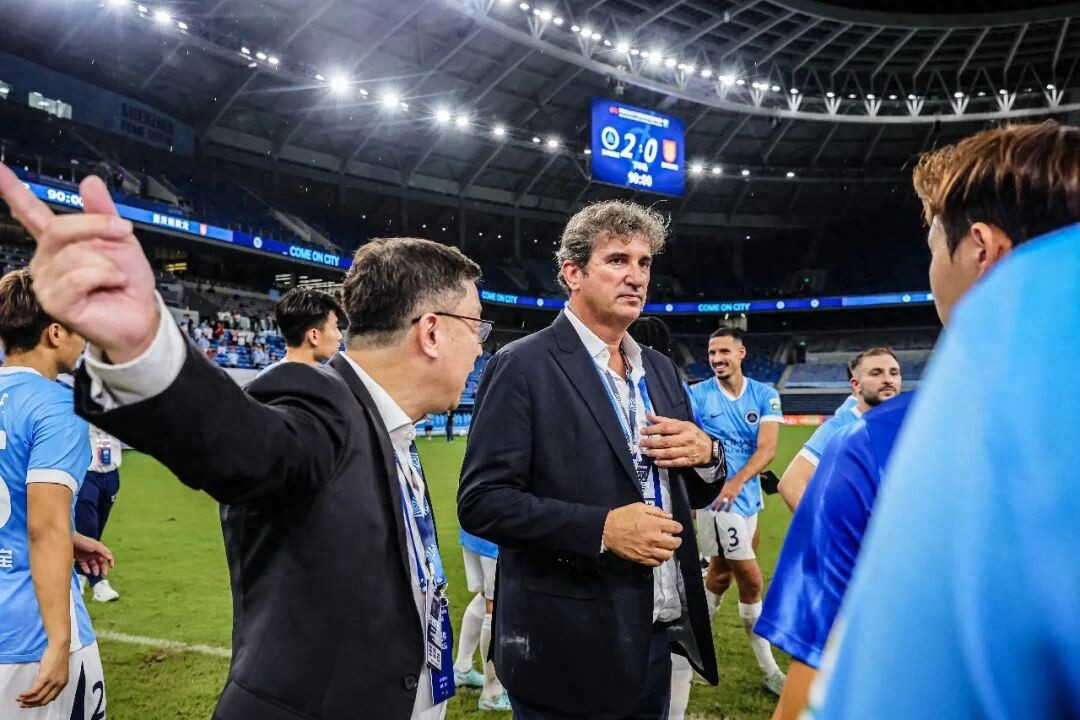
City Football Group CEO Soriano
Contributed by Cheng Shan The August 2 home match against Chongqing Tonglianglong was a major event for Shenzhen Xinpeng City. The club's majority shareholder, City Football Group CEO Soriano, and Sporting Director Viana arrived unexpectedly to watch the game. Soriano stressed that Xinpeng City is an important component of the group and a strategic layout in China, with the club committed to long-term growth. Viana mentioned that they keep a close eye on Xinpeng City from Manchester City and specifically noted the enthusiasm of Shenzhen fans.
However, just five days later, Xinpeng City suffered a 0-4 defeat away to Beijing Guoan. So far this season, they have lost 9 of their 11 away league matches, accumulating only 23 points in 22 Chinese Super League rounds. Their immediate priority for the remainder of the season is to avoid relegation. The club's strategic development remains a key issue. The high-profile visit and strong support from executives are positive signs of the group's commitment, but Xinpeng City still needs to address the problem of high investment yielding low returns. Among the many City Football Group subsidiaries, if they want to consistently rank at the top like Melbourne City and New York City, there is still much work to be done.
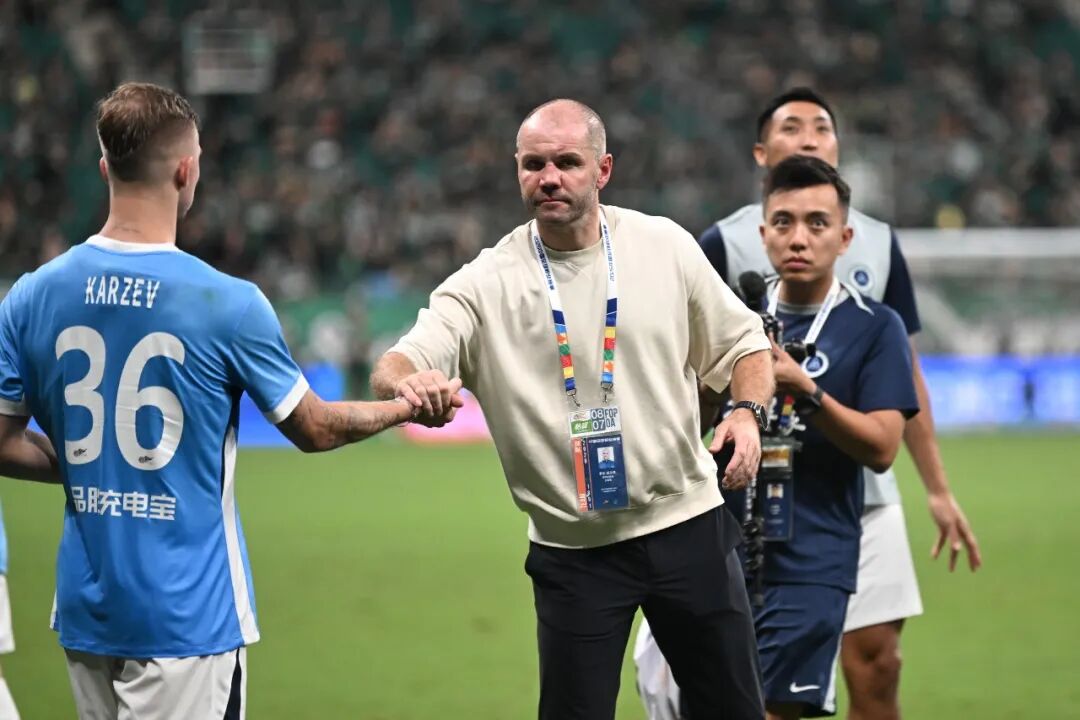

This is the second official visit to China by City Football Group CEO Soriano. The first was in early 2019, when he went to Chengdu to attend the press conference announcing the group's acquisition of Sichuan Jiuniu, the predecessor of Shenzhen Xinpeng City. Seven years later, Soriano returned to China together with Manchester City's new Sporting Director Viana, marking the highest-level executive inspection since the acquisition of a subsidiary club in China. Their subsequent public statements also demonstrated the group's emphasis on Xinpeng City and the Chinese market.
The reason Shenzhen Xinpeng City is receiving so much attention from City Football Group is the group's strategic retrenchment in the Asia-Pacific region in recent years. After acquiring a controlling stake in Mumbai City in India at the end of 2019, the group had four subsidiary clubs in the region, accounting for one-third of its total subsidiaries. Yokohama F. Marinos, in which the group bought a partial stake as early as 2014, represented Japan, the most important Asia-Pacific market for the group. However, in June 2025, as Yokohama F. Marinos was fighting relegation, the group sold all its shares and downgraded to a sponsorship relationship. At the end of 2025, due to the four-month suspension of the Indian Super League, the group sold all its shares in Mumbai City, completely exiting the Indian market. As a result, the group's subsidiary clubs shrank from a peak of 12 to 10.
After the acquisition of Bahia in Brazil, City Football Group has achieved stable results, consistently ranking in the top eight. However, in France, Italy, and Spain, the investment thresholds for subsidiary clubs are too high, so the group will not invest further and will maintain the status quo with low-level funding. The group's only remaining subsidiary clubs in the Asia-Pacific region are Melbourne City and Shenzhen Xinpeng City, and the Australian A-League market is quite limited. The group's executive "surprise visit" at this time is a clear signal that it is shifting its Asia-Pacific focus to China. The group's emphasis on the Chinese market is a major positive for Xinpeng City's future development, but the club still needs to make more efforts.

In the successful operations of City Football Group outside Europe, localization and a stable coaching staff are important factors. Melbourne City has had three local coaches in the last six seasons. After Bahia was acquired in 2023, it has been coached by Brazilian legendary goalkeeper Rogério Ceni, with steady progress. The group's practice of transferring internal coaches among its Asia-Pacific subsidiaries has not yielded good results. The French coach Mobatz, who was successful at Yokohama F. Marinos, was transferred to Melbourne City and achieved nothing in 15 months. His successor, Kisnorbo, who was originally the women's team coach of Melbourne City, won the A-League championship immediately upon taking over. However, after being transferred to French Ligue 1 club Troyes, he led the team to relegation in the same season, and was then sent to Yokohama F. Marinos in spring 2025, only to be sacked after 55 days.
Over the past four-plus years, from its predecessor Sichuan Jiuniu to Xinpeng City, the club has changed six coaches, five of whom were internal transfers within the group. Since moving to Shenzhen, the club has changed five coaches in two and a half years, with poor results. Chen Tao, who took over at the end of September last year, was dismissed in June this year. His successor, Nielsen, was transferred from subsidiary club Lommell to coach Xinpeng City. Since he had never coached in Asia before, he experienced some "culture shock," and the team's performance has been mediocre.
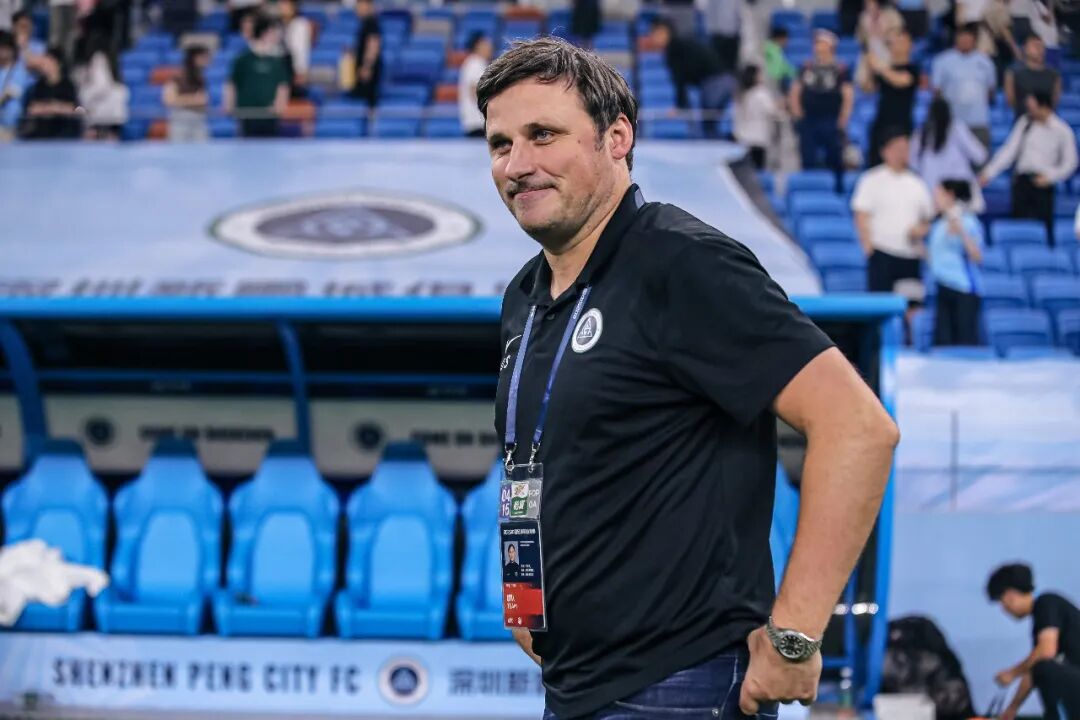
Previously, it was reported that the relationship between Sporting Director Stenz and the coaches was tense, and almost all coaching changes were controlled by the group. Under such circumstances, it is very difficult to achieve success like Melbourne City and Bahia, which relied on local coaches more familiar with the domestic environment. Moreover, Xinpeng City is the only club in the group that has relocated its home ground. It only moved to Shenzhen in 2024, so local fans and resources still need long-term cultivation. In the 2024 Chinese Super League season, Xinpeng City's average home attendance was only 6,600. In 2025, it soared to 23,500, with four matches exceeding 30,000 and only one below 20,000. In the first 11 home matches of this year, the average dropped to 20,900, with only one match above 30,000 and five below 20,000.
The team's recruitment has been largely unsuccessful year after year, and frequent coaching changes have been affecting the club's fan base. For Xinpeng City to replicate the success of Melbourne City and Bahia, clarifying internal responsibilities and powers and deepening localization may be the right direction.


Wonderfulshortvideo
vinicius junior transfer real madrid arsenal vini here we go arsenal news today real madrid news today ronaldo real madrid ronaldo edit



A sneak peak at yesterdays opener 👀
Think we might side with Francesca’s idea 😂
The highs & lows of racing 🐎
A different view to yesterday’s Stewards enquiry 👀

Perfectly explained by Francesca 🫶🏻
Keep an eye out for Adaay of Scarlett 👀
 Links
Links
 Contact
 App
App


