



Chinese football needs this "Cave Dwelling University"



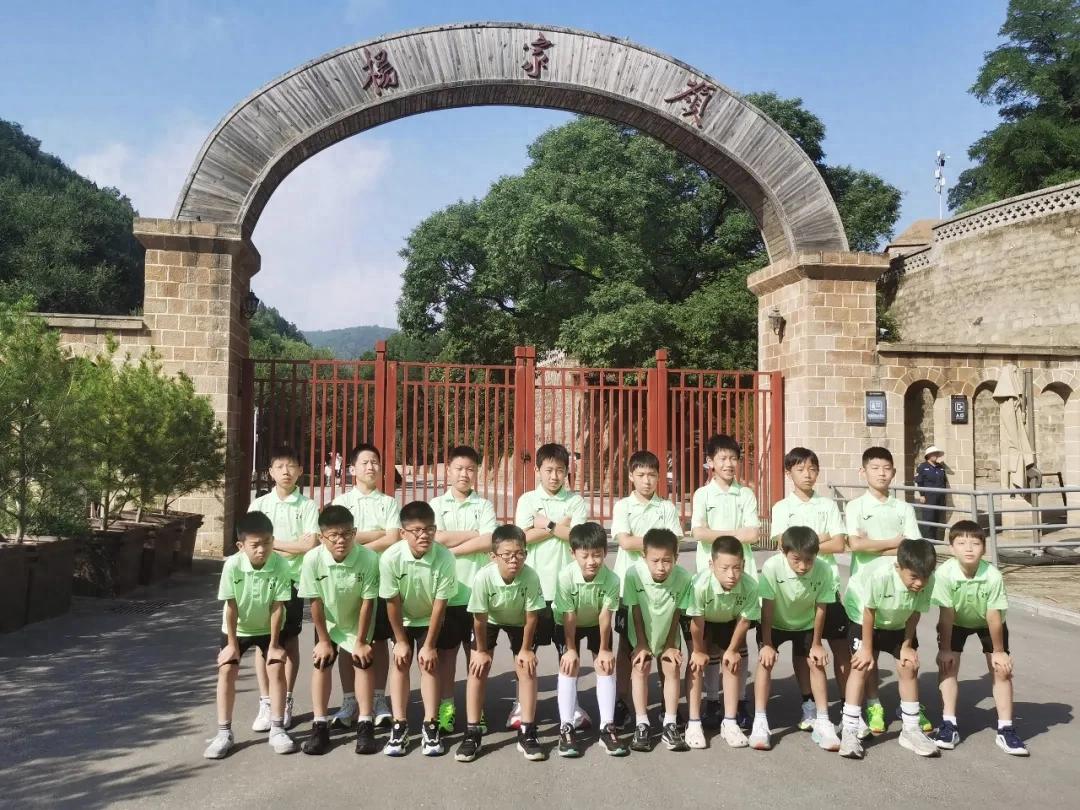
Written by Nan Nan In August 2026, the third Elite Exchange Tournament of Century-Old Schools (Primary School Group) was held in Zhidan County, Yan'an. Because of this, we had the opportunity to witness the remarkable combination of football and red education on this land in northern Shaanxi, and we also had the chance to talk with He Qihua, a national model teacher, a member of the Yan'an Spirit and Liu Zhidan Spirit Research Association, and the deputy director of the Zhidan County Working Committee for the Next Generation, about the connection between the red revolutionary spirit and Chinese football.
"I am a physics teacher, I don't know much about football," He Qihua said in a strong northern Shaanxi accent. Most of his memories are unrelated to football, but one thing left a deep impression on him. With the rapid development of Zhidan football in recent years, there are more football matches, and He Qihua sometimes goes to watch the children play. After the matches, when the stands were empty, He Qihua noticed rubbish left by the children on the sidelines. He bent down and picked them up one by one. Later, taking children to visit Liu Zhidan's Mausoleum, Bao'an Revolutionary Site, and the Anti-Japanese Red Army University became a habit for He Qihua. There, he told the children, "Picking up a piece of waste paper deepens a virtue."
He Qihua's words reflect the simplicity of the people in northern Shaanxi. Behind this sentence lies a memory that the Chinese people must not forget, nor can Chinese football afford to forget.
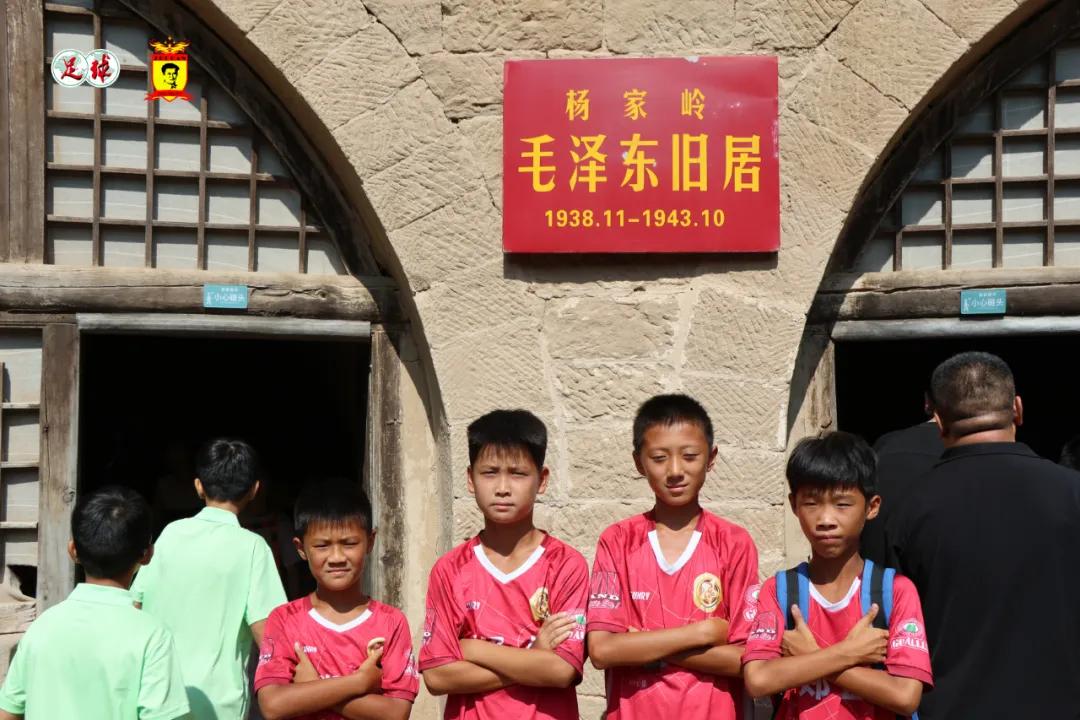
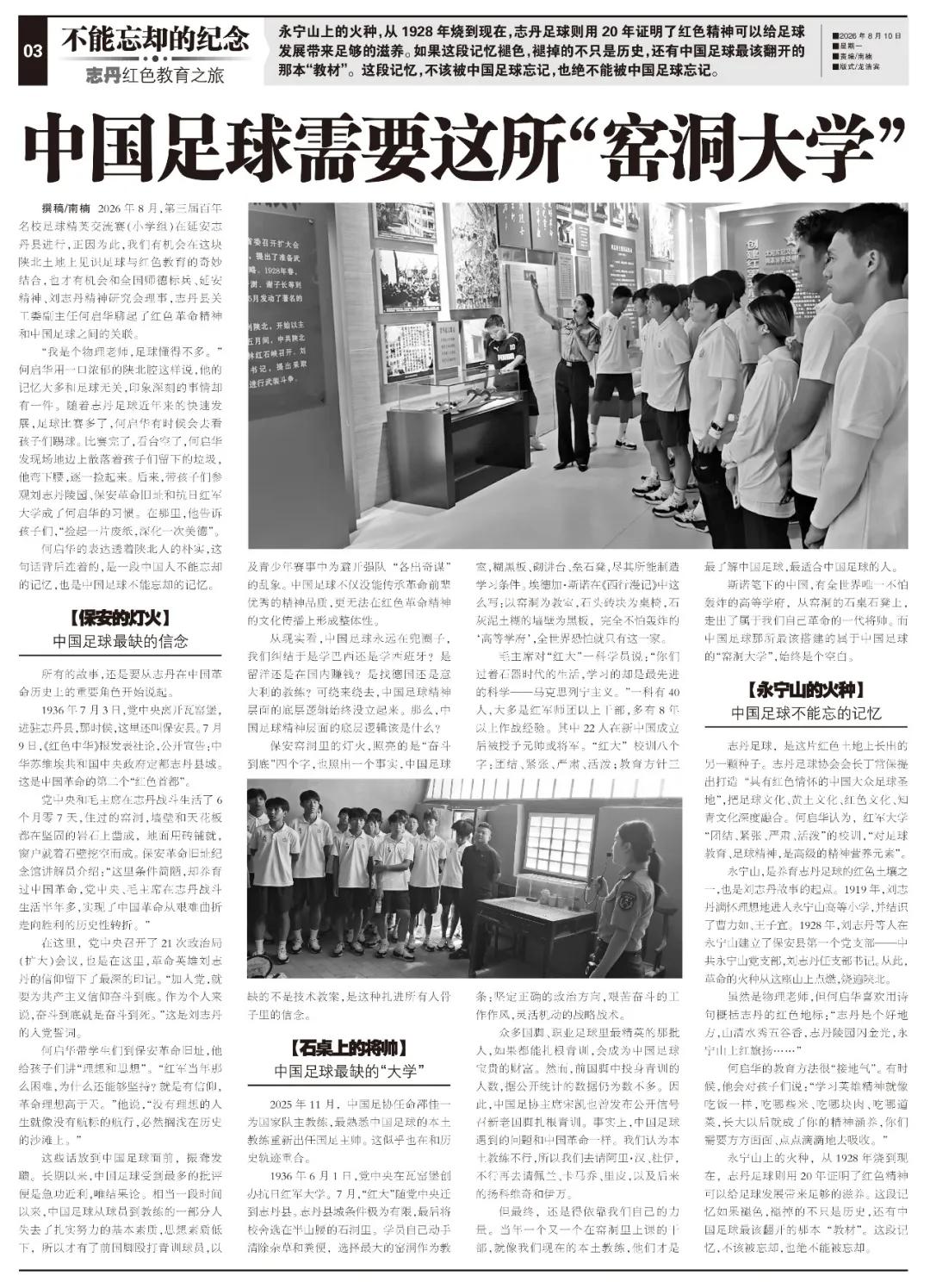
▲ Players of the Century-Old School Cup study at the Yangjialing Revolutionary Site

All stories must begin with Zhidan's important role in China's revolutionary history.
On July 3, 1936, the Party Central Committee left Wayaobao and moved into Zhidan County, which was then called Bao'an County. On July 9, the newspaper *Red China* published an editorial publicly announcing that the Central Government of the Chinese Soviet Republic had made Zhidan County its capital. This was the second "Red Capital" of the Chinese Revolution.
The Party Central Committee and Chairman Mao lived and worked in Zhidan for six months and seven days. The cave dwellings they stayed in had walls and ceilings carved out of solid rock, floors paved with bricks, and windows cut into the stone walls. A guide at the Bao'an Revolutionary Site memorial hall explained: "The conditions here were simple, yet they nurtured the Chinese revolution. The Party Central Committee and Chairman Mao spent over half a year here, achieving a historic turning point from hardship to victory for the Chinese revolution."
Here, the Party Central Committee held 21 Politburo (expanded) meetings. It was also here that the faith of the revolutionary hero Liu Zhidan left the deepest imprint. "Joining the Party means fighting for the communist faith to the end. As an individual, fighting to the end means fighting until death." This was Liu Zhidan's oath upon joining the Party.
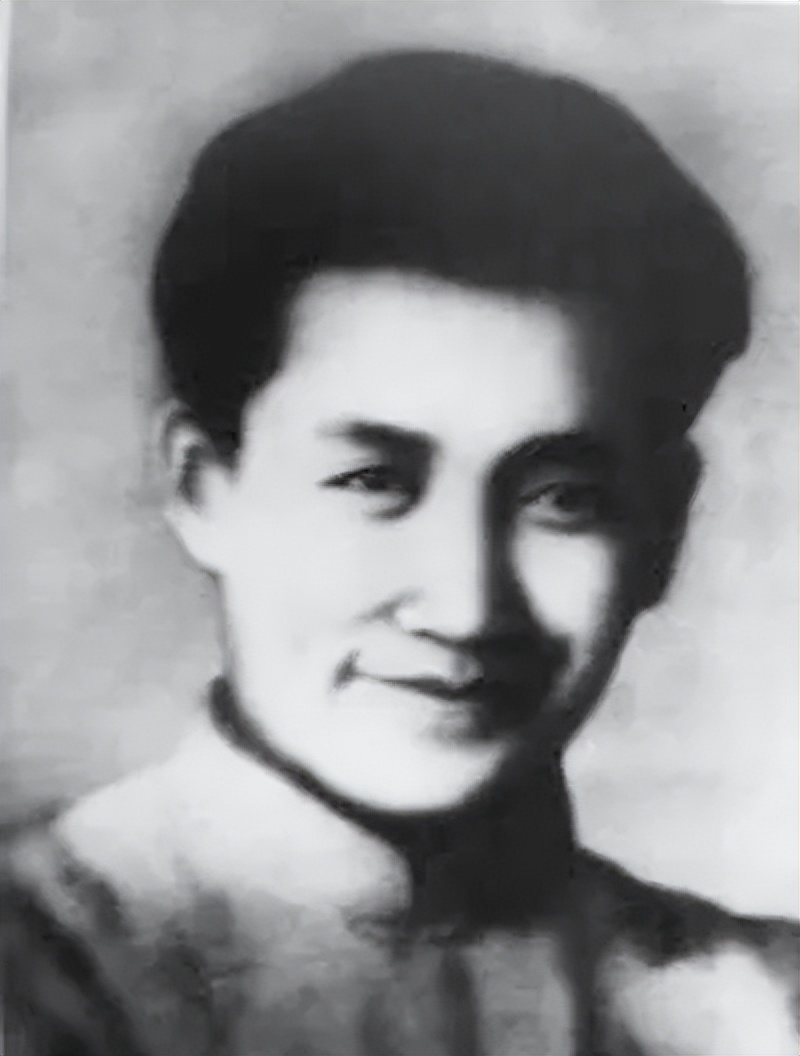
▲ Liu Zhidan
He Qihua takes his students to the Bao'an Revolutionary Site, where he tells them about "ideals and thoughts." "The Red Army faced such great difficulties back then, why could they still persevere? Because they had faith, and their revolutionary ideals were higher than the sky," he said. "A life without ideals is like a voyage without a beacon, and it will inevitably run aground on the shores of history."
These words are a wake-up call for Chinese football. For a long time, Chinese football has been most criticized for its short-sightedness and result-oriented approach. For quite some time, some players and coaches in Chinese football have lost the basic quality of working hard, and their ideological quality is low. This has led to incidents such as a former national team player assaulting a youth player, and various "creative tactics" in youth tournaments to avoid strong teams. Chinese football has not only failed to inherit the excellent spiritual qualities of the revolutionary forefathers but has also been unable to form a coherent cultural dissemination of the red revolutionary spirit.
From a practical perspective, Chinese football is always going in circles. We are torn between whether to learn from Brazil or Spain, whether to go abroad or stay home to make money, whether to find a German or an Italian coach. But no matter how we twist and turn, the underlying logic of Chinese football's spiritual level has never been established. So, what should that underlying logic be?
The lamp in the Bao'an cave illuminates the two words "fight to the end," and also reveals a fact: Chinese football does not lack technical lesson plans; it lacks this kind of belief that is deeply rooted in everyone's bones.
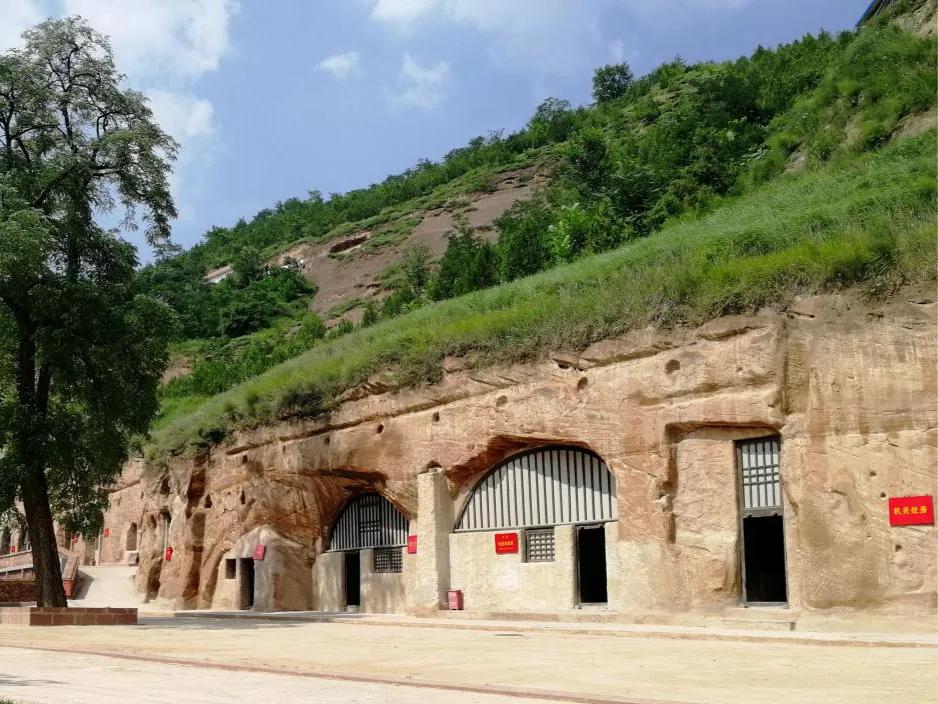
▲ Bao'an Revolutionary Site

In November 2025, the Chinese Football Association appointed Shao Jiayi as the head coach of the national team. A local coach who knows Chinese football best once again took the helm of the national team. This also seems to align with the trajectory of history.
On June 1, 1936, the Party Central Committee established the Anti-Japanese Red Army University in Wayaobao. In July, the "Red University" moved with the Party Central Committee to Zhidan County. The conditions in Zhidan County were extremely limited, and eventually, the school was set up in caves halfway up the mountain. The students cleared weeds and feces themselves, chose the largest cave as the classroom, plastered blackboards, built platforms, and arranged stone benches, doing everything possible to create learning conditions. Edgar Snow wrote in *Red Star Over China*: "A 'higher institution of learning' using caves as classrooms, stones and bricks as tables and chairs, and walls made of lime and mud as blackboards, completely unafraid of bombing—there is probably only one such school in the world."
Chairman Mao said to the first class of the "Red University": "You live a Stone Age life, but you are learning the most advanced science—Marxism-Leninism." The first class had 40 students, mostly Red Army cadres at the division and regiment level or above, most with over eight years of combat experience. Twenty-two of them were later awarded the rank of marshal or general after the founding of New China. The school motto of the "Red University" was eight characters: Unity, Tension, Seriousness, and Liveliness; its three educational principles were: Correct political direction, Hardworking working style, and Flexible and mobile strategy and tactics.
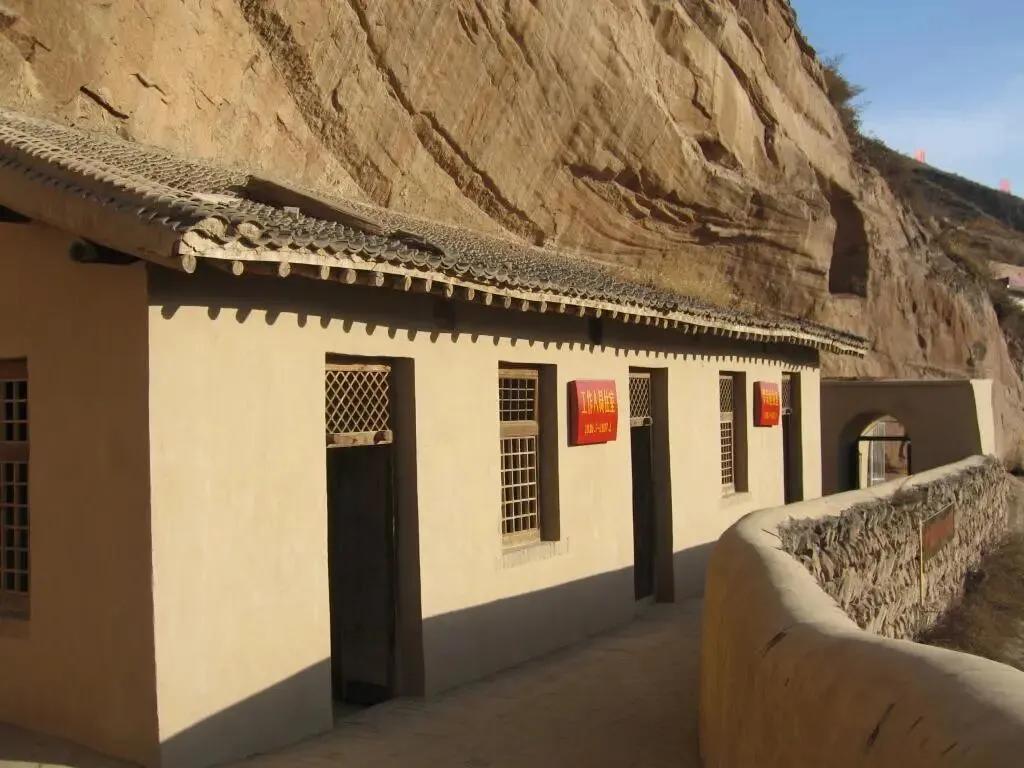
▲ Anti-Japanese Red Army University, Zhidan Site of the Chinese People's Anti-Japanese Red Army University
If many national team players, the most elite in professional football, could all dedicate themselves to youth training, they would become a valuable asset for Chinese football. However, according to publicly available statistics, the number of former national team players involved in youth training is still small. Therefore, Chinese Football Association Chairman Song Kai also issued a public call for former and current national team players to devote themselves to youth training. In fact, the problems Chinese football faces are similar to those of the Chinese revolution. We thought local coaches were not good enough, so we hired Ali Han, Dujković, and when that didn't work, we hired Perrin, Camacho, Lippi, and later Janković and Ivanković.
But in the end, we still have to rely on our own strength. The cadres who attended classes in the caves back then are like our local coaches today—they are the ones who understand Chinese football best and are the most suitable for Chinese football.
The China described by Snow had the only institution of higher learning in the world that was unafraid of bombing. From the stone tables and stools in the caves emerged our own generation of revolutionary generals. But the "Cave Dwelling University" that Chinese football most needs to build—a university of its own—remains a blank.
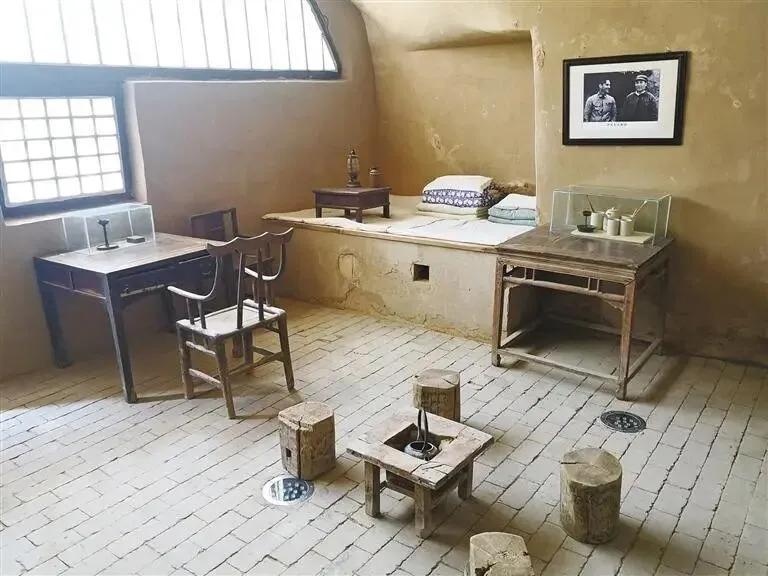
▲ Chairman Mao being interviewed by Snow here

Zhidan football is another seed that has grown on this red land. Ding Changbao, president of the Zhidan Football Association, proposed creating a "mass football holy land with red feelings," deeply integrating football culture, loess culture, red culture, and educated youth culture. He Qihua believes that the school motto of the Red Army University—"unity, tension, seriousness, and liveliness"—is "a high-level spiritual nutrient for football education and football spirit."
Yongning Mountain is one of the red soils that nurtures Zhidan football, and also the starting point of Liu Zhidan's story. In 1919, Liu Zhidan, full of ideals, entered Yongning Mountain Higher Primary School, where he met Cao Liru and Wang Ziyi. In 1928, Liu Zhidan and others established the first Party branch in Bao'an County—the Yongning Mountain Party Branch—with Liu Zhidan as the branch secretary. From then on, the spark of revolution was ignited from this mountain and spread across northern Shaanxi.
Although he is a physics teacher, He Qihua likes to summarize Zhidan's red landmarks with poems: "Zhidan is a good place, with beautiful mountains and clear waters and fragrant grains; the Zhidan Mausoleum shines with golden light; the red flag flies on Yongning Mountain..."
He Qihua's educational methods are very "down-to-earth." Sometimes, he says to the children: "Learning the spirit of heroes is like eating. Which rice you eat, which piece of meat, which dish—these become your spiritual nourishment when you grow up. You need to absorb it from all aspects, bit by bit."
The spark on Yongning Mountain has been burning since 1928. Zhidan football has proven over 20 years that the red spirit can provide sufficient nourishment for football development. If this memory fades, it will not just be history that fades, but also the very "textbook" that Chinese football most needs to open. This memory should not be forgotten, and must never be forgotten.


Wonderfulshortvideo
vinicius junior transfer real madrid arsenal vini here we go arsenal news today real madrid news today ronaldo real madrid ronaldo edit



A sneak peak at yesterdays opener 👀
Think we might side with Francesca’s idea 😂

The highs & lows of racing 🐎

A different view to yesterday’s Stewards enquiry 👀

Perfectly explained by Francesca 🫶🏻

Keep an eye out for Adaay of Scarlett 👀
 Links
Links
 Contact
 App
App


