



Breaking the Dilemma of Comprehensive Development in Five Dimensions: The Red Revolutionary Spirit Provides Guidance for Chinese Football



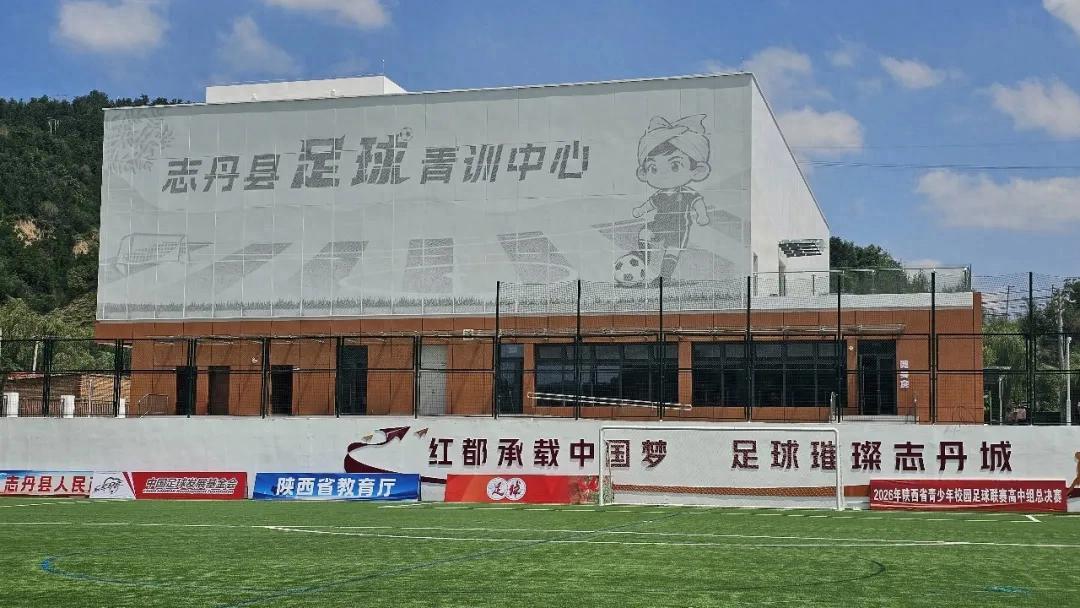
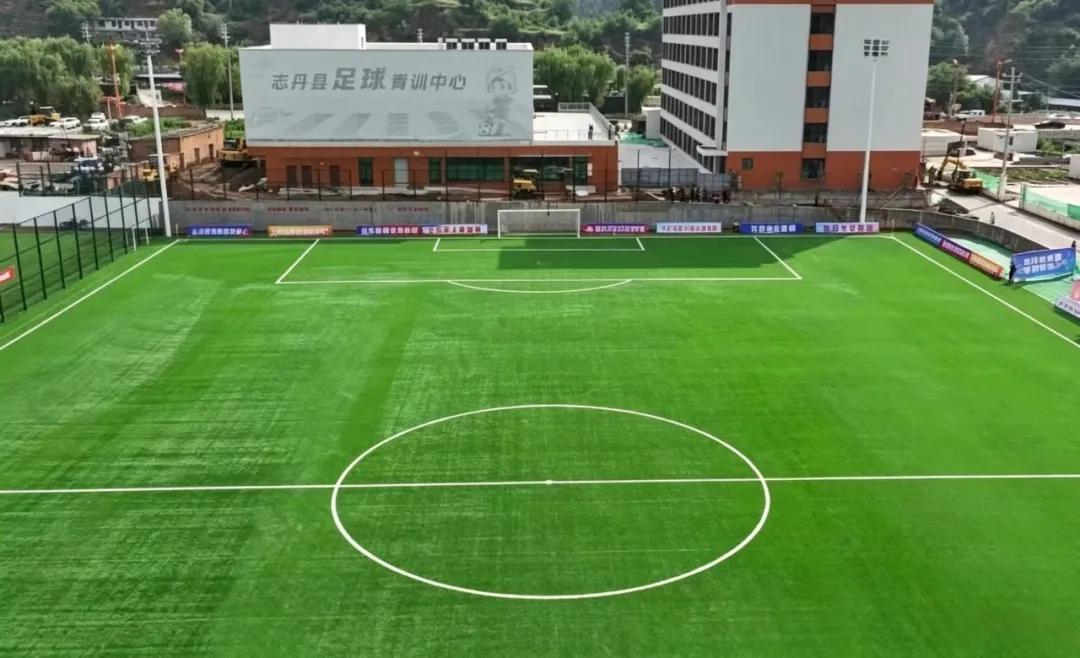
By Nan Nan. In 2003, the Zhidan County Football Association was founded, and Ding Changbao recalled that fewer than 60 people in the county played football regularly. At the same time, the Chinese professional league was on the verge of a massive influx of money. Twenty years later, Zhidan's football population has grown to 6,000, artificial turf fields have increased from 0 to 32, and 246 children have changed their lives through football. Meanwhile, Chinese professional football has experienced a roller-coaster ride from expansion to collapse over these two decades.
Different directions lead to different outcomes. He Qihua believes that the unwavering revolutionary spirit allowed people to always believe in victory even when only a few thousand guns remained. Does Chinese football have such determination? The answer is obvious, and that is the root of the problem. The steadfast faith, indomitable will, unity and cooperation, sustained effort, practicality, and hard work of the red revolutionary spirit precisely target the pain points of Chinese football: impatience, weak will, system gaps, and lack of cohesion. It can provide spiritual guidance for Chinese football in these aspects.

The primary guidance provided by the red revolutionary spirit for Chinese football is at the top-level strategic level. When Liu Zhidan was conducting armed struggle in northern Shaanxi, he did not copy any model. He proposed the "Three Colors Theory" — red (establishing worker-peasant armed forces), white (sending people to do military work within the Kuomintang army), and gray (winning over and reforming bandit forces). These three forms were carried out simultaneously, adapting to local conditions and uniting all forces that could be united. This is a strategy of adapting to local conditions summarized through a series of revolutionary practices.
Revolution is not about a single path, but once the right one is chosen, persisting in it is the power of faith. In contrast, over the years, Chinese football has seen one Football Association plan after another, prioritizing iconic achievements and results, with top-level designs constantly changing. Each decision-maker came with their own prescription, and every plan was overturned before completing a full cycle.
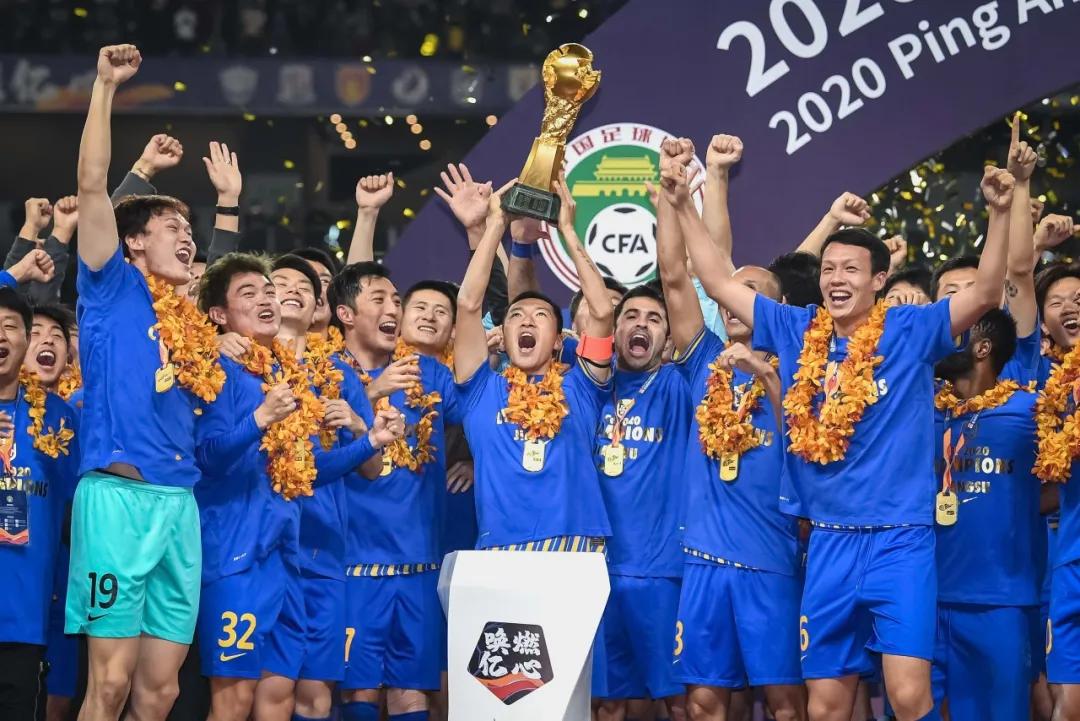
In the era of money-driven football, capital poured in massively. With astronomical foreign players and ultra-high salaries, Chinese football experienced a short-term sprint. As a result, achievements seemed to rise, but the foundation of the pyramid was hollowed out. When the bubble burst, what remained were club salary arrears, disbandments, and a mess. The Chinese Super League champion disbanded the following year—such absurdity actually happened in Chinese football. Chinese football's top-level strategy does not lack the explosive power of "short, fast, and direct"; what it lacks is the determination not to be swayed by short-term interests.

He Qihua has studied education all his life. He summarized three elements of his own preaching of the red revolutionary spirit: ideals, spirit, and down-to-earth struggle. "With ideals and dreams, we still need to be down-to-earth, persevere towards the right goal, and then we can achieve ultimate success," he said.
He Qihua told the children about Liu Zhidan's oath to join the Party: "To join the Party means to fight for the communist faith to the end. As an individual, fighting to the end means fighting until death." What he wanted to express was: ideals determine direction.
This story is equally glaring when placed in front of Chinese football's youth training. The dilemma of Chinese youth training is systemic. The pool of talent selection is narrow, with a huge gap in the number of registered youth players compared to developed football countries; the separation of sports and education pits playing football against studying, making parents afraid to let their children pursue football; there is a shortage of youth coaches, and their levels are uneven; players are afraid of hardship and fatigue, and they back down at high-intensity training. What is missing? It is still ideals, spirit, and struggle.
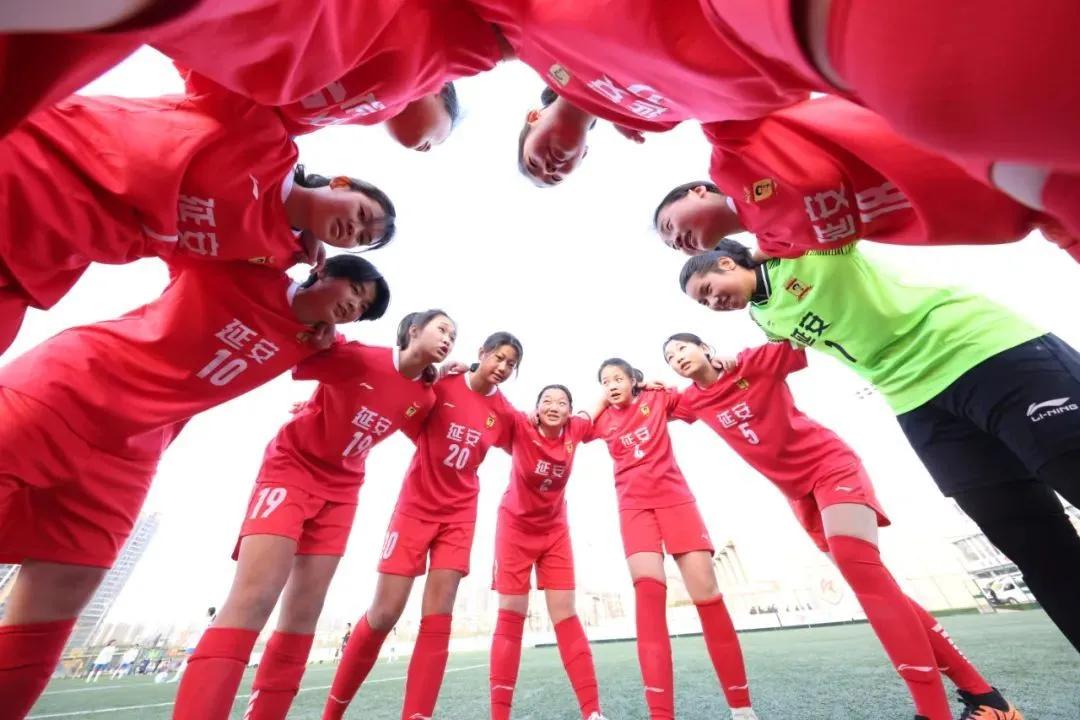
There is a set of data that shows the results of Zhidan football and red education: 246 children changed their lives through football, some joining professional teams, some going to university. Liu Jiahui, a little girl who once ran on the Zhidan football field, has made it into the strong women's super league team Wuhan Women's Football through her own efforts. Even as a professional player, whenever time permits, she returns to Zhidan to train the children. In her eyes, the children of Zhidan are like her when she was young—their eyes light up at the sight of a football.
This is youth training, and this is also a closed loop. It is not about buying more expensive training equipment, but about cultivating more people willing to root themselves in grassroots youth training.

Military tactics have no fixed form, just as water has no constant shape. Liu Zhidan's "Three Colors Theory" is not only a strategy of unity but also a tactical wisdom of seeking truth from facts. He did not copy the Jinggangshan model; instead, based on the actual conditions of the Shaanxi-Gansu border, he combined armed struggle, land revolution, and base area construction.
Conditions can be simple, but the concept must be correct. This is seeking truth from facts. The illness of Chinese football on the field precisely stems from not seeking truth from facts. We are always looking for a way out: should we learn from Brazil or from Spain?
We are always going in circles on specific issues. Copying foreign tactical templates mechanically, without designing playing styles based on the physical and technical characteristics of local players—this is not learning, but copying homework. After copying for 20 years, we have not formed a style that truly suits us.
Collapsing as soon as a goal is conceded, not strong against weak opponents, and crumbling against strong ones—on the surface it's a psychological problem, but at its core it's a work style problem. Why do we have the Three Main Rules of Discipline and the Eight Points for Attention? This revolutionary style itself is a set of iron rules that form a conditioned reflex, deeply rooted in everyone's code of conduct. Chinese football's work style is far from forming such a conditioned reflex. Hence we have off-field chaos, loose discipline, and lack of professional ethics—common industry ailments.
Combining flexible tactical wisdom with iron discipline is the prescription that the red revolutionary spirit offers to Chinese football in practice. On the technical and tactical level, take a localized path; on the work style level, restrain players with strict discipline, making resilience a conditioned reflex. What Chinese football lacks most is still willpower and quality, not just in matches but more in the bits and pieces of daily training.

Liu Zhidan's daughter Liu Lizhen wrote in a memoir: "My father made me understand that the value of life lies in giving, not in taking."
Giving without taking—this is like a mirror in front of today's football industry governance. In the past 20 years, Chinese football has experienced two large-scale anti-corruption campaigns. From top officials of the Football Association to national team coaches, from club executives to referees, the announcements are shocking. The deep-seated problems of short-term capital chasing profits, loose industry discipline, and ineffective entry systems in Chinese football cannot be eradicated by just one or two storms.
Nowadays, phenomena such as club salary arrears, players struggling to defend their rights, and frequent referee controversies leading to declining credibility still occur from time to time. To restore the ecosystem of Chinese football, what is needed is not to replace a batch of people but the courage for self-reform. Only in this way can Chinese football face the industry's deep-seated problems, dare to actively expose issues and fix loopholes, break the chaos of short-term capital profit-seeking, and return to the public welfare nature of football and the essence of sports.
He Qihua takes students to red education bases, not just for a quick look, but to turn the revolutionary spirit into concrete things that children can touch and feel up close. Chinese football industry governance also needs this kind of "walking classroom," writing discipline and rules into the daily operation of the industry, making them a conditioned reflex for every practitioner.

Sports serve the people—this is the root of red sports. In September 1942, during the most difficult period of the War of Resistance Against Japan, the "September 1" Expanded Sports Meet was held in Yan'an. 1,388 people participated, with Zhu De as chairman. The events ranged from track and field, basketball to shooting, mountain climbing, and demonstration events including football. Photographer Xu Xiaobing recalled the scene: "The masses were also enthusiastic; there were many onlookers at every competition, and the hillsides were full of people." This was the largest sports event during the Yan'an period.
The ideological education power of red sports is enormous, and putting ideology first is our magic weapon. Chinese football's shortcomings in cultural dissemination are obvious. The transmission of football culture has been broken; after several generations, no own football culture has been accumulated. Instead, there is severe internal friction among various types of fans, lacking a spirit of sharing honor and disgrace. Moreover, football cultural IP is extremely scarce, with no recognizable Chinese football cultural label. Compared with advanced football countries, Chinese football's gap is not only at the technical level but also at the cultural level.
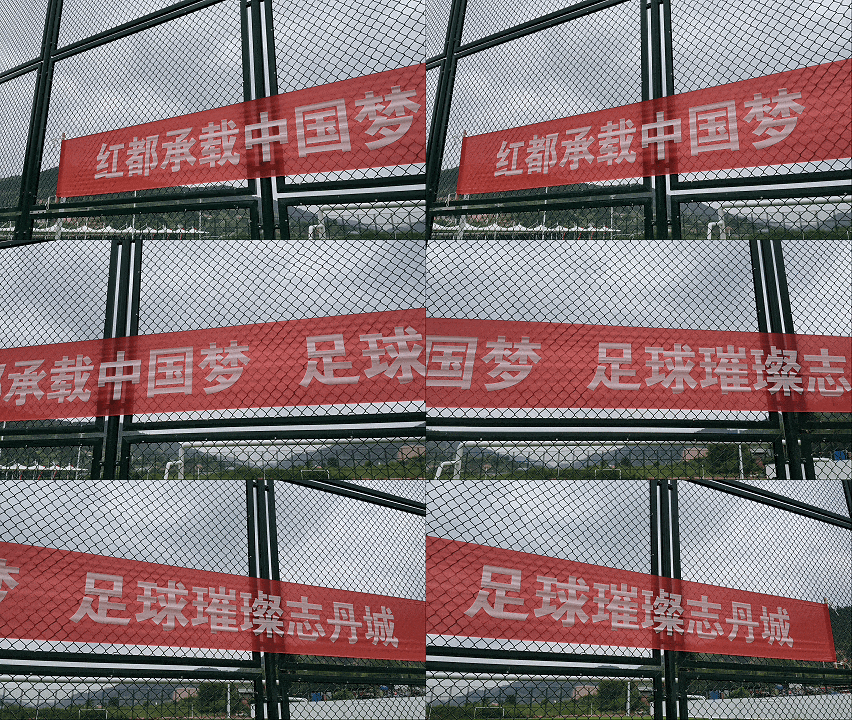
Zhidan provides an idea. They are working hard to build Zhidan into a "Chinese mass football holy land with red feelings," deeply integrating football culture, loess culture, red culture, and educated youth culture. Zhidan's football is no longer just a game, but a cultural phenomenon: the red revolutionary spirit is the background, and football is the carrier.
When the U17 national team won consecutive matches and tied for the "Star of Tomorrow" Cup championship, fans began to get restless and dream again. But temporary wins do not represent comprehensive victory. Chinese football lacks the ability to turn wins into systemic victories, or rather, lacks education across the entire industry. And this is precisely the core of cultural dissemination. The red spirit is by no means just shouting a few slogans before a match; it must be a mechanism that is implemented. Instead of doing red visits as a formality, we should integrate resilience into the team's daily training and matches, making the red spirit truly become an industry standard.
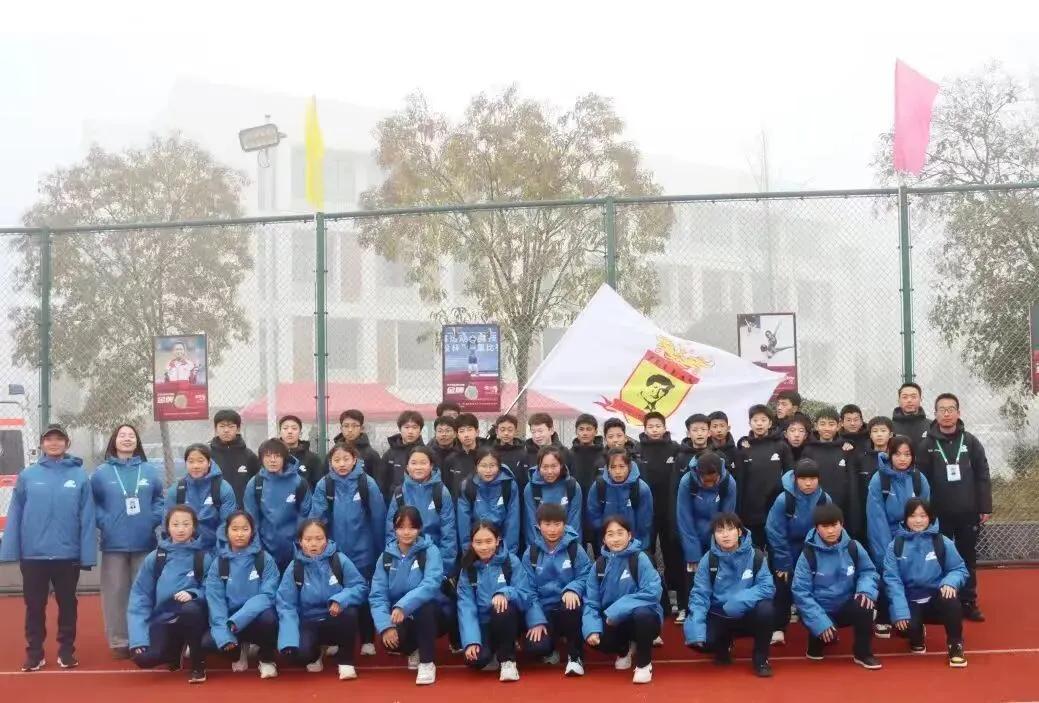
Twenty years, Zhidan football has grown from 60 people to 6,000. The football seeds on this red land are still growing, and the answers to many of Chinese football's problems may be hidden in the land under the feet of the children participating in the Centennial School Cup.


Wonderfulshortvideo
vinicius junior transfer real madrid arsenal vini here we go arsenal news today real madrid news today ronaldo real madrid ronaldo edit



A sneak peak at yesterdays opener 👀
Think we might side with Francesca’s idea 😂
The highs & lows of racing 🐎
A different view to yesterday’s Stewards enquiry 👀
Perfectly explained by Francesca 🫶🏻

Keep an eye out for Adaay of Scarlett 👀
 Links
Links
 Contact
 App
App


