



Youth football tournaments are booming, with nationwide events unlocking international exchanges


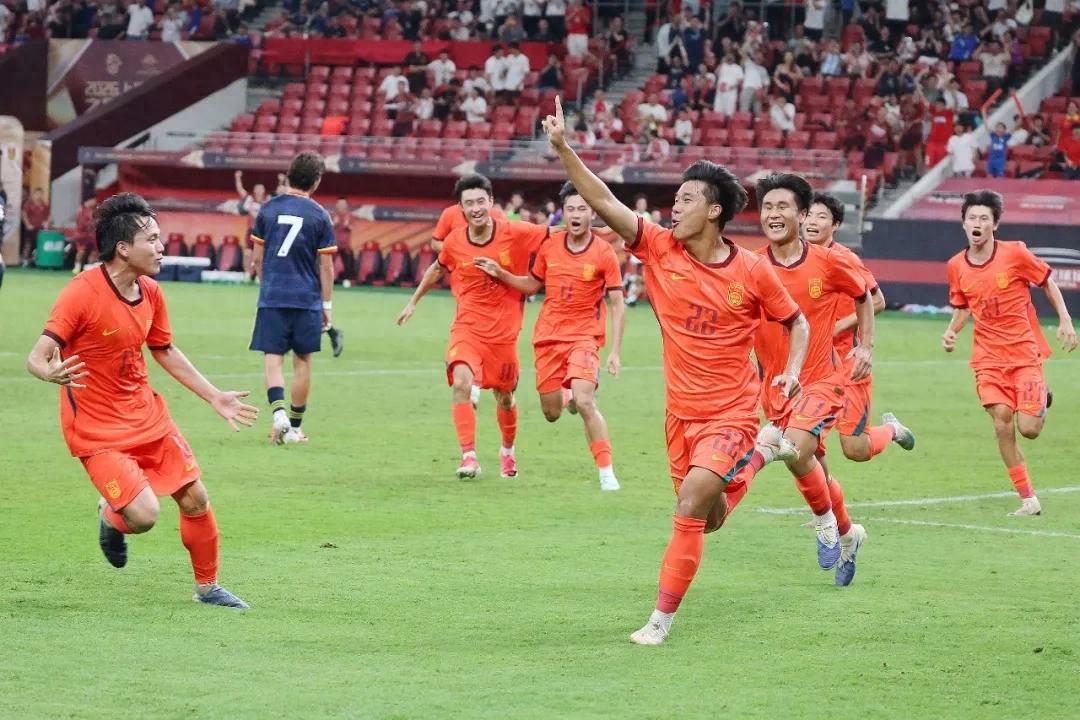
Written by Han Bing and Wang Wei This summer, Chinese youth football has entered a golden phase of comprehensive international exchanges. From north to south, major cities across the country have invited high-level overseas youth teams to China for friendly matches and competitions. Various tournaments are flourishing and spreading everywhere: from Shenyang, Xiong'an, and Jinan in the north, to Shanghai, Zhangjiagang, and Nantong in the east, down to Guangzhou, Meizhou, and Fuzhou in the south, and west to Kunming, Zunyi, and Guiyang... Dozens of domestic and international youth teams, both male and female, have stepped onto Chinese fields. The pattern of "bringing in" youth football exchanges has begun to take shape.

The summer of exchanges began in early July with the CFA China Team·Yinchuan International Youth Football Championship in Ningxia. The U17 national team faced Australia, Nigeria, and Tanzania's U17 teams as warm-up for the U17 World Cup at the end of the year. The U17 national team beat Australia 3-0, lost to Tanzania 0-2, and drew with Nigeria 1-1, finishing as runners-up, which provided considerable training value.
On July 12, the 43-year-old "Beibei Cup" youth football tournament (U12 age group) kicked off in Zhangjiagang. Last year, the event invited foreign teams for the first time, and this year it continued with three teams: Italy's Tongda, South Korea's Nowon RFC, and Thailand's Chonburi.
On July 15, the Shenyang · Naishi Cup Sino-Foreign Youth Football Invitational Tournament kicked off in Shenyang. The event had seven age groups from U7 to U13, bringing together 74 teams, including youth teams from Russia and South Korea.
On July 25, the "Xinjian Yuan 2034 Cup" Primary School Football Tournament (U12 age group) started in Suzhou. Multiple foreign teams, including those from Thailand, Laos, Uzbekistan, and Japan, entered the finals.
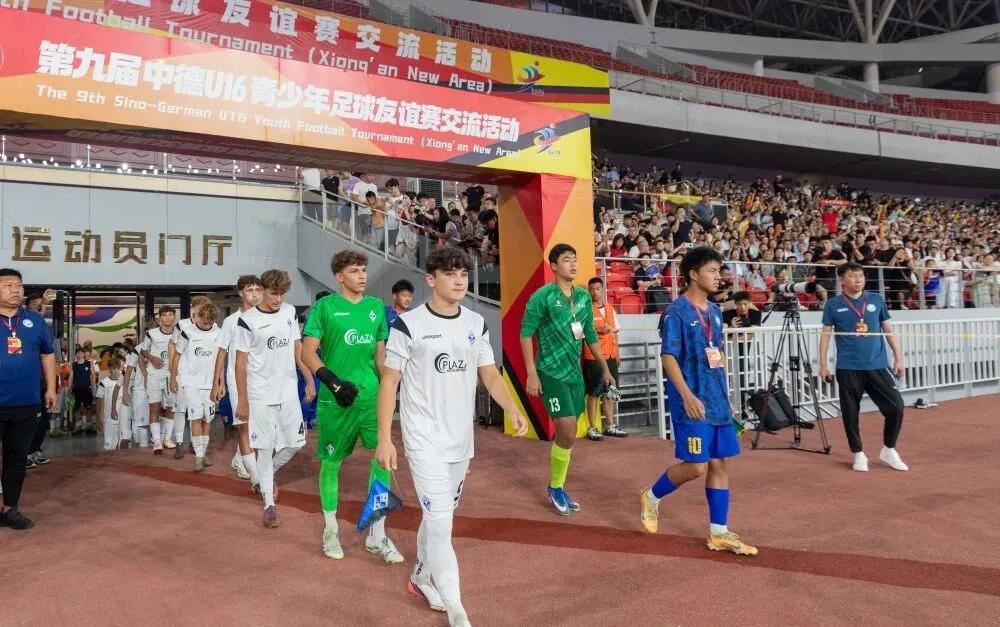
On August 3, the group stage of the 9th China-Germany U16 Youth Football Friendship Tournament began in Nantong. This event was initiated in 2012 by former national team coach Klaus Schlappner. The three German teams that came to China were Union Berlin, Mannheim, and the Rhine-Neckar district selection team. Union Berlin won the championship. From August 6 to 8, the Xiong'an leg of the tournament took place, and the Tianjin Men's U16 team won.
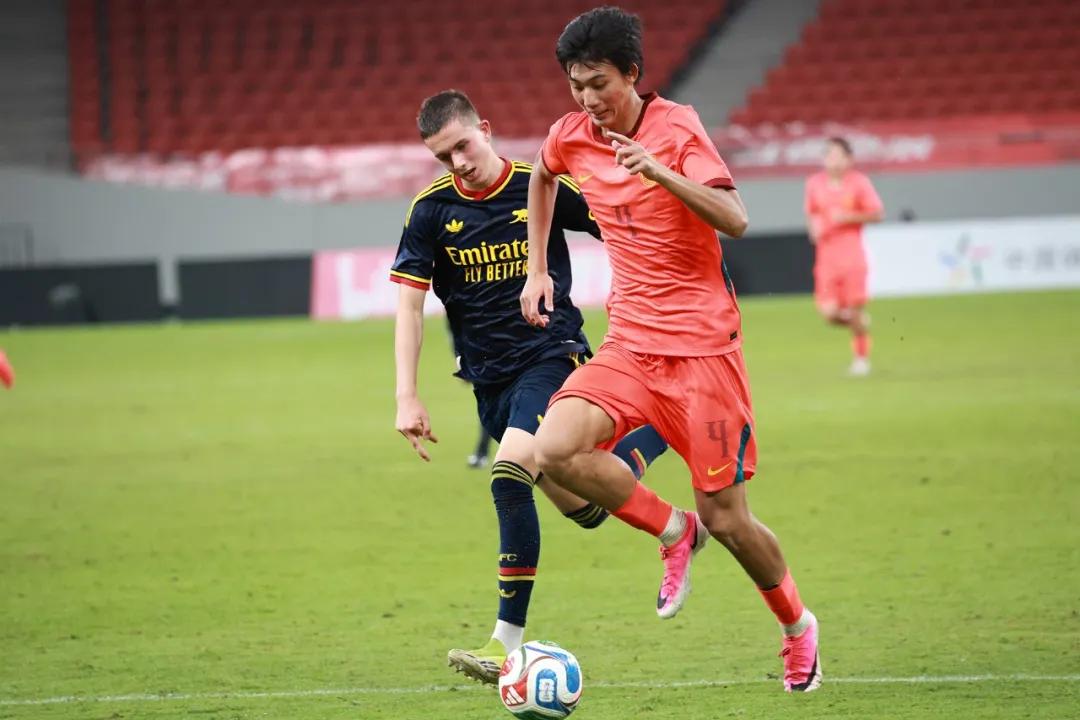
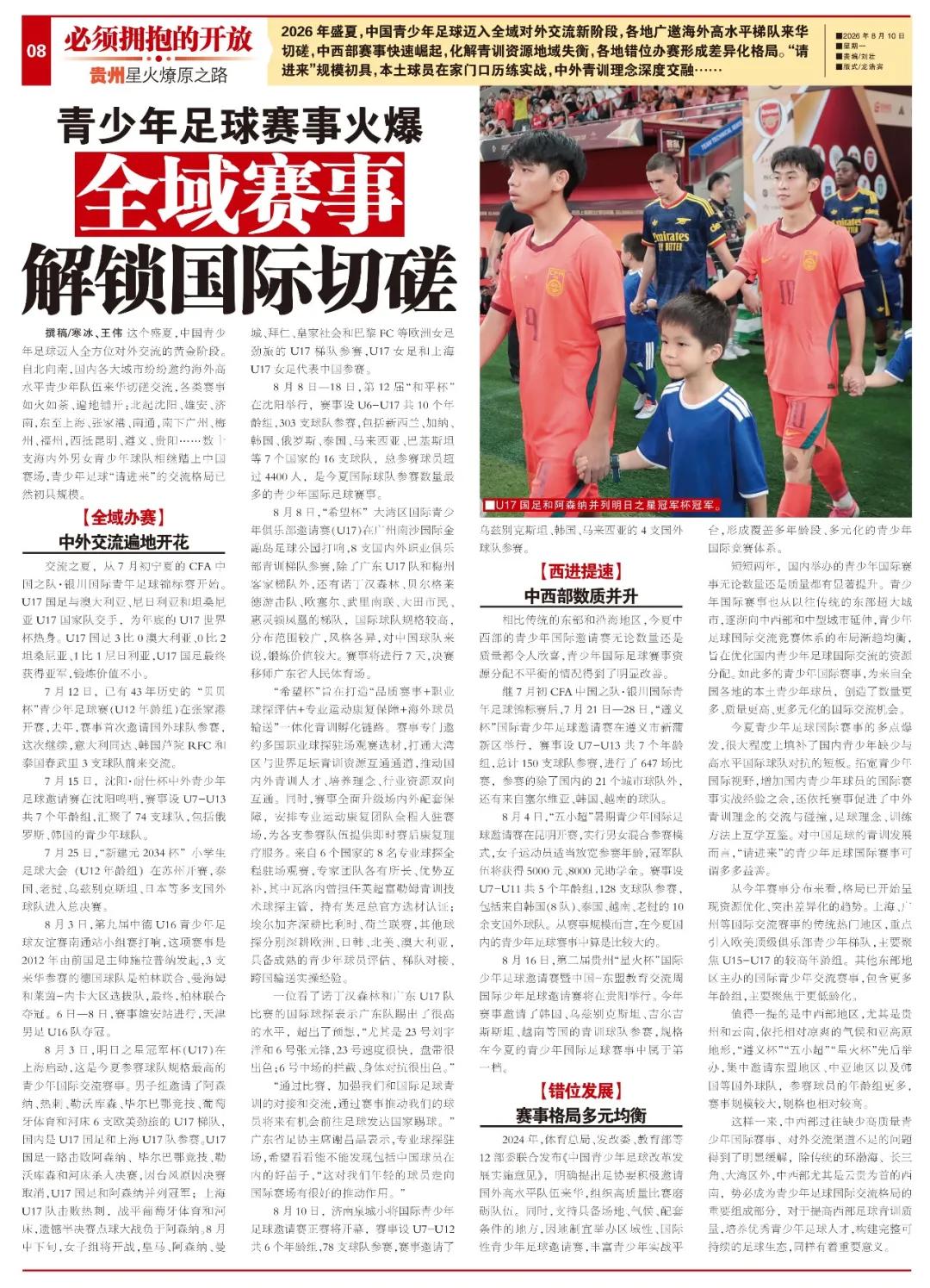
On August 3, the Future Star Champions Cup (U17) started in Shanghai, the highest-specification youth international exchange tournament this summer. The men's division invited U17 teams from six European and American powerhouses: Arsenal, Tottenham, Bayer Leverkusen, Athletic Bilbao, Sporting Lisbon, and River Plate. Domestically, the U17 national team and Shanghai U17 team participated. The U17 national team defeated Arsenal, Athletic Bilbao, Bayer Leverkusen, and River Plate to reach the final, but the final was canceled due to a typhoon, and the U17 national team and Arsenal were declared co-champions. The Shanghai U17 team beat Tottenham, drew with Sporting Lisbon and River Plate, but unfortunately lost to Arsenal on penalties in the semifinals. In late August, the women's division will start, with U17 teams from European women's football powerhouses such as Real Madrid, Arsenal, Manchester City, Bayern Munich, Real Sociedad, and Paris FC participating. The U17 women's national team and Shanghai U17 women's team will represent China.
From August 8 to 18, the 12th "Peace Cup" was held in Shenyang, with 10 age groups from U6 to U17, 303 teams participating, including 16 teams from seven countries: New Zealand, Ghana, South Korea, Russia, Thailand, Malaysia, and Pakistan. The total number of players exceeded 4,400, making it the youth international football tournament with the most international teams this summer.
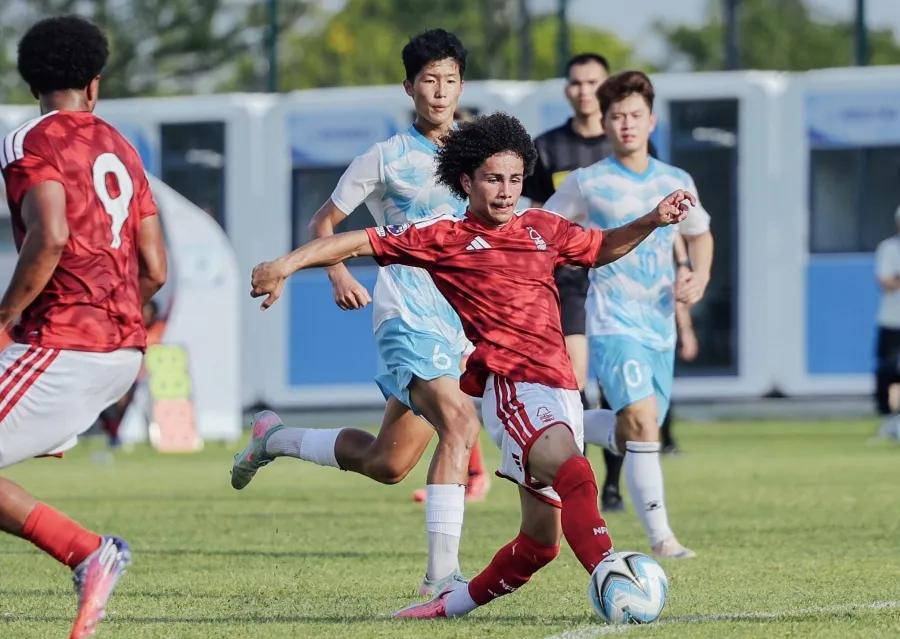
On August 8, the "Hope Cup" Greater Bay Area International Youth Club Invitational Tournament (U17) kicked off at the Guangzhou Nansha International Financial Island Football Park. Eight domestic and foreign professional club youth academies participated. Besides the Guangdong U17 team and Meizhou Hakka academy, there were academies from Nottingham Forest, Partizan Belgrade, Auxerre, Buriram United, Daejeon Citizen, and Wellington Phoenix. The international teams were of high quality, diverse in style, and from a wide geographical range, providing significant training value for Chinese teams. The tournament will last seven days, with the final moving to the Guangdong Provincial People's Stadium.
The "Hope Cup" aims to create an integrated youth training incubation chain of "quality tournament + professional scouting assessment + professional sports rehabilitation support + overseas player transfer." The tournament specially invited professional scouts from multiple countries to watch matches and select talent, opening a channel for youth training resource exchange between the Greater Bay Area and the world football community, promoting two-way communication of youth training talents, concepts, and industry resources. At the same time, the tournament comprehensively upgraded on-site and off-site support, arranging professional sports rehabilitation teams to stay at the venue throughout, providing immediate post-match recovery therapy services for all participating teams.
Eight professional scouts from six countries watched the matches throughout the tournament. The expert team had diverse strengths and complementary advantages. Among them, Valone once served as the head of technical scouting for Premier League club Fulham's youth academy and holds the FA official selection certification. El Ghazi specializes in the Belgian and Dutch leagues. Other scouts specialize in Europe, Japan, South Korea, North America, and Australia, with mature practical experience in youth player assessment, academy connection, and cross-border transfer.
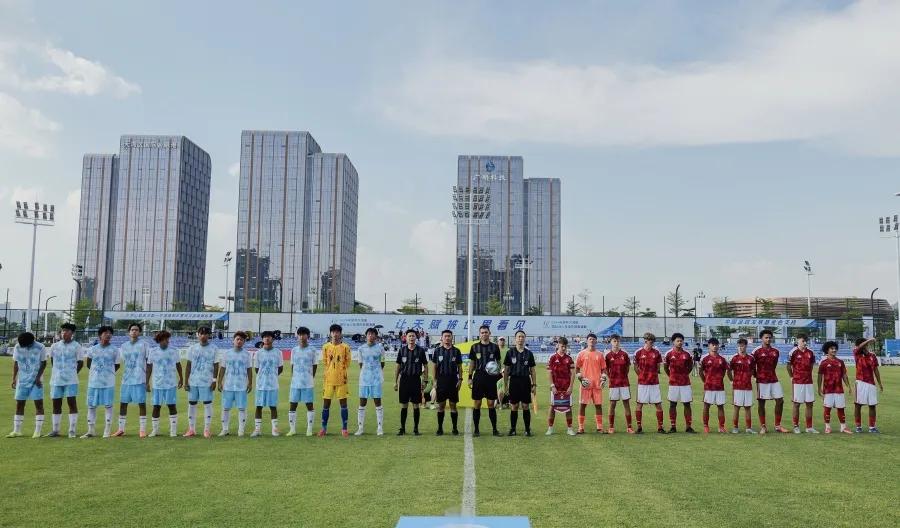
An international scout who watched the match between Nottingham Forest and Guangdong U17 said that Guangdong played at a very high level, exceeding expectations. "Especially No. 23 Liu Yuyang and No. 6 Zhang Yuanfeng. No. 23 is very fast and has excellent dribbling; No. 6 has outstanding interception and physical confrontation in midfield."
"Through the matches, we strengthen the connection and exchange with international football youth training, and through the tournament, we hope our players will have opportunities to play in football-developed countries in the future," said Xie Changjing, chairman of the Guangdong Football Association. He added that professional scouts on site hope to find good prospects, including Chinese players. "This will greatly promote our young players' journey to the international stage."
On August 10, the Jinan Spring City Youth International Football Invitational Tournament will officially open. The event has six age groups from U7 to U12, with 78 teams participating. It has invited four foreign teams from Uzbekistan, South Korea, and Malaysia.
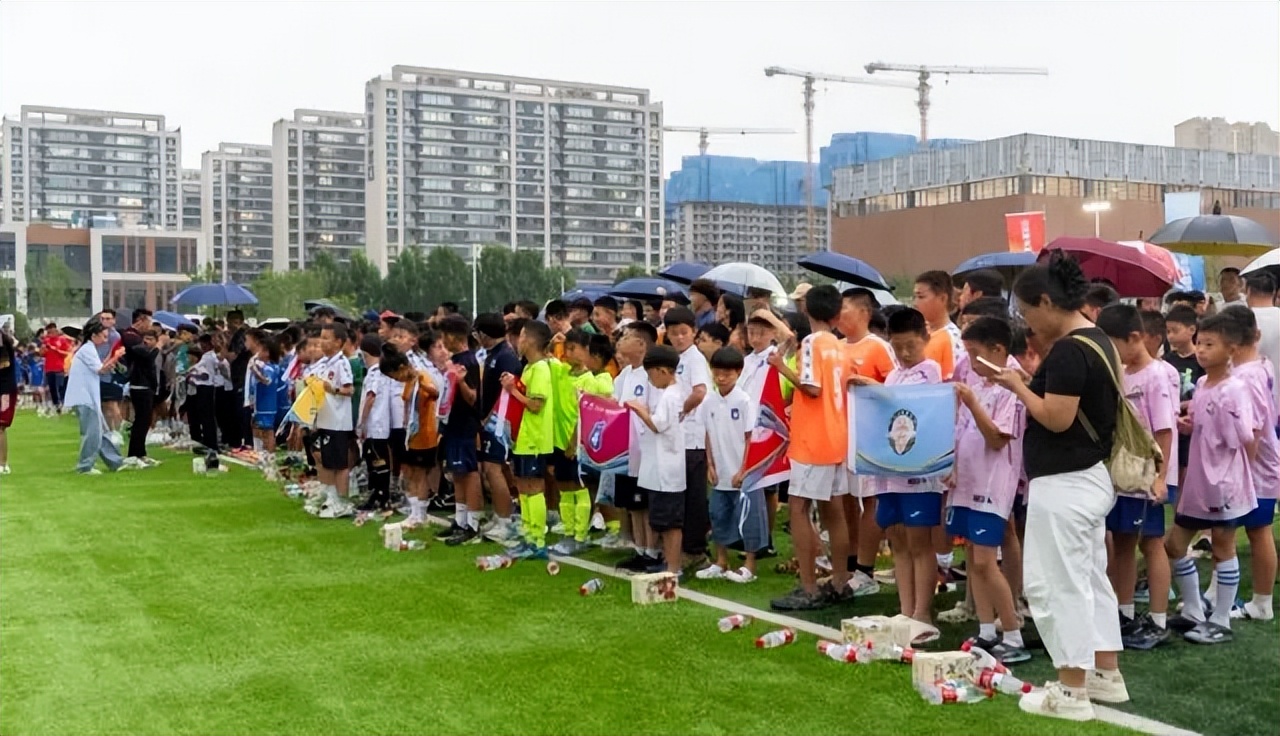

Compared with the traditional eastern and coastal regions, the number and quality of youth international invitational tournaments in the central and western regions this summer are impressive. The imbalance in the distribution of youth international football tournament resources has significantly improved.
Following the CFA China Team·Yinchuan International Youth Football Championship in early July, from July 21 to 28, the "Zunyi Cup" International Youth Football Invitational Tournament was held in the Xinpu New District of Zunyi. The event had seven age groups from U7 to U13, with a total of 150 teams participating and 647 matches played. In addition to domestic teams from 21 cities, there were teams from Serbia, South Korea, and Vietnam.
On August 4, the "Wuxiao Super" Summer Youth International Football Invitational Tournament started in Kunming, adopting a mixed gender participation model, with female players appropriately allowed older ages. The champion team will receive grants of 5,000 and 8,000 yuan. The event had five age groups from U7 to U11, with 128 teams participating, including more than ten foreign teams from South Korea (8 teams), Thailand, Vietnam, and Laos. In terms of scale, it is relatively large among domestic youth football tournaments this summer.
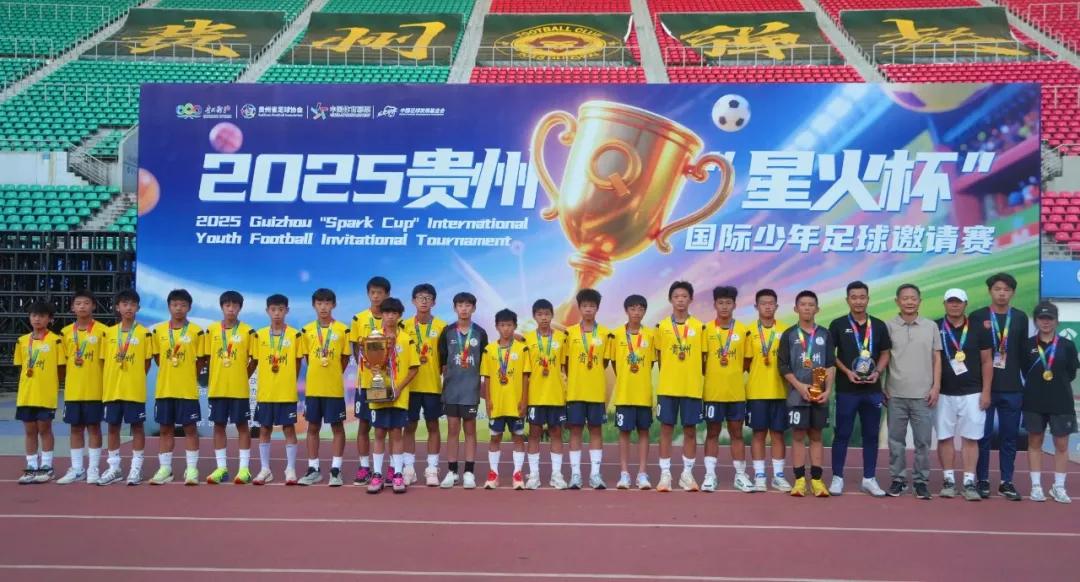
On August 16, the second Guizhou "Spark Cup" International Youth Football Invitational Tournament and the China-ASEAN Education Exchange Week International Youth Football Invitational Tournament will be held in Guiyang. This year, the tournament invited youth teams from South Korea, Uzbekistan, Kyrgyzstan, Vietnam, and other countries. The specifications are among the top tier of youth international football tournaments this summer.

In 2024, the General Administration of Sport, the National Development and Reform Commission, the Ministry of Education, and eight other ministries jointly issued the "Implementation Opinions on the Reform and Development of Chinese Youth Football," clearly stating that the Football Association should actively invite high-level foreign teams to China to organize high-quality matches to hone the team. At the same time, it supports regions with suitable venues, climate, and supporting conditions to organize regional and international youth football invitational tournaments according to local conditions, enriching the youth practical platform and forming a multi-age, diversified youth international competition system.
In just two years, the number and quality of youth international tournaments held in China have significantly improved. Youth international events have gradually extended from the traditional eastern megacities to central, western, and medium-sized cities. The layout of the youth football international exchange competition system is becoming more balanced, aiming to optimize the distribution of resources for domestic youth football international exchanges. So many youth international events have created more, higher-quality, and more diversified international exchange opportunities for local young players from all over the country.
The multi-point outbreak of youth football international events this summer has largely filled the gap of domestic youth lacking confrontation with high-level international teams. Besides broadening the international perspective of young players and increasing their practical experience in international matches, the events also promoted the exchange and collision of youth training concepts between China and foreign countries, learning from each other in football concepts and training methods. For the development of Chinese football youth training, "bringing in" youth football international events are certainly more than welcome.
Judging from the distribution of events this year, the pattern has begun to show a trend of resource optimization and differentiation. Traditional hot regions for international exchange events like Shanghai and Guangzhou focused on introducing top European and American club youth teams, mainly targeting the higher age groups of U15-U17. Other eastern regions hosted international youth exchange events covering more age groups, mainly focusing on lower ages.
It is worth mentioning the central and western regions, especially Guizhou and Yunnan. Relying on relatively cool climates and subplateau terrain, the "Zunyi Cup," "Wuxiao Super," and "Spark Cup" were held successively, focusing on inviting foreign teams from ASEAN, Central Asia, and South Korea. The participating players' age groups were more numerous, and the event scale was relatively large, with relatively high specifications.
In this way, the past shortage of high-quality youth international events and insufficient external exchange channels in the central and western regions has been significantly alleviated. Besides the traditional Bohai Rim, Yangtze River Delta, and Greater Bay Area, the central and western regions, especially the southwest led by Yunnan and Guizhou, will inevitably become an important part of the youth football international exchange pattern. This is also significant for improving the quality of youth training in western football, cultivating outstanding young football talents, and building a complete and sustainable football ecosystem.


Wonderfulshortvideo
vinicius junior transfer real madrid arsenal vini here we go arsenal news today real madrid news today ronaldo real madrid ronaldo edit



A sneak peak at yesterdays opener 👀

Think we might side with Francesca’s idea 😂

The highs & lows of racing 🐎

A different view to yesterday’s Stewards enquiry 👀

Perfectly explained by Francesca 🫶🏻

Keep an eye out for Adaay of Scarlett 👀
 Links
Links
 Contact
 App
App


