



Barcelona and the 103-goal puzzle: The solution doesn't lie in a single player!



Barcelona is facing a major attacking problem as Robert Lewandowski and Ferran Torres, two players who have scored a combined 103 goals in two seasons under Hansi Flick, are likely to leave the club in the same summer.
Main content
Robert Lewandowski has concluded his four-year stay at Camp Nou and is set to join Chicago Fire. Ferran Torres could soon follow the Polish striker, having reached a personal agreement with Paris Saint-Germain, while the two clubs continue negotiations over the transfer.
In his first two seasons working with Flick at Barcelona, Lewandowski scored 63 goals, while Ferran contributed 40. They were two of the team's most important goal sources during this period.
These numbers illustrate the scale of the gap the Catalan club's attack now faces. And Barca's problem is not simply about finding a new Lewandowski or a new Ferran Torres.

Gordon and Adeyemi are only part of the solution
Barcelona has added Anthony Gordon and Karim Adeyemi this summer. Last season, Gordon scored 17 goals across all competitions, while Adeyemi netted 10. Both bring pace, wide movement, and flexibility to the attack, aligning with the direction Deco wants to build. However, in terms of goal output alone, the 27 strikes from this duo are not enough to reassure Barca.
The positive side is that Flick doesn't have to start from scratch.
Lamine Yamal scored 24 goals last season and still has plenty of room to grow. Raphinha had 21 goals, though significantly lower than the 34 he scored in the 2024/25 season. Meanwhile, Fermin Lopez contributed 13 goals, and Dani Olmo added 8.
If these players maintain or improve their output, Barca can significantly offset the production left by Lewandowski and Ferran. This is probably a more realistic approach than finding a single individual capable of shouldering the entire goal-scoring burden.
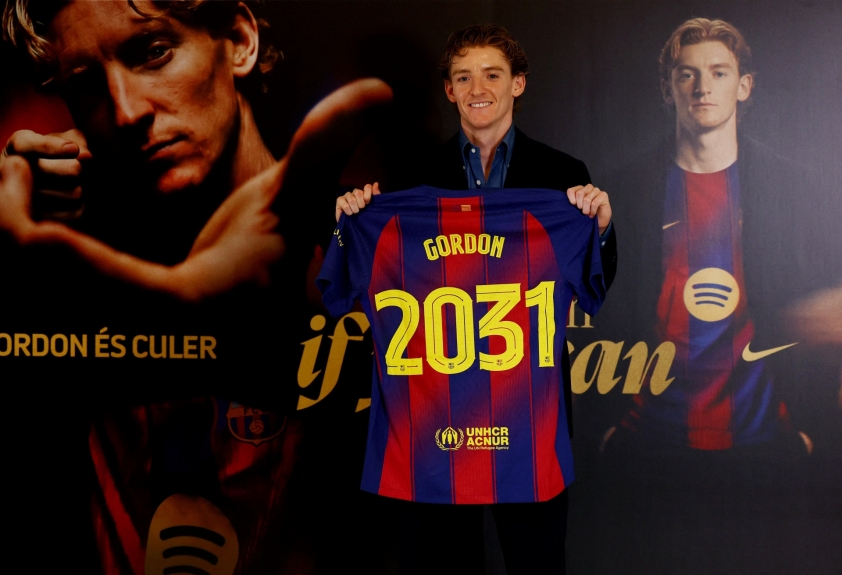
But Barca still needs a heavyweight number 9
Despite having many players who can contribute goals, Barcelona will likely still want to add a top-class center-forward.
Julian Alvarez is seen as a target highly valued by Deco. This interest also reflects what Barca lacks: a player who can guarantee a large and consistent output in the central area.
The value of a number 9 is not just about total goals over a season. In matches where Barcelona dominates possession but doesn't create many clear chances, the ability to position oneself in the box, exploit a cross, or turn a half-chance into a goal can make all the difference.
That's also why the benchmark of around 30 goals is seen as an important reference. Not because Barcelona must have a player reaching that number, but because a striker capable of maintaining high output provides a "floor" for the attack, rather than forcing Flick to rely on multiple players being in top form throughout the season.
In a long campaign, that guarantee is extremely valuable. And in Champions League knockout matches or cup games, where only a few real opportunities may decide the outcome, it becomes even more crucial.
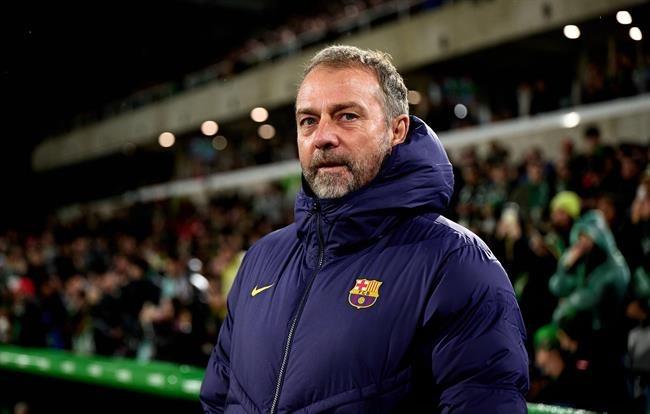
Flick's challenge is to redistribute goals
A top-class center-forward is obviously the most direct and safest option for Barcelona to address the attacking gap. The problem is that the Catalan club doesn't have an unlimited budget, and their squad reinforcement plans are not solely focused on the number 9 position.
Rodri is the clearest example of that trade-off. If Barcelona channels a large portion of their resources to bring the Manchester City midfielder to Camp Nou, their ability to spend heavily on a center-forward would be significantly reduced. In that case, Flick would have to choose between adding a direct goal source and upgrading the overall quality of the team's operation.
This is also where the 103-goal puzzle needs to be viewed more broadly.
Barcelona doesn't necessarily have to replace all the lost goals with an equivalent number from new signings. If an addition like Rodri helps the team control the ball better, reduce counter-attacks, protect the defense more effectively, and maintain a more stable game, they could still become stronger overall.

In that scenario, Flick might accept not having an extra center-forward with 25-30 goals, as long as the current attacking players can share the missing goal tally. Instead of solving the puzzle with a new "killer," Barca would bet on improving the entire system and then redistributing the goal output within it.
That is a logical approach, but also riskier. Over the course of a season, if several goal sources decline or get injured at the same time, Barca could quickly find themselves without a reliable finisher. And in Champions League knockout matches or cup games, where only one or two clear chances may appear, the absence of a striker capable of deciding a situation on his own could become especially significant.
That is the puzzle Hansi Flick and the Barcelona management must solve before the new season kicks off. And the choice between adding a top-class center-forward or betting on the ability to redistribute goals within the system could directly impact the Camp Nou side's success or failure in the upcoming season.


Wonderfulshortvideo

vinicius junior transfer real madrid arsenal vini here we go arsenal news today real madrid news today ronaldo real madrid ronaldo edit



A sneak peak at yesterdays opener 👀

Think we might side with Francesca’s idea 😂

The highs & lows of racing 🐎

A different view to yesterday’s Stewards enquiry 👀

Perfectly explained by Francesca 🫶🏻

Keep an eye out for Adaay of Scarlett 👀
 Links
Links
 Contact
 App
App


