



Swiatek admits falling into "the worst nightmare," coaching team embroiled in controversy


Yesterday, world No. 3 Swiatek suffered a surprising defeat at the Miami Open. In the opening set, she needed only 33 minutes to secure a 6-1 victory, with an astonishing first-serve win rate of 88%, and she easily achieved two breaks. However, the match turned in the second set when Linette seized an opportunity in the 12th game, executing a crucial break to win the set 7-5.
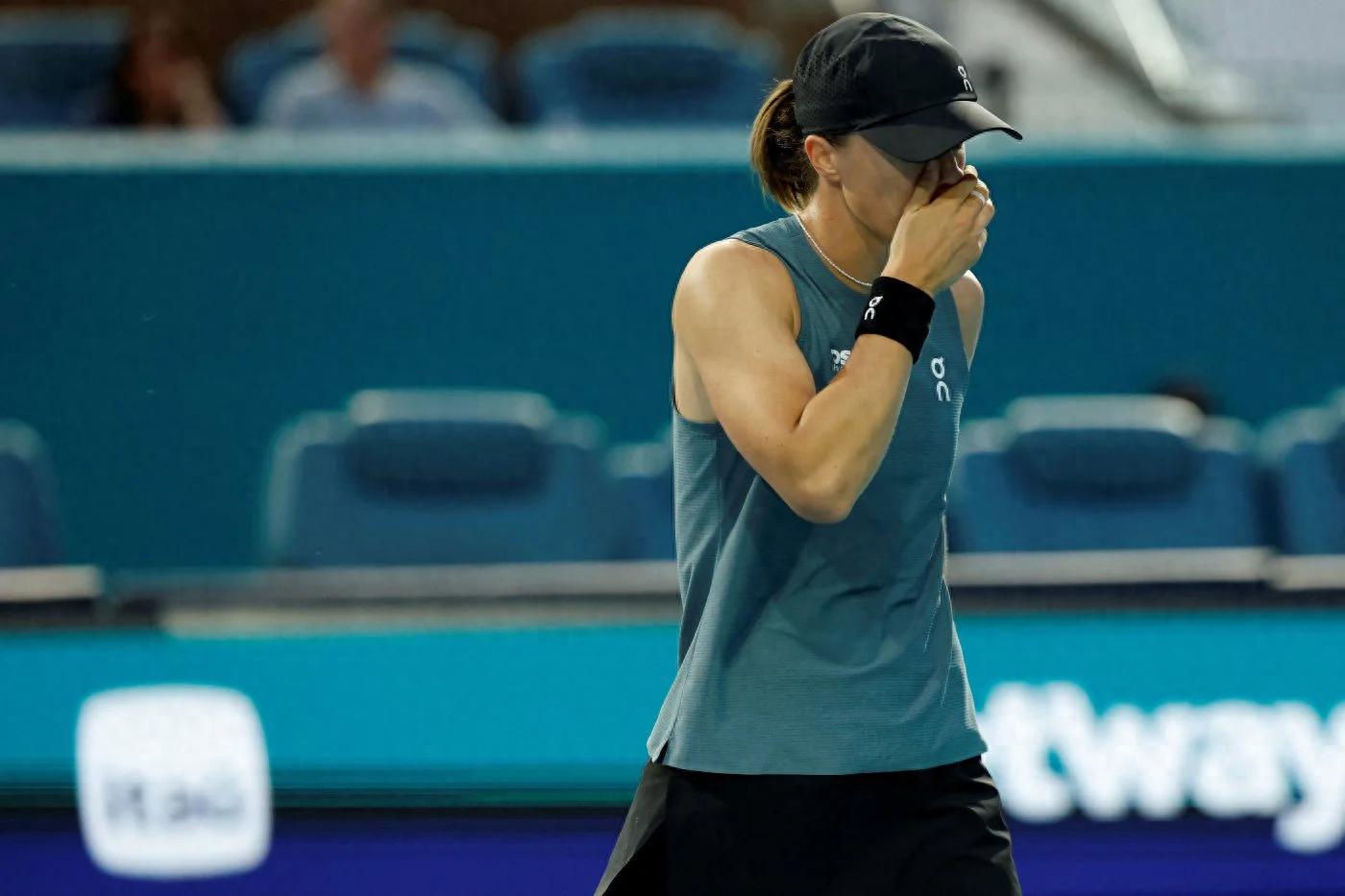
In the third set, Linette capitalized on Swiatek's increased unforced errors to quickly establish a 5-2 lead. Although the Polish player saved two match points to hold serve and narrowed the gap to 5-3, Linette ultimately sealed the victory on her fourth match point, completing a stunning comeback with a score of 1-6, 7-5, 6-3.
After the loss, the six-time Grand Slam champion did not shy away: "My performance in the second and third sets was simply poor tennis. I played well in the first set, and such a contrast is really hard to accept. I don't know if it was subconscious or deliberate, but I struggled to adjust, and then my tennis completely collapsed. I haven't felt this way for about five years—such a severe decline during a match. I just need to work on regaining confidence."
Her words not only conveyed disappointment but also revealed genuine confusion over her rare collapse. Beyond tactics, Swiatek admitted she is facing increasingly uncontrollable inner struggles.
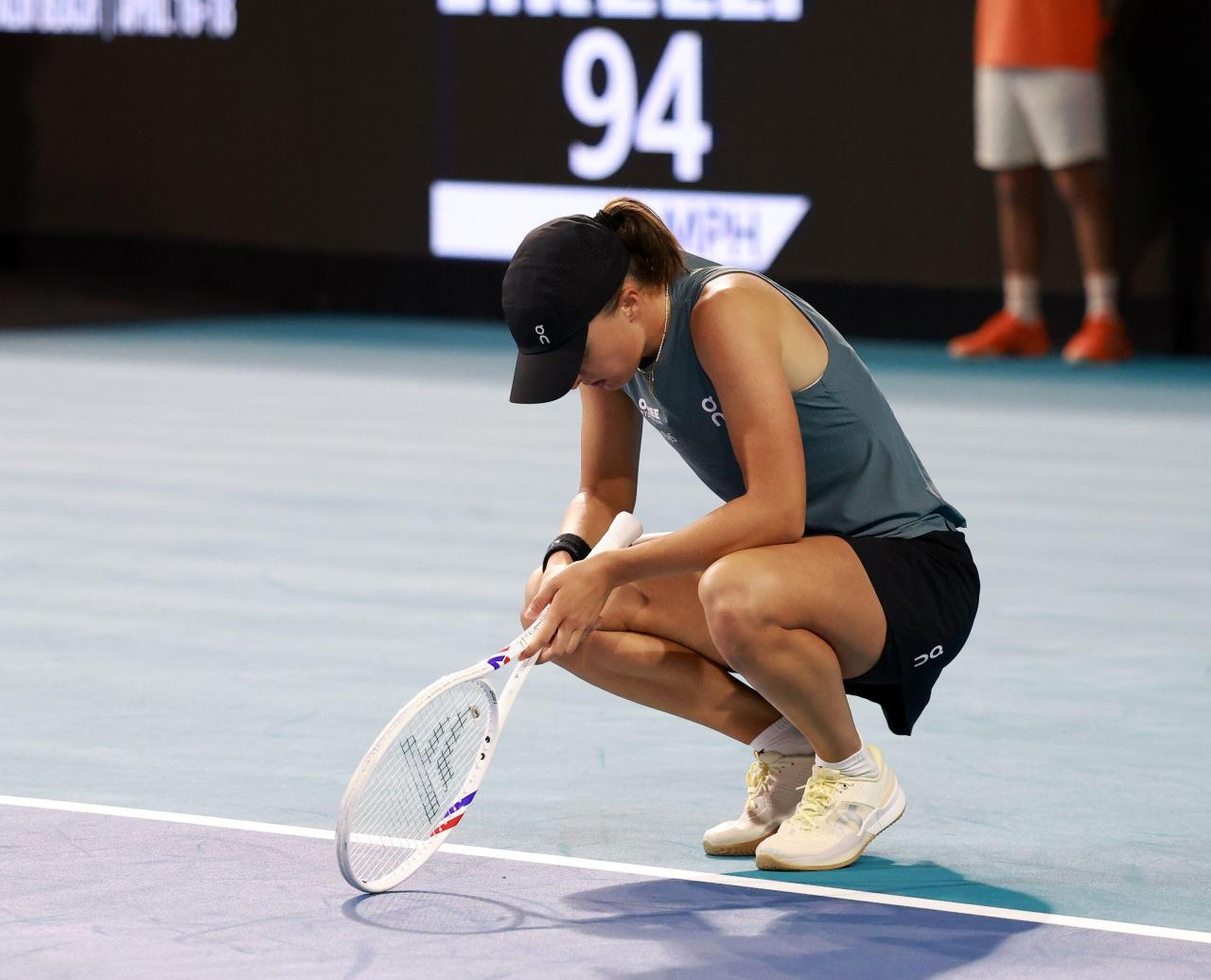
She stated that stepping onto the court often feels like carrying too many expectations, and she must shed these burdens because her performance simply doesn't match them: "I feel somewhat lost, but I will strive to regain my form. I know I have the ability, but I'm temporarily off track. This is the worst nightmare for a top tennis player—such a drastic drop in performance during a match. I must endure this phase and identify the issues."
Swiatek also acknowledged that her once manageable tendency to overthink has worsened after consecutive losses this season: "It's hard for me to shake off numerous distracting thoughts, which used to be my strength. Honestly, I play best when I don't overthink. Now I make too many wrong decisions, and ironically, I can't stop thinking. Pressure follows, my body becomes extremely tense, and everything becomes much harder."
This defeat not only ended a match but also terminated one of the most legendary winning streaks in modern tennis. Swiatek previously held a 73-match winning streak in first rounds, dating back to 2021. For over four years, she had never lost in the first round of any tournament.
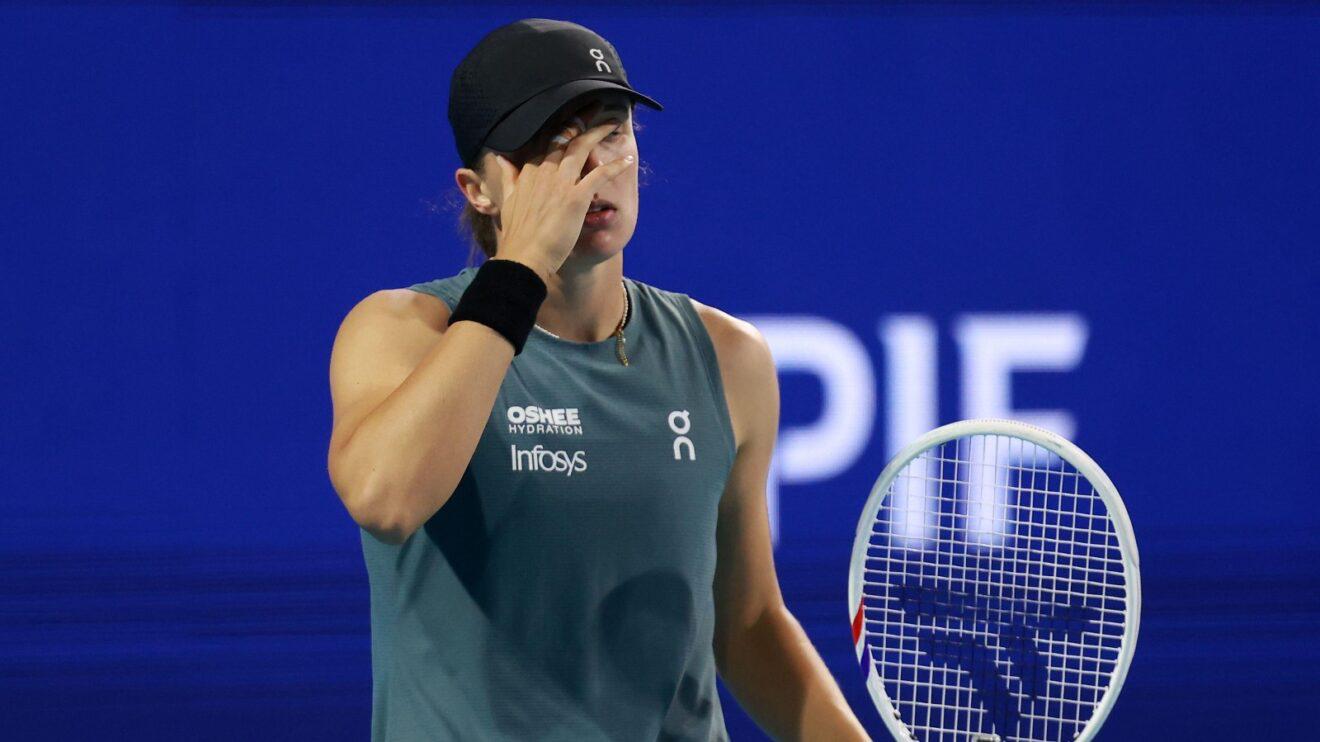
A comparison highlights its significance: when she last lost in a first round, Medvedev and Raducanu were newly crowned Grand Slam champions; Federer, Nadal, and Djokovic each had 20 Grand Slam titles; Barty was still world No. 1, and Alcaraz was ranked outside the top 30. The end of this era-defining consistency also underscores the weight of Linette's victory.
Swiatek's first-round exit at the Miami Open has intensified external concerns. Her previous quarterfinal loss to Svitolina at Indian Wells, particularly her struggling serve, had already drawn attention. Now, questions are emerging about her team dynamics. Although she has won multiple titles under coach Fisette, recent performances have sparked debate.
For instance, during the match against Linette, cameras captured Fisette telling Swiatek to "make some changes." Former WTA professional Chanda Rubin, commenting on Tennis Channel, questioned this: "Shouldn't the coach help you figure out what to change?"
The role of Swiatek's mental coach, Daria Abramowicz, has long been scrutinized, especially after witnessing Swiatek's emotional outbursts during matches multiple times. First, at Indian Wells, she vented frustration toward her team during the quarterfinal against Svitolina; then, during training in Miami, the Polish player appeared visibly tense.
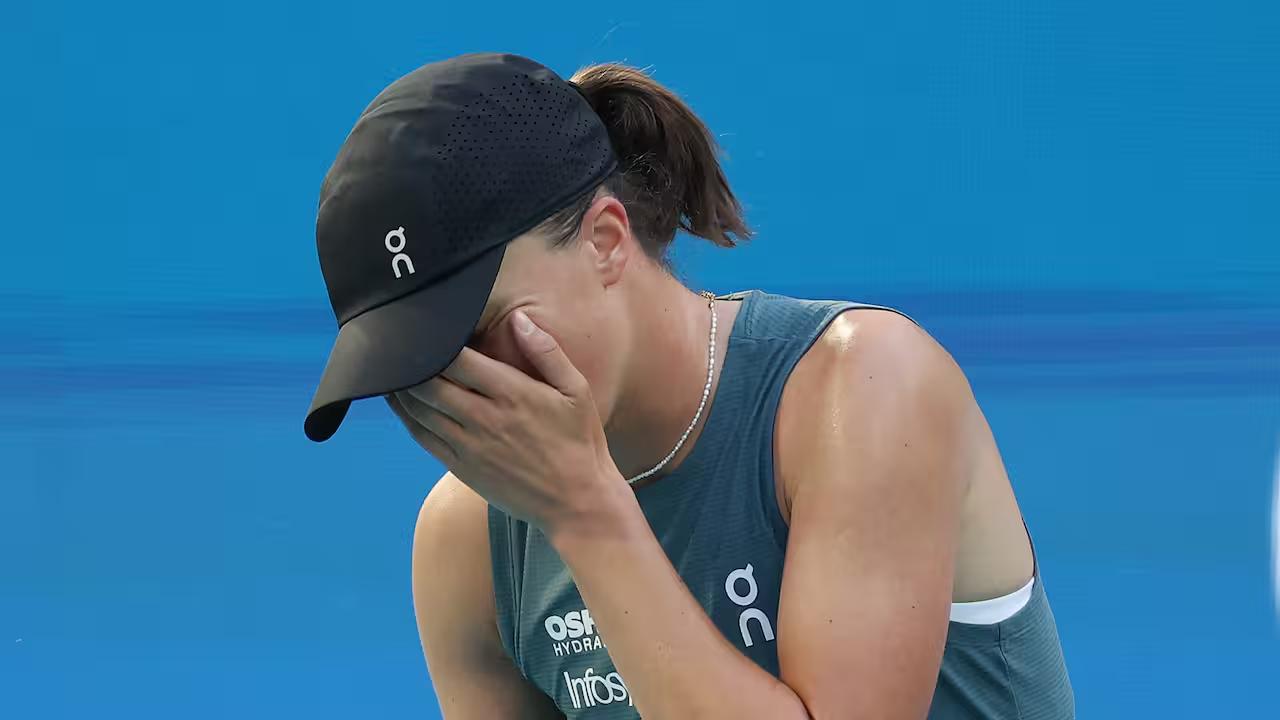
Thus, mental coach Abramowicz has faced intense scrutiny, and after the Miami exit, public focus has also shifted to coach Fisette and his role within the team. Additionally, tennis veteran Dmitry Tursanov even expressed doubts about her short-term top-level prospects, suggesting that if issues persist, she might struggle to maintain a top-five ranking.
Figures across tennis are paying attention. Brad Gilbert noted that early losses alter opponents' mindset: "No matter how glorious your past, winning streaks build immense intimidation. But once you start losing, especially exiting earlier than usual, opponents approach the match from the very beginning with a completely different attitude."
While public attention centers on Swiatek, this victory also belongs to Linette's resilience. After being swept in the first set, she remained patient, waiting for her moment: "After winning that game in the first set, I thought, 'Okay, at least the score isn't too ugly, and now it can't get worse.' I felt I did many things right, but she was playing far better than me at that time. I just waited for an opportunity, perhaps to play more aggressively, grab a few points here and there, and create trouble for her. I had some luck, performed well on key points, and ultimately turned the match around."
This marks Linette's eighth career victory over a top-ten player and stands as one of her most significant wins. Now Swiatek faces a different challenge: not the opponent across the net, but the battle within herself. How she responds next may define the next phase of her illustrious career. (Source: Tennis Home, Author: Spark)

 Links
Links
 Contact
Address:UNIT 1804 SOUTH BANK TOWER, 55 UPPER GROUND,LONDON ENGLAND SE1 9E
Number:+85259695367
E-mali:[email protected]
 App
App


